

Why giving charity in Ramadan multiplies spiritual rewards
TL;DR:
- Ramadan enhances the spiritual rewards and significance of charity in Islam.
- Giving during Ramadan cultivates compassion, humility, gratitude, and strengthens community bonds.
- Sincere intentions and diverse forms of charity maximize both personal growth and social impact.
Ramadan is widely recognized as the most generous month in the Islamic calendar. Muslims around the world increase their giving during this time, yet many do so out of habit rather than deep understanding. Why does charity carry such heightened significance during Ramadan? What does Islamic scripture actually teach about giving in this blessed month, and how can you make your charity more sincere and impactful? This article explores the religious foundations, spiritual dimensions, and practical steps that help you give with purpose, so your Ramadan charity becomes a genuine act of worship rather than a routine gesture.
Table of Contents
- Why Ramadan magnifies the impact of charity
- How charity in Ramadan supports spiritual transformation
- Different forms of charity and their significance in Ramadan
- Making your Ramadan charity more meaningful
- The deeper truth: Charity transforms Ramadan beyond rewards
- How we can help you make your charity count this Ramadan
- Frequently asked questions
Key Takeaways
| Point | Details |
|---|---|
| Rewards multiply in Ramadan | Charity during Ramadan carries extra spiritual reward according to authentic Islamic teachings. |
| Charity pairs with fasting | Combining giving with fasting amplifies both spiritual and social benefits for believers. |
| Intentions matter | Sincere intentions are crucial for charity to be accepted and fully rewarded in Ramadan. |
| Diverse ways to give | Zakat, Sadaqah, and providing iftar are all meaningful ways to give charity in Ramadan. |
| Charity transforms the self | The deeper value of charity is lasting spiritual transformation and increased compassion. |
Why Ramadan magnifies the impact of charity
Ramadan is not simply a month of fasting. It is a season of heightened worship, and charity sits at the heart of that worship. Islamic scholarship consistently emphasizes that rewards are multiplied in Ramadan, making it a preferred time for giving both Zakat (obligatory almsgiving) and Sadaqah (voluntary charity).
The Quran repeatedly pairs prayer with charity, treating them as inseparable pillars of a believer’s life. These pillars of worship in Islam form a connected system, and Ramadan is the month when that system operates at its fullest. Fasting, prayer, recitation of the Quran, and charity reinforce one another in a way that is unique to this month.
The Prophet Muhammad (peace be upon him) was described by his companions as being more generous in Ramadan than at any other time of year. Ibn Abbas (may Allah be pleased with him) narrated that the Prophet was “like the blowing wind” in his generosity during Ramadan, giving freely and without hesitation.
“The Prophet was the most generous of people, and he was even more generous in Ramadan.” (Bukhari and Muslim)
This prophetic example sets the standard for every Muslim. Generosity in Ramadan is not just encouraged; it is a Sunnah (prophetic tradition) that carries its own spiritual weight.
The main types of charity emphasized during Ramadan include:
- Zakat: The obligatory annual almsgiving calculated at 2.5% of eligible wealth, often paid during Ramadan for its increased reward
- Sadaqah: Voluntary charity given at any time and in any amount, with no fixed rules on quantity
- Providing iftar: Sponsoring or preparing the meal that breaks the fast for others, which carries its own unique reward
- Sadaqah Jariyah: Ongoing charity whose benefits continue after the giver’s death, such as funding a well or educational resource
Pro Tip: Plan your Zakat and Sadaqah donations before Ramadan begins. Setting a clear intention and a giving schedule early in the month helps you give more consistently and with greater mindfulness throughout the 30 days. You can also explore how Umrah rewards in Ramadan connect acts of worship to amplified spiritual benefit.
How charity in Ramadan supports spiritual transformation
Charity during Ramadan does more than earn reward. It actively reshapes the giver. Fasting creates a physical experience of hunger and restraint that softens the heart and builds genuine empathy for those who live with scarcity every day. That empathy, when channeled into giving, becomes a powerful spiritual force.
Islamic scholars note that fasting alone is incomplete without accompanying acts of generosity. When fasting, prayer, and charity are combined, the spiritual effect is compounded. As one well-known teaching states, charity extinguishes sins like water extinguishes fire, and this effect is especially powerful when combined with fasting and night prayer during Ramadan.
“Charity extinguishes sin as water extinguishes fire.” (At-Tirmidhi)
This is not simply a metaphor. It reflects a theological reality: acts of worship performed together in sincerity create a cumulative spiritual effect that none of them achieves alone.
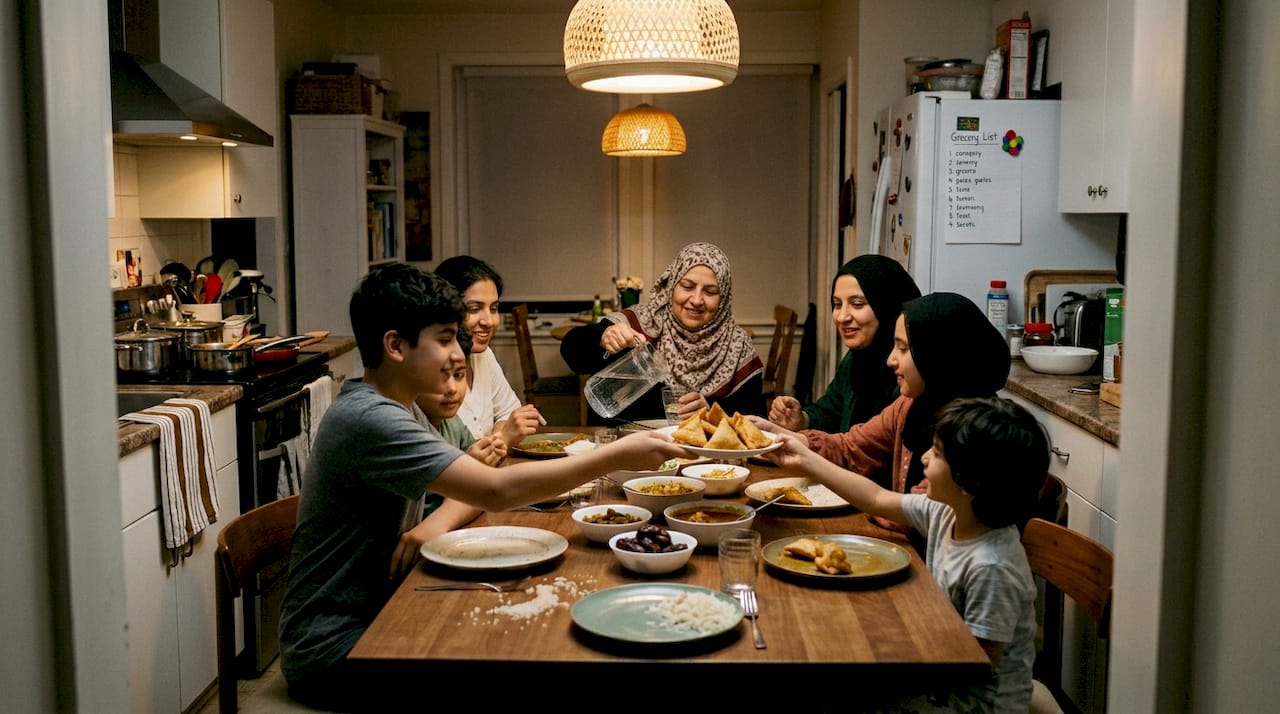
Research in behavioral psychology supports what Islamic tradition has long taught: giving increases feelings of connection, purpose, and well-being. When you give during Ramadan, you are not only fulfilling a religious duty. You are also investing in your own spiritual and emotional health.
The core spiritual changes that charity fosters during Ramadan include:
- Compassion: Experiencing hunger while fasting makes the suffering of others feel real and immediate
- Humility: Recognizing that your wealth is a trust from Allah, not a personal achievement
- Gratitude: Giving reminds you of the blessings you have, which deepens your thankfulness
- Purification: Charity cleanses the soul of attachment to material things
- Community: Giving connects you to others and strengthens the bonds of the Muslim Ummah
This is why community service and faith are so deeply linked in Islamic practice. Charity is not a private transaction between you and Allah. It is a social act that builds the community around you. Purifying intentions before giving ensures that these spiritual benefits are fully realized.
Different forms of charity and their significance in Ramadan
Understanding the types of charity available in Ramadan helps you give with clarity and purpose. Each form carries its own rules, eligibility criteria, and spiritual rewards.
| Type of charity | Obligatory or voluntary | Who must give | Primary purpose |
|---|---|---|---|
| Zakat | Obligatory | Muslims with wealth above Nisab threshold | Purify wealth; support the poor |
| Sadaqah | Voluntary | Any Muslim | Earn extra reward; express gratitude |
| Fidyah | Compensatory | Those unable to fast | Compensate for missed fasts |
| Kaffarah | Compensatory | Those who broke a fast deliberately | Expiate a specific sin or violation |
| Iftar sponsorship | Voluntary | Any Muslim | Feed the fasting; earn equivalent reward |
One of the most celebrated forms of Ramadan charity is providing iftar. The Prophet (peace be upon him) taught that sponsoring someone’s iftar earns the sponsor the full reward of that person’s fast, without reducing the faster’s own reward in any way. This is a remarkable opportunity: one act of generosity earns two full rewards.
Here are the steps to properly give each major type of charity during Ramadan:
- Zakat: Calculate your total eligible wealth (savings, gold, investments) and check if it meets the Nisab threshold. Apply the 2.5% rate and distribute to one of the eight eligible categories mentioned in the Quran.
- Sadaqah: Choose a cause that is meaningful to you. Give with a clear intention, and do not delay. Even a small amount given consistently holds great value.
- Fidyah: If you are unable to fast due to illness or old age, pay the equivalent of one meal per missed fast to someone in need.
- Kaffarah: Consult a knowledgeable scholar to determine the correct expiation for your specific situation, then fulfill it promptly.
- Iftar sponsorship: Donate to a trusted organization or prepare food directly for neighbors, mosque communities, or those experiencing hardship.
Exploring Umrah donation rewards can also help you understand how acts of worship performed for others carry their own category of spiritual benefit during this month.
Making your Ramadan charity more meaningful
Knowing what to give is only part of the equation. How you give matters just as much. The quality of your intention (niyyah) determines whether your charity is a genuine act of worship or simply a financial transaction.
Islamic teachings are clear that spiritual reward is grounded in Quranic and Hadith traditions rather than in measurable numeric formulas. The focus should always be on sincerity, not on calculating how many times a reward is multiplied.
Here is a look at common charitable causes and their direct social impact:
| Charitable cause | Direct social impact |
|---|---|
| Feeding programs (iftar) | Provides nutrition and community for those in need |
| Clean water projects | Serves hundreds of families over many years |
| Orphan sponsorship | Covers education, food, and emotional support |
| Medical aid | Delivers urgent care to those without access |
| Humanitarian relief (e.g., Gaza) | Addresses immediate survival needs in conflict zones |
Engaging your family in giving is one of the most powerful strategies for deepening the experience. When children participate in choosing a cause or preparing food for others, they internalize the values of generosity and compassion from an early age. Supporting humanitarian aid together as a family creates shared memories and shared reward.
Pro Tip: Organize a family Ramadan giving plan at the start of the month. Assign each family member a role, whether researching causes, preparing donations, or making dua for recipients. Collective giving multiplies both impact and reward.
Mistakes to avoid when giving charity in Ramadan:
- Showing off (Riya): Publicizing your donations to gain social approval cancels the spiritual reward entirely
- Giving only leftovers: Charity that costs you nothing spiritually reflects a weak intention; give from what you value
- Delaying without reason: Procrastinating on Zakat or Sadaqah reduces its sincerity and impact
- Neglecting local need: While global causes matter, neighbors and community members in need deserve your attention too
- Forgetting ongoing charity: Sadaqah Jariyah, such as performing Umrah for others, continues to generate reward long after Ramadan ends
The deeper truth: Charity transforms Ramadan beyond rewards
Most conversations about Ramadan charity focus on reward multiplication. That framing is understandable, but it can quietly reduce a profound spiritual act to a transaction. The deeper truth is that charity changes the person who gives it.
When fasting softens the heart and fosters genuine empathy, the resulting charity is not about earning points. It is about becoming a more compassionate, grounded human being. The real test of Ramadan giving is whether it continues after the month ends.
We have seen this pattern repeatedly: Muslims who approach charity with sincerity during Ramadan often find that their generosity does not stop on Eid. They carry the habit forward. They look for ways to give throughout the year. That is the sign of a Ramadan that truly worked.
Focusing only on spiritual arithmetic misses this transformation. Give because it changes you. Give because it serves others. The reward will follow, but the real gift is the person you become. Exploring Umrah and social responsibility reveals how this same principle applies across all major acts of worship in Islam.
How we can help you make your charity count this Ramadan
At Badal Umrah, we believe that charity and worship are deeply connected. One of the most meaningful gifts you can offer a loved one who cannot travel is the performance of Umrah on their behalf. This act combines sincere intention, worship, and care for another person into a single, powerful expression of faith.
Our Badal Umrah services are designed to make this process simple, trustworthy, and spiritually sound. We also donate 10% of every booking to humanitarian efforts in Gaza, so your act of worship directly supports those in urgent need. If you are looking for a way to honor a loved one and give charity at the same time, consider arranging Umrah on behalf of loved ones this Ramadan.
Frequently asked questions
Does giving charity in Ramadan really multiply the reward?
Islamic teachings confirm that rewards are multiplied in Ramadan, though the exact numeric multiplication is not specified in scripture. The emphasis is on sincerity and consistency of giving.
Is there a specific type of charity that is best in Ramadan?
Zakat, Sadaqah, and providing iftar to those fasting are among the most highly encouraged forms of charity during Ramadan, each carrying distinct spiritual rewards.
Why is intention important in giving charity during Ramadan?
In Islamic practice, actions are judged by their intentions. Giving with sincerity (niyyah) ensures that your charity is accepted as an act of worship, not merely a social gesture.
Can charity given on behalf of someone else count in Ramadan?
Yes. You may give charity or arrange acts of worship such as Umrah on behalf of another person, and both you and the recipient receive the spiritual reward according to Islamic scholarship.
Recommended
- Umrah Badal in Ramadan in Sweden | Rules, Rewards & Islamic Guidance – Badal Umrah
- Umrah donation advantages: Spiritual rewards and lasting impact – Badal Umrah
- Guide to performing Umrah on behalf of others in 2026 – Badal Umrah
- Community service in Umrah: How proxy faith fulfillment works – Badal Umrah