- badal umrah video proof
Badal Umrah Video Proof: What It Shows and How to Protect Privacy
Published on Oct 29, 2026
Badal Umrah Video Proof: What It Shows and How to Protect Privacy

Video is the proof most families ask for after a badal Umrah, and it is a good one. It shows the rituals being done in Makkah, in the order they are done. It does not prove everything, though, and it carries a privacy side that few providers explain. This guide covers what a video can and cannot show, the other proofs worth requesting, how to check that a file is real, and how to keep the beneficiary’s name and details protected.
TL;DR
- A good badal Umrah video shows the main rituals, in sequence, from a representative who is clearly in Makkah. It cannot show intention or religious acceptance.
- Ask for more than one kind of proof: video, photos, and a certificate that names the service you ordered.
- Check files for consistent timestamps, a clear link to your order, and a provider who will answer questions about how they were made.
- Share only what the provider needs: a name for the intention, not a full identity file. Ask how long files are kept and who can see them.
- Keep the proof private. A video of Tawaf can show strangers’ faces, so think before posting it anywhere.
Table of Contents
- What a badal Umrah video can show
- What a video cannot prove
- The kinds of proof you may receive
- Live and recorded video: what is the difference?
- How to check that a video is genuine
- Privacy: the part families rarely think about
- Different situations, different needs
- Our perspective
- Questions to ask before you entrust someone
- Our packages and the proof that comes with them
- FAQ
- Sources
What a badal Umrah video can show
Badal means substitute. Someone who cannot travel, because of illness, old age or death, has the Umrah performed for them by another Muslim. Families naturally want to see it was done.
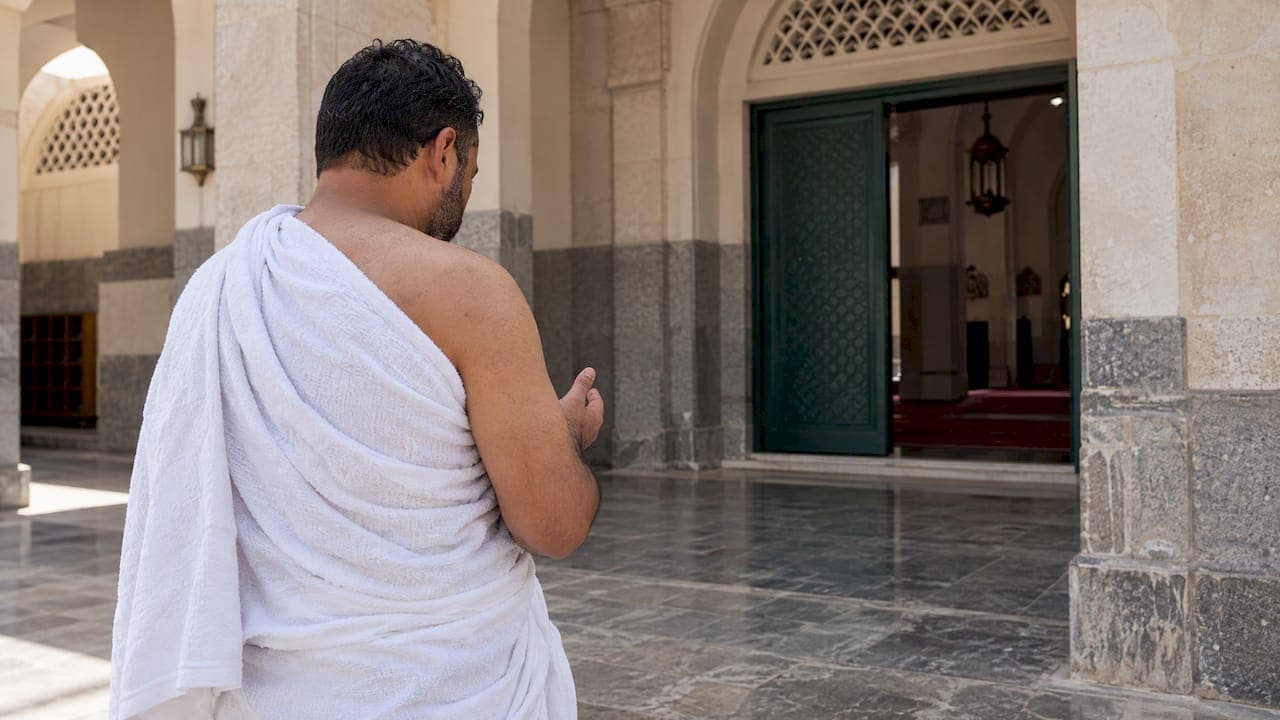
A useful video usually covers the stages of Umrah: entering ihram, Tawaf around the Kaaba, prayer behind Maqam Ibrahim, Sa’i between Safa and Marwa, and the shaving or trimming of the hair that completes the rite. Seeing these in order tells you the representative went through the full sequence rather than part of it.
The video can also show:
- Place. The Haram, the Kaaba and the Mas’a are recognizable, so you can tell the footage is from Makkah.
- Pace. Seven circuits of Tawaf and seven laps of Sa’i take real time. A clip that jumps through them in seconds should raise a question.
- Continuity. A single recording, or clearly linked segments, is easier to trust than scattered clips.
- The statement of intention. Some providers record the representative saying the niyyah for the named person. That links the act to your order.
What a video cannot prove
No recording can show what is in someone’s heart. It cannot confirm that the representative held the right intention, or that the Umrah was accepted. Acceptance belongs to Allah alone.
A video also cannot prove the representative met the conditions scholars set. The commonly stated points include that the person is Muslim and sound of mind, and that they are doing the Umrah for someone who truly cannot do it themselves. Scholars discuss these in detail, and the details differ between rulings. Our guide to Saudi fatwas, eligibility and proof before you pay walks through the questions to put to a provider. If your situation is unusual, ask a qualified scholar you trust before booking.
Finally, a video cannot prove it is about your order. That is why a family should never rely on footage alone. A clip can be reused, edited, or made for another client. The links below between video, order and certificate are what give it meaning.

The kinds of proof you may receive
Providers differ, so ask what each package includes before you pay. In general, proof falls into four groups.
| Proof type | What it tells you | What it leaves open |
|---|---|---|
| Video (live or recorded) | The rituals were performed in Makkah, in order | Whether it is your order, unless linked |
| Photos | Key moments, such as ihram and the Haram | Less detail on sequence or duration |
| Certificate | A written record naming the service, beneficiary and date | Can be issued without any footage behind it |
| Updates and messages | Progress as it happens, with time to ask questions | Needs the provider to keep a record |
Our page on the four completion proofs to demand for proxy bookings explains how these fit together. The principle is simple: each proof backs up the others. Video with no certificate, or a certificate with no video, is a weaker file than the two together.
If you want a look at how finished proof can appear, our gallery is the place to start.
Live and recorded video: what is the difference?
Live updates let you see progress while it happens and ask a question in the moment. Recorded video is edited or compiled afterward, which is fine, but it should still run in a natural order and match the dates of your booking.
Neither is automatically more trustworthy. A live stream can be poorly framed, and a recording can be perfectly honest. What matters is whether you can connect the footage to your order: its date, its time, and the name used in the intention.
For families booking for someone bedridden or very elderly, the timing matters in another way. You may want the video ready to share with the person while they are still able to see it. Our guide on verifiable proofs for bedridden patients covers that situation with care.
How to check that a video is genuine
You are not a forensic lab, and you do not need to be. A few sensible checks catch most problems.
- Match the order. Does the footage or the accompanying message show your order reference, your date or the name used for the intention? Ask the provider to state how each file is tied to your booking.
- Look at the timeline. Does the date on the file, the date on the certificate and the date of your order agree? Digital forensic guidance treats timestamps and device information as core parts of authentication, together with a documented chain of custody.
- Do not trust one signal. The Scientific Working Group on Digital Evidence advises that metadata should not be relied upon alone and should be read alongside the visual content and the file’s structure. In plain terms: a believable date on a file is a clue, not a verdict.
- Watch the content itself. Look for consistent lighting, crowds and sounds throughout. Abrupt cuts, repeated passages or footage that looks like it came from a different day deserve a question.
- Ask how it was made. An honest provider will tell you who recorded it and how it reached you. A vague answer is information.
- Check the certificate separately. Our page on five checks to verify an Umrah certificate shows what to look for.
If something does not add up, ask before you accept the file. A reliable provider welcomes the question. Our overview of Umrah tracking and verifying the provider shows what a transparent process looks like from the start.
Privacy: the part families rarely think about
A badal Umrah involves personal information about people who are sometimes sick or have died. Three kinds of data are in play: the beneficiary’s name, what you tell the provider about their situation, and the media itself.

Recorded media can expose faces, voices and locations, including those of bystanders. The Kenyan data protection regulator, in its guidance on recorded media, names identity theft, harassment, profiling and reputational harm as risks, and warns that control becomes hard once media is published. That guidance is from Kenya, but the logic travels well.
In a Tawaf video, the crowd is the issue. Thousands of people are in the frame. They did not agree to appear in a file that circulates among families. Posting it publicly spreads their image, and the beneficiary’s name if you caption it.
What you should give the provider
Give only what is needed. For most badal Umrah bookings, that means the name to be mentioned in the intention, and the contact details to send the proof. You do not usually need to send a passport copy, medical records or a photo of the person.
The World Health Organization’s personal data protection policy is written for health data, yet its principles apply here: limit the data shared, use appropriate confidentiality and security, and do not keep data longer than its purpose requires. It also treats consent as the preferred basis for processing where practical.
What to ask about storage
Before booking, ask:
- Who can see the video and certificate on your side of the provider?
- How long are files kept after delivery, and can you ask for deletion?
- Are files ever used in galleries, social posts or marketing? If so, only with your clear permission.
- How are files delivered: a private link, an email attachment, a shared drive?
The Kenyan guidance stresses secure storage and clear retention and deletion procedures. Those are exactly the questions above.
Saudi Arabia, where the service takes place, has its own Personal Data Protection Law. It took effect on 14 September 2023, with a further year for organizations to comply, and it treats consent as the primary basis for processing personal data. If you are in another country, your own laws may apply too. For a specific legal concern, speak to a privacy lawyer in your jurisdiction.
How to handle the proof at home
- Save the files in a private folder, not a public cloud link.
- Share them with close family only, and ask them not to repost.
- If you want to show them at a gathering, consider cropping or trimming the crowd footage.
- For a deceased person, think about who in the family would feel exposed by a public post. Dua and remembrance do not need an audience.
- Delete extra copies once they have served their purpose, and keep one safe.
Different situations, different needs
What you ask for will depend on who you are booking for.
For a deceased parent or relative. Families often want a certificate and video to keep, plus a clear statement of the name used. Our guide to documented Umrah for deceased loved ones lays out the steps.
For a living person who cannot travel. Scholars speak of a person who is permanently unable. The details are covered in our page on documented proxy Umrah for living relatives. A spouse is a common case, and the page on badal Umrah for a spouse explains it.
For several people. Families sometimes wonder whether one Umrah can cover many names. The answer is in our guide to Umrah for multiple people.
Our perspective
We built Badal Umrah around one belief: a family handing over something this sacred deserves to see what was done, and to feel safe doing it. Video is the heart of that, but it was never meant to be the only thing.
We ask families to look at proof as a set. A video, photos and a certificate, tied to one order, tell a fuller story than any single file. We also encourage questions. If you want to know how a file was made, or how long we keep it, ask. The answer should be easy.
On privacy, our view is plain. The proof belongs to your family. You decide who sees it. Our work is performed in accordance with Islamic law and verified by qualified imams, and we treat the names and stories families share with us as trust, not content.
We also pledge a portion of our profits to charity, including support for Gaza. Good deeds travel together.
— anas
Questions to ask before you entrust someone
Use this short list with any provider, including us.
- What exactly will I receive: video, photos, certificate, updates?
- How will each file be linked to my order?
- Who performs the Umrah, and how are they verified?
- Are the rituals performed according to Islamic rulings, and who checks that?
- What personal data do you need from me, and why?
- How long do you keep my files, and can I ask you to delete them?
- Will any of my proof appear publicly? Under what conditions?
- What happens if I find a problem with the proof?
A clear, calm answer to each is a good sign. Hesitation, pressure to pay first or vague promises are not. If the price seems far too low for a sacred service involving travel and documentation, ask what it covers.
Our packages and the proof that comes with them
Our service is a one-time fee per booking, with no recurring charges. Each package comes with documentation, and families can choose the level that suits them.
- Du’a Package: $150
- Noor Package: $250
- Barakah Package: $400
- Jariyah Premium Package: $500
If you are ready, you can book your Umrah in a few minutes. If you would first like to understand the Islamic ruling or the proof process, read our guide to Badal Umrah or your own trip, then come back when you are ready. For Hajj on behalf of someone, see Hajj Badal pre-booking.
FAQ
Is a video required for a badal Umrah to be valid?
No. Validity rests on the rulings of Islamic law, the intention and the correct performance of the rites, not on a recording. Video is a way for the family to have assurance and a record. Ask your scholar about any question of validity.
Can I ask for my relative’s name to be kept out of the proof?
Yes, you can ask. Many families use the name only in the intention and not in any visible caption. Tell the provider before booking, and ask them to confirm in writing how names are used.
Is it safe to post badal Umrah video online?
We advise against it. The footage often shows other pilgrims, and once something is public it is hard to take back. Keep it with close family, or share a short clip with the crowd cropped out.
How can I tell if a video was reused from another order?
Ask how the video links to your order, and check that dates and details agree across the video, certificate and messages. Metadata helps but is not proof on its own. A provider who explains their process openly is easier to trust.
Sources
- AOFIRS: Online Videos Authentication and Evidence Management (2026)
- SWGDE: Best Practices for Digital Video Authentication
- Kenya ODPC: Guidance Notes on Processing Personal Data in Recorded Media
- WHO: Personal Data Protection Policy
- Data Protection Laws of the World: Saudi Arabia