- choose badal umrah date
- night badal umrah
- how to select badal umrah dates
- customizing badal umrah dates
- choosing badal umrah travel dates
- recommended badal umrah dates
- finding the right badal umrah date
- umrah date selection guide
- badal umrah scheduling advice
- badal umrah date options
Last 10 Nights Need Months' Lead: Choose Badal Umrah Dates by Nusuk
Published on Sep 19, 2026
Last 10 Nights Need Months’ Lead: Choose Badal Umrah Dates by Nusuk
Yes, you can schedule Badal Umrah in any month of the year, but two things narrow your real options: the official season calendar posted through Nusuk and a routine pause around the Hajj period. Pick your date by ranking what matters most to you, spiritual reward, mild weather, or a lower price, then confirm that window is actually open before you pay for a package.
TL;DR:
- Booking during Ramadan offers the highest spiritual reward but requires early planning due to peak demand and higher costs.
- Winter provides a cooler, less crowded option ideal for elderly or health-sensitive individuals, with permit windows typically open from November to February.
- Summer yields the lowest prices and crowd levels but involves intense heat, making it suitable for flexible travelers prioritizing budget.
- Always verify permit availability on Nusuk before paying, as permit windows determine if a specific date can be scheduled.
- Flexibility with a range of acceptable dates and working with specialized providers helps navigate permit restrictions and seasonal fluctuations smoothly.
Table of Contents
- How to Choose Badal Umrah Dates: Ramadan, Winter, Summer, and the Hajj Pause
- How Do Nusuk and Official Calendars Decide Which Dates You Can Book?
- Step-by-Step: How to Pick and Lock In Your Badal Umrah Date
- How Far Ahead Should You Book for High-Demand Dates?
- Who Can Request Badal Umrah, and What Do You Need to Provide?
- How Have COVID-19 and Other Health Restrictions Affected Umrah Dates?
- What Mistakes Do People Make When Choosing a Badal Umrah Date?
- How Does Weather Actually Shape Your Date Choice, Beyond Just Heat?
- Do Weekends or Weekdays Change Crowd Levels and Costs?
- How Do You Coordinate Badal Umrah Dates Across Family or Group Requests?
- Why Working With a Specialized Provider Reduces the Guesswork
- Choose Your Date, Then Let Badal Umrah Handle the Calendar
- Sources
- FAQ
How to Choose Badal Umrah Dates: Ramadan, Winter, Summer, and the Hajj Pause
Every season carries a different trade-off. Once you know which one you’re optimizing for, half the decision is already made.
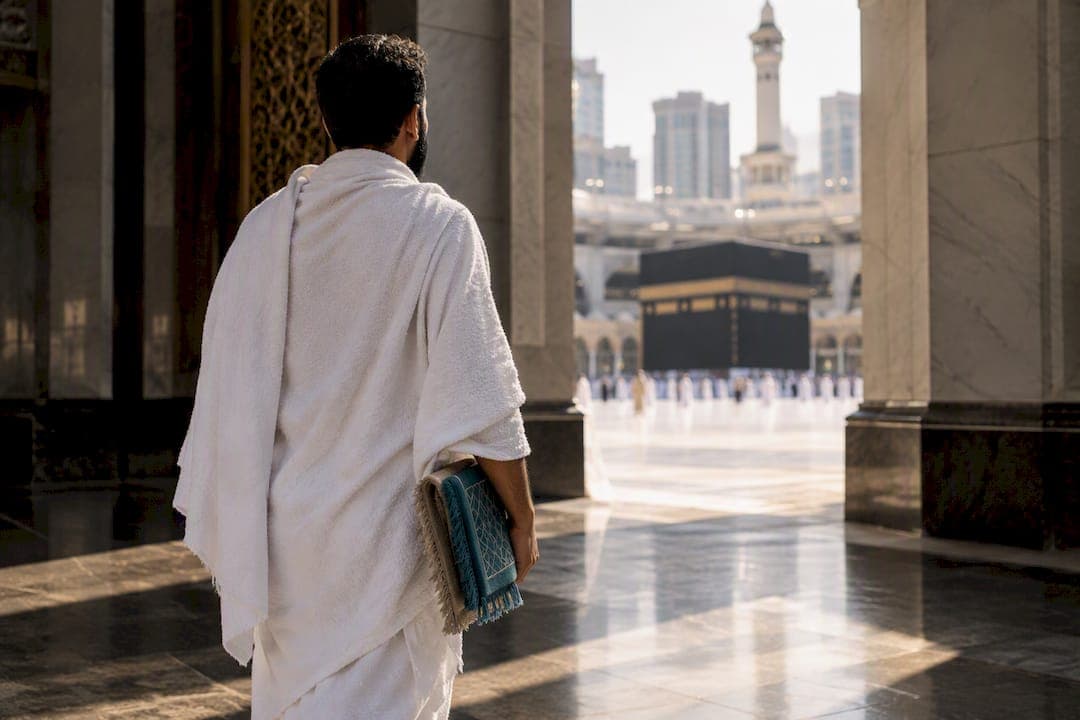
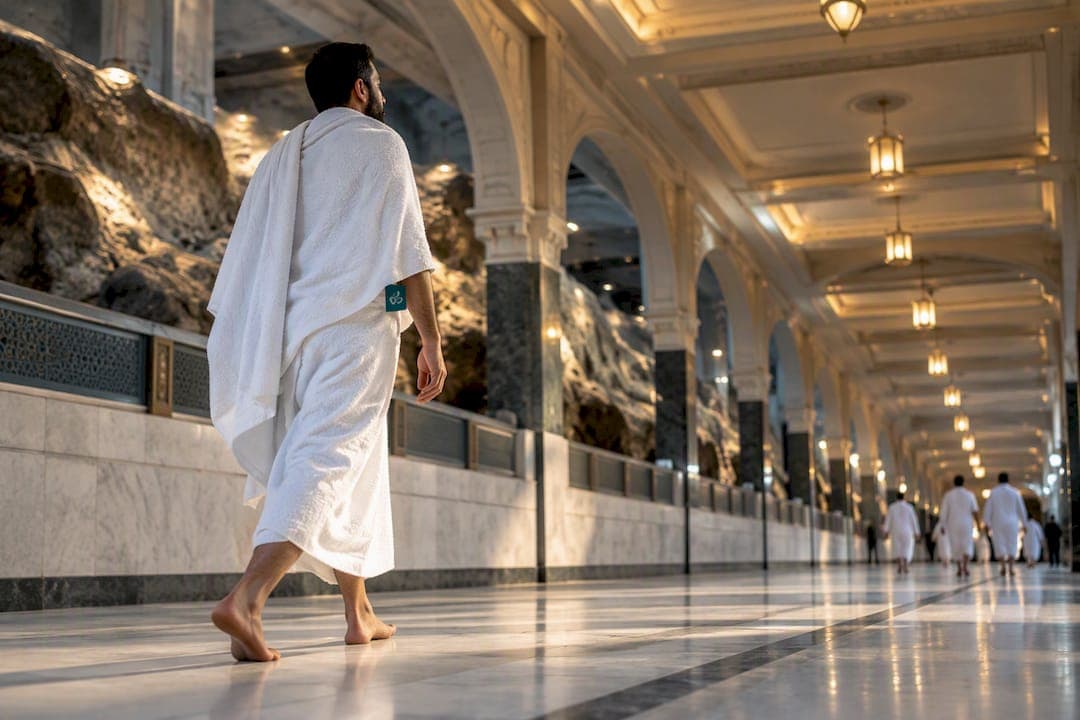
Ramadan delivers the highest spiritual weight of any month for Umrah, and that’s exactly why it’s also the busiest and most expensive period. Providers report the last nights fill fastest of all since demand for that window outpaces almost every other date on the calendar. If Ramadan is your goal, plan for higher fees and a longer wait for confirmed slots.
Winter, roughly during the cooler months, is the comfort pick. Temperatures in the Kingdom sit far below summer extremes, and crowd levels stay moderate rather than peak. This tends to suit older family members or anyone requesting Badal Umrah on behalf of someone frail, where a calmer, cooler window matters more than timing it to a specific spiritual occasion.
Summer, June through August, is the budget play. Heat is intense, but crowds and prices both drop to their lowest point of the year, which makes it the natural choice for flexible travelers or families requesting Badal Umrah with cost as the deciding factor.
Then there’s the Hajj pause. Umrah is routinely suspended for non-pilgrims during the days surrounding Hajj itself, a window that shifts slightly each year on the lunar calendar. A few practical windows worth knowing:
- Ramadan: maximum reward, maximum demand, book earliest.
- Winter (November to February): mild weather, moderate crowds, comfortable for elderly requests.
- Summer (June to August): hot, but the cheapest and least crowded stretch of the year.
- Post-Ramadan and post-Hajj weeks: crowds thin out fast and availability tends to open back up.
Never assume last year’s Hajj-pause dates apply this year. Confirm the current window through Nusuk before locking anything in.
How Do Nusuk and Official Calendars Decide Which Dates You Can Book?
The Ministry of Hajj and Umrah controls the calendar, and Nusuk is the tool that shows you what’s actually open. Here’s how the pieces connect:
- The Ministry announces the season first. For the 1448 AH season, visa issuance and arrivals opened May 31, 2026, Nusuk permits opened June 1, 2026, and the visa issuance deadline runs through March 9, 2027. Those dates set the outer boundaries for every Badal Umrah booking made that year.
- Nusuk displays live permit availability. This is the authoritative source for whether a specific date window is currently open, not a travel blog, not a provider’s marketing page.
- Permit and visa windows determine what your provider can actually deliver. A representative can’t perform Umrah on your behalf outside an open permit window, no matter how much you’re willing to pay.
- Check before you pay, not after. If your preferred date falls outside the open window, ask your provider for the nearest available alternative rather than insisting on a fixed date that isn’t bookable yet.
Skipping this step is the single most common reason a Badal Umrah request gets delayed. Reading the calendar first takes five minutes; reading it after payment costs you weeks.
Step-by-Step: How to Pick and Lock In Your Badal Umrah Date
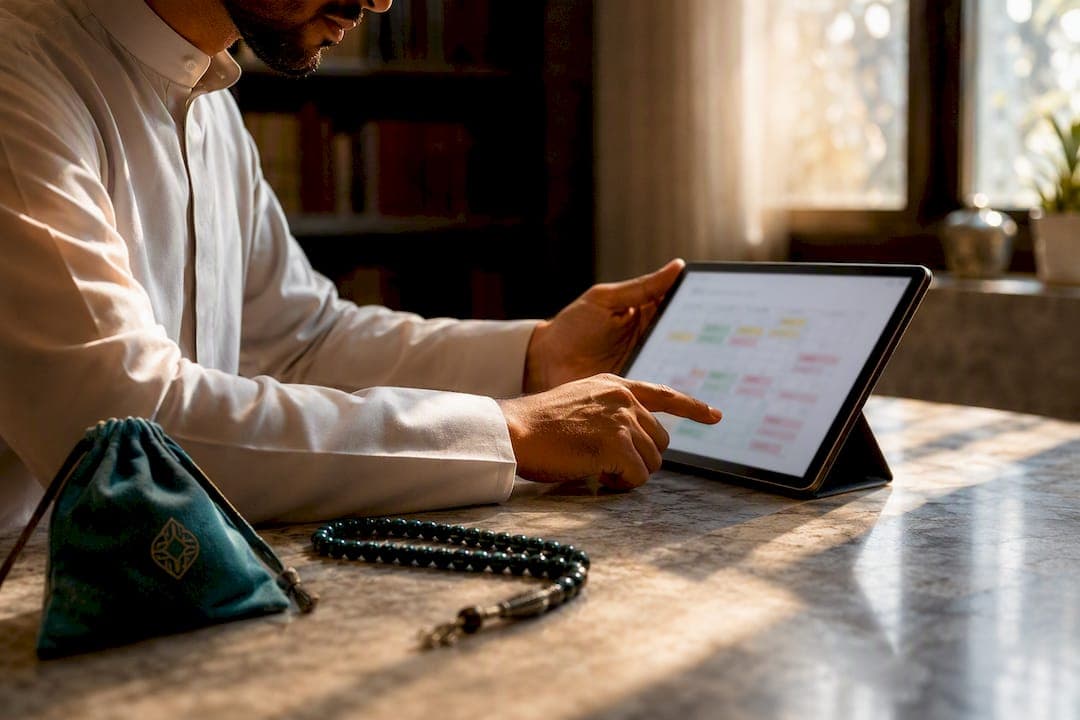
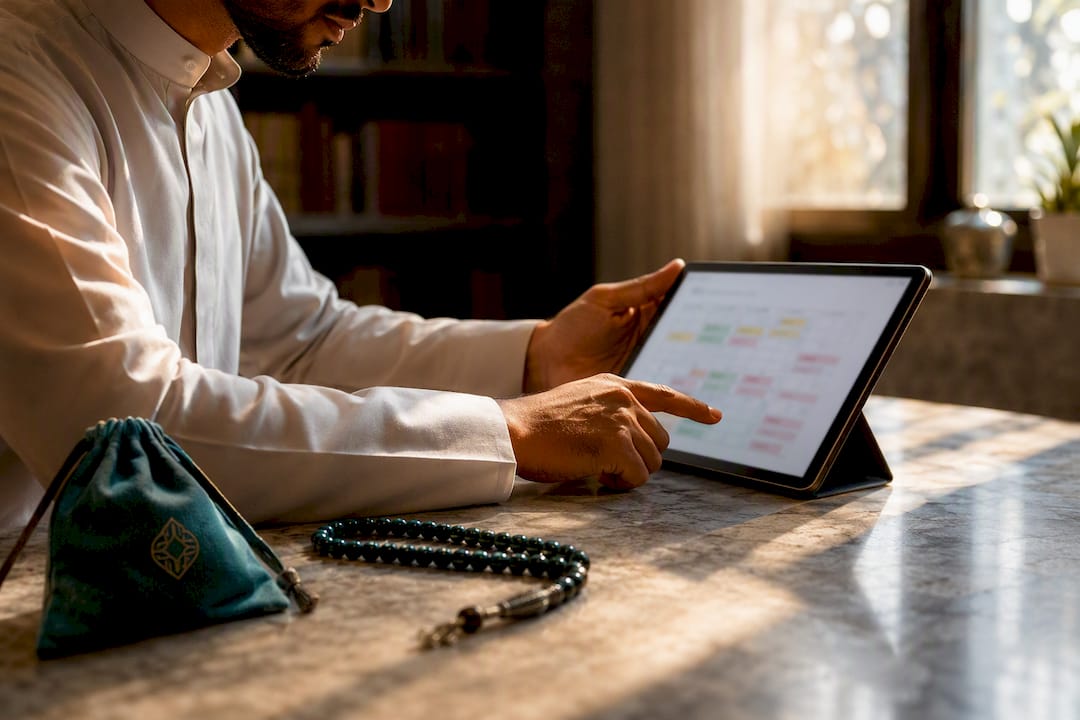
- Decide your priority first. Are you optimizing for spiritual timing (Ramadan), comfort (winter), or cost (summer)? Pick one; trying to optimize for all three usually means picking none well.
- Check the current season dates and Nusuk permit status for your candidate window before doing anything else.
- Contact your Badal Umrah provider with a range of acceptable dates, not a single fixed day. Ramadan slots move fastest of any period, so flexibility improves your odds.
- Confirm documentation and any health guidance. Follow your provider’s instructions and check official travel health guidance for Hajj and Umrah if vaccinations or health notices apply to your situation.
- Pay and get written confirmation of the scheduled date, plus the exact proof format (certificate, photos, video) and delivery timeline.
- Follow up if proof runs late. Ask for timestamps or escalate through the provider’s support channel if the delivery window passes without word.
Pro Tip: Submit two or three acceptable dates instead of one fixed day. Providers can often shift you into the next open slot in a range far faster than they can force a single locked date through a closed permit window.
How Far Ahead Should You Book for High-Demand Dates?
Lead time depends entirely on which window you picked in the last section.
- Ramadan, especially the last ten nights, needs the longest runway. Demand spikes months in advance, and slots are allocated on a first-come, first-served basis once permits open.
- Some providers accept date reservations a full season ahead of Ramadan, which is worth asking about directly if that’s your target window.
- Summer and shoulder seasons usually allow shorter lead times, though it’s still worth confirming directly with your provider rather than assuming availability.
- Build in a buffer for visa and permit deadlines. Official windows occasionally shift, and seasonal patterns change year to year, so what worked last year isn’t guaranteed to repeat.
Booking two or three months out gives you room to adjust if your first-choice date closes unexpectedly. Booking a week out for Ramadan almost never works.
Who Can Request Badal Umrah, and What Do You Need to Provide?
Badal Umrah exists for a specific reason: someone who cannot travel due to illness, advanced age, or death, still fulfills the ritual through a trusted representative. If you’re weighing eligibility questions, the guide to who can request Badal Umrah and the Islamic rulings on performing Umrah for others both cover the religious basis in detail.
On the practical side, expect to provide:
- Identity details for the person on whose behalf Umrah is being performed.
- Any permission or authorization forms your provider requires.
- Health advisories to review ahead of time, particularly if your provider references official travel health guidance.
For verification, most providers deliver a certificate of completion, photos, and video, often within about 5 to 10 working days after the ritual is performed, according to Badal Umrah service support guidance. If what you receive falls short of what was promised, check the provider’s escalation and refund policy, and keep every payment receipt and contract copy on hand.
How Have COVID-19 and Other Health Restrictions Affected Umrah Dates?
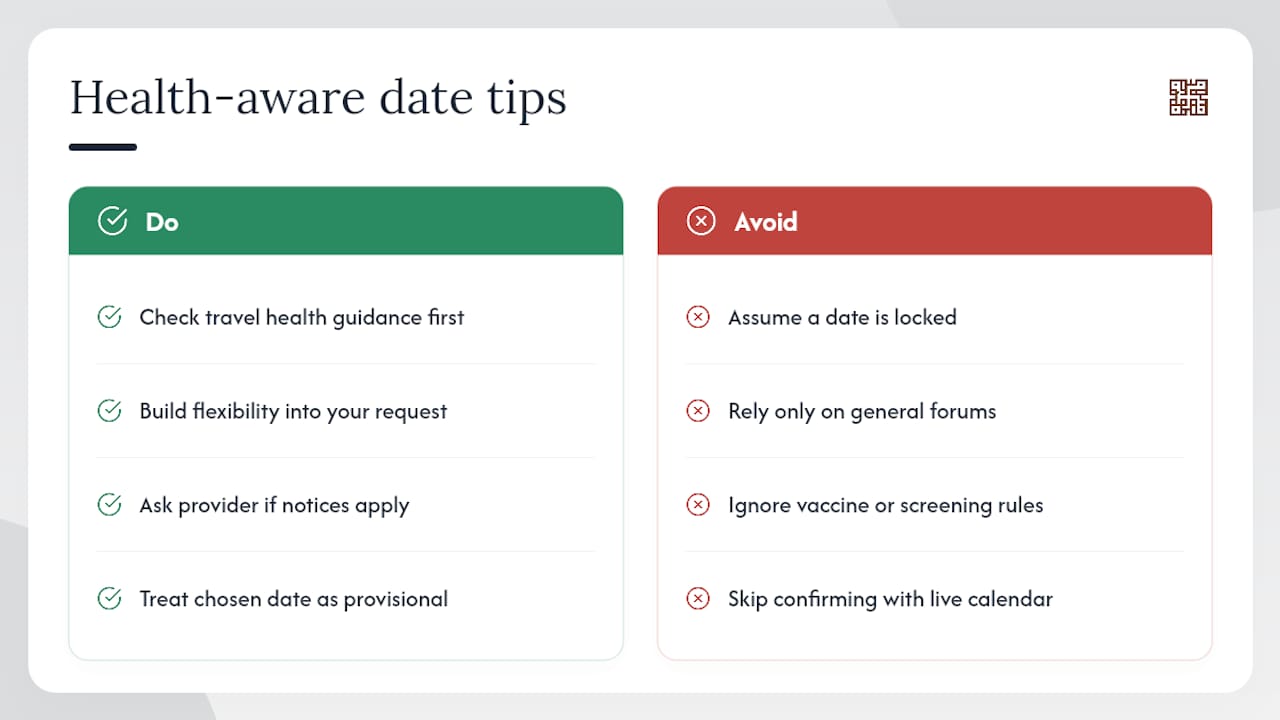
Health emergencies have reshaped Umrah scheduling before, and it can happen again without much warning. During periods of heightened public health concern, authorities have tightened or paused permit issuance, capped daily visitor numbers, or added vaccination and health-screening requirements before a date could be confirmed.
For anyone choosing a Badal Umrah date, the practical lesson is this: official windows aren’t static. A date that’s open today can close on short notice if a health advisory changes the picture. That’s why checking travel health guidance before you commit to a specific window matters just as much as checking the season calendar itself.
Build a small amount of flexibility into your request. If you’re choosing dates on behalf of an elderly or ill family member, ask your provider directly whether any current health notices apply to the window you want, and whether they’ve seen recent shifts in permit availability tied to health policy. Providers who work through Nusuk regularly stay closer to these changes than a general travel forum ever will, simply because their bookings depend on the same permit system reacting in real time.
Treat any date you pick as provisional until your provider confirms it against the live calendar, not as locked the moment you decide on it.
What Mistakes Do People Make When Choosing a Badal Umrah Date?
The most common mistake is picking a single fixed date and refusing to budge, then discovering it falls in a closed permit window or lands right before the Hajj pause. Flexibility with a range of two or three acceptable dates avoids most of this problem outright.
A second mistake is assuming last year’s crowd and price patterns will repeat exactly. They usually rhyme, Ramadan is always busiest, summer is always calmer, but exact dates and permit windows shift with the lunar calendar and official announcements each year.
A third mistake is paying before confirming Nusuk availability. Some readers assume that once a provider accepts payment, the date is automatically secured. It isn’t, permit windows still govern what’s actually possible, and a provider can only work within what’s open.
A fourth mistake is underestimating lead time for the last ten nights of Ramadan. Demand there outpaces every other period on the calendar, and slots close early. Waiting until a month out to start the process for that window usually means missing it entirely.
Finally, some readers skip asking about proof timelines upfront, then feel anxious when photos or a certificate take longer than expected to arrive. Asking for a written delivery timeline before you pay removes that uncertainty from the start.
How Does Weather Actually Shape Your Date Choice, Beyond Just Heat?
Heat gets most of the attention, but weather affects your Badal Umrah date choice in a few less obvious ways too.
Humidity spikes during certain summer stretches, which makes even short outdoor movement around the Grand Mosque feel harder on elderly or ill family members than the temperature alone suggests. If you’re choosing a date for someone with health limitations, winter’s drier, cooler air is often the gentler pick even if the spiritual timing matters less to your family.
Ramadan’s date shifts by about ten to eleven days earlier each year on the Gregorian calendar, since it follows the lunar cycle. That means Ramadan can fall in cooler months one year and in peak summer heat a decade later. Check where Ramadan lands on the calendar for the specific year you’re booking rather than assuming it always coincides with mild weather.
Rain is rare in the region but does occur in isolated winter storms, occasionally affecting short-term logistics around ritual scheduling. It’s a minor factor compared to heat, but worth a passing question to your provider if your date falls in a winter month.
None of these weather factors should override your main priority, reward, comfort, or cost, but they’re worth weighing if you’re choosing on behalf of someone whose health is a real concern.
Do Weekends or Weekdays Change Crowd Levels and Costs?
Within any given season, the day of the week still moves the needle on crowding, even though it matters less than the broader seasonal calendar.
Weekend nights, particularly Thursday and Friday in the Saudi week, tend to draw larger local and regional crowds to the Grand Mosque, since pilgrims and residents alike have more free time to visit. That translates into a busier atmosphere and occasionally slightly higher costs for services tied to peak demand periods.
Weekday dates, by contrast, tend to run calmer. If your main priority is minimizing crowd density rather than chasing a specific spiritual date, aiming for a weekday within your chosen season is a reasonable secondary filter, especially once you’ve already settled on Ramadan, winter, or summer as the broader window.
That said, this effect is modest next to the seasonal swing. A weekday in Ramadan is still far busier than a weekend in July. Use the day-of-week factor as a tiebreaker between two otherwise similar dates, not as your primary decision point.
How Do You Coordinate Badal Umrah Dates Across Family or Group Requests?
When multiple family members want Badal Umrah performed for different relatives, or a group wants dates to align around a shared occasion like a death anniversary, coordination gets trickier than a single booking.
Start by agreeing on one shared priority as a family, whether that’s Ramadan for maximum reward, or a calmer season if the group includes elderly decision-makers who want to avoid the crowd and heat of peak months. Trying to satisfy five different individual preferences at once usually means missing every window.
Submit requests together where possible, since bundling multiple names under one provider inquiry often simplifies communication and keeps everyone’s proof documentation organized under a single point of contact rather than scattered across separate bookings. If your family wants Umrah performed for several deceased relatives around the same period, ask your provider whether they can align completion dates closely together, even if the rituals themselves are performed as separate acts.
Build in extra lead time for group requests. Coordinating calendars across several people naturally takes longer than a single individual decision, and high-demand windows like Ramadan won’t wait for a family group chat to reach consensus.
Why Working With a Specialized Provider Reduces the Guesswork
Choosing a date is only half the job. Someone still has to translate that date into an actual confirmed permit slot, and that’s where a specialized Badal Umrah provider earns its place. Experienced services track Ministry announcements and Nusuk permit windows directly, then match client date preferences against what’s genuinely open, rather than promising a fixed date and hoping the calendar cooperates.
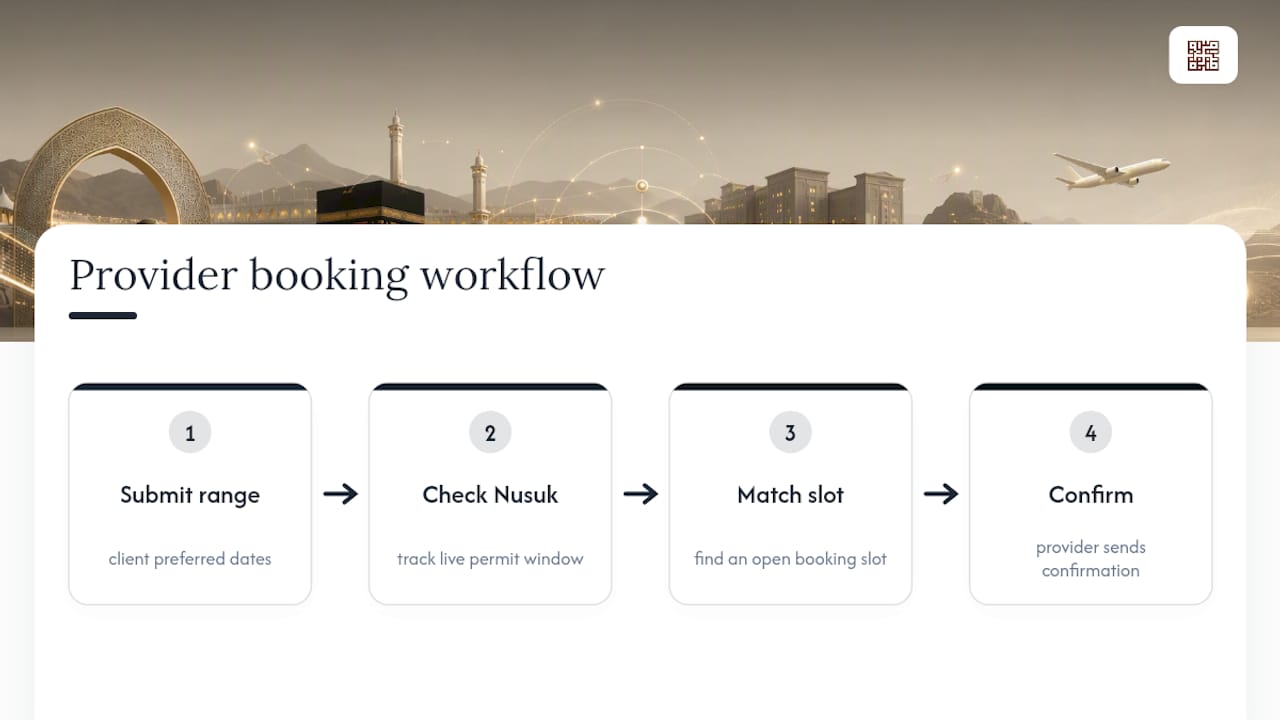
During peak months like the last ten nights of Ramadan, providers that maintain rolling slot reservations with local teams can often secure a place within a requested range even after individual dates close to new bookings. That operational groundwork is invisible to the client, but it’s the difference between a request that gets fulfilled on time and one that stalls for weeks.
— anas
Choose Your Date, Then Let Badal Umrah Handle the Calendar
Badal Umrah gives you a direct path to securing a specific date range without personally tracking Nusuk permit windows or Ministry announcements yourself, that legwork is handled on your behalf. Each package is built around the same core promise: a trusted representative performs Umrah on behalf of your loved one, with documented proof to confirm it happened.
The Du’a Package at $150 covers the essentials for readers who want an affordable, date-requested service.
The Noor Package at $250 adds photo and video documentation for families who want stronger visual proof tied to their chosen date. For readers who want extended coverage, the Barakah Package at $400 includes fuller video documentation, and the Jariyah Premium Package at $500 offers the most complete proof tier available.
Before you book, decide your priority season, gather the names and details of who the Umrah is being performed for, and have a range of two or three acceptable dates ready. Browse the full Umrah Packages collection to compare what fits your family’s date and budget, then submit your preferred window and let the team confirm it against the current Nusuk calendar.
Sources
Confirm every date decision against the Ministry’s season announcement and Nusuk’s live permit calendar first. Review official travel health guidance if health advisories apply to your situation, and check the Badal Umrah FAQ for proof formats and turnaround expectations before you pay.
- Hajj Ministry Announces Umrah Season for 1448 AH — Saudi Press Agency
- Best time to perform Umrah (2026): Weather, Crowds & Prices — Al‑Maqam
- Badal Umrah service FAQs — Muslim Pro Support
- Hajj and Umrah — travelhealthpro
FAQ
When does the Umrah season typically open?
Season opening dates shift each year based on the lunar calendar and Ministry announcements. For the 1448 AH season, visa issuance and arrivals began May 31, 2026, with Nusuk permits opening June 1, 2026, so always check the current year’s announcement rather than assuming a fixed date.
Which miqat applies for a second Umrah?
For a second Umrah performed during the same trip, pilgrims typically travel to a nearby miqat point outside the Haram boundary, such as Masjid Aisha (Tan’im), to enter a fresh state of ihram. This applies to travelers performing their own second Umrah rather than to Badal Umrah, which is performed on behalf of someone else entirely.
Which month has the fewest crowds for Umrah?
Summer months, June through August, tend to bring the lowest crowd levels and the lowest prices of the year, largely because the heat discourages casual travel. Winter comes second in terms of lighter crowds while still offering comfortable weather.
How do I book Badal Umrah for a specific date?
Decide your priority season, then contact a provider with a range of acceptable dates rather than one fixed day, since flexibility improves your chances during high-demand periods. Packages like the Noor Package and Barakah Package let you request a date window while the provider confirms availability against the current Nusuk calendar.
How long does it take to get proof that Badal Umrah was completed?
Most providers deliver a certificate, photos, and video as proof, often within about 5 to 10 working days after the ritual is performed. Ask your provider for a written delivery timeline before you pay, so you know exactly what to expect and when to follow up if it runs late.