- custom duas badal umrah
- badal umrah dua timing
- multiple duas badal umrah
- dua requests badal umrah
- dua for someone doing umrah
- unique duas for umrah
- custom supplications umrah
- dua for intercession umrah
- badal umrah prayer requests
- personalized duas for umrah
5 Ready Duas for Badal Umrah: Niyyah Wording and Proofs
Published on Sep 20, 2026
5 Ready Duas for Badal Umrah: Niyyah Wording and Proofs
Yes, personalized duas are valid during Badal Umrah when you set the correct niyyah and the beneficiary meets the eligibility conditions. The first step is not the wording of your dua. It’s confirming who you’re performing for, whether they’re deceased or permanently unable to travel, and whether you have permission if they’re still living. Get that right before you enter Ihram, and your custom dua carries full weight.
TL;DR:
- Only the person on whose behalf the pilgrimage is performed can have a valid niyyah; multiple beneficiaries require separate rituals with distinct niyyahs.
- Custom duas during Badal Umrah are permitted and should be made sincerely during specific moments like Tawaf, Sa’i, or shaving, but they do not replace standard ritual supplications.
- Validity depends on confirming the beneficiary’s eligibility, with deceased individuals and permanently incapacitated people qualifying automatically, while living beneficiaries need explicit permission.
- Providers should supply clear, personalized proof such as certificates, photos, and videos showing the ritual performed on the correct beneficiary’s behalf, ideally with timestamps and the beneficiary’s name.
- The official niyyah phrasing typically involves declaring intention just before Ihram using a formula like “Labbaik Umrah’an 'an [Name],” with the beneficiary’s actual name inserted.
Table of Contents
- What Is Badal Umrah, and Where Do Custom Duas Fit In?
- Who Qualifies for Badal Umrah, and How Do You Word the Niyyah?
- When Should You Make Personal Duas During the Umrah Rituals?
- How Do You Write a Custom Dua for Someone Else’s Umrah?
- Can One Umrah Cover Multiple Beneficiaries?
- What Should You Ask a Badal Umrah Provider to Prove?
- Why Sincerity Matters More Than Perfect Wording
- How Badalumrah Documents Your Custom Dua
- Sources
- FAQ
What Is Badal Umrah, and Where Do Custom Duas Fit In?
Badal Umrah means one person performs the pilgrimage rituals on behalf of another, dedicating the entire act through niyyah rather than personal presence. The rituals themselves don’t change. Tawaf, Sa’i, and the trimming of hair all happen exactly as they would in a regular Umrah, with the ritual mechanics staying identical to a standard pilgrimage. What shifts is the intention behind it.
That’s where custom duas come in. A personalized supplication doesn’t replace any required ritual wording. It sits alongside it, an added layer of connection between the performer, the beneficiary, and the act itself. Think of the niyyah as the legal contract and the custom dua as the personal letter attached to it. Both matter, but they do different jobs. Miss the niyyah, and the Umrah doesn’t count for the intended person. Skip the personal dua, and the Umrah still counts, but you’ve lost a chance to make the moment mean something specific.
Who Qualifies for Badal Umrah, and How Do You Word the Niyyah?
Not everyone qualifies for a proxy pilgrimage, and getting this wrong undermines the entire arrangement. Established guidance on proxy Umrah draws a clear line between people who can and can’t have someone else perform on their behalf.
- Deceased individuals qualify without restriction, and no permission is needed since the obligation transfers to family or a representative.
- Permanently incapacitated people (severe chronic illness, advanced age, disability that makes travel impossible) generally qualify too.
- Temporary illness or scheduling conflicts typically do not qualify. If someone can reasonably recover or rearrange travel, Badal Umrah isn’t the intended remedy.
- Living beneficiaries need to give explicit permission before you perform on their behalf. Verbal or written consent both work, but silence or assumption doesn’t.
For the niyyah itself, most guides recommend stating the intention just before entering Ihram, either aloud or in the heart, using a formula like: “Labbaik Umrah’an 'an [Name]”, meaning “Here I am, performing Umrah on behalf of [Name].” Insert the beneficiary’s actual name, not a general reference. Scholarly opinions vary slightly on phrasing and timing, so if your situation involves any ambiguity, a local imam or trusted scholar can settle it in minutes.
When Should You Make Personal Duas During the Umrah Rituals?
Timing your custom dua right means understanding the rhythm of the pilgrimage instead of forcing a pause where one doesn’t belong. The niyyah happens once, before Ihram. Everything after that is an opportunity for supplication, not a slot you need to fill.
The strongest moments for personal dua are:
- During Tawaf, especially between circuits or right after finishing the seventh round.
- At Maqam Ibrahim, immediately following Tawaf, where many pilgrims pause briefly for reflection.
- Before starting Sa’i, once Tawaf is complete and you’re transitioning between rituals.
- During the pauses within Sa’i, particularly atop Safa and Marwah.
- After trimming or shaving hair, which marks the close of Ihram and the completion of the Umrah on the beneficiary’s behalf.
None of these moments require replacing the standard ritual supplications. Your custom dua supplements them. Keep it brief, specific, and quiet enough not to disturb others around you performing their own rituals.
Pro Tip: Write your dua down beforehand, even just a few words on your phone. Standing at Maqam Ibrahim with hundreds of people moving around you is not the moment to compose something meaningful from scratch.
How Do You Write a Custom Dua for Someone Else’s Umrah?
A good custom dua for Badal Umrah is short, names the beneficiary directly, and states one clear request rather than a list of everything you hope for them. Here are five templates you can adapt:
- Forgiveness for a deceased parent or relative: “Allah, forgive [Name] and grant them ease in the grave. Accept this Umrah on their behalf.” (Allahumma ighfir li [Name] wa afihi wa’fu 'anhu.)
- Mercy for someone who has passed: “Allah, have mercy on [Name] as You had mercy on [him/her] in this life. Let this act reach them as a source of light.”
- Ease and healing for a living relative unable to travel: “Allah, grant [Name] health and the strength they need, and accept this Umrah as a means of relief for them.”
- Sustained reward, or sadaqah jariyah, for a deceased loved one: “Allah, let the reward of this Umrah continue to reach [Name] long after this moment, as an ongoing charity on their behalf.”
- Guidance and protection for someone incapacitated: “Allah, protect [Name], ease their difficulty, and accept this act performed in their place.”
Say the beneficiary’s name and their relationship to you clearly in your mind, whether that’s “my mother,” “my late father,” or “my grandfather who can no longer travel.” Reciting the Arabic phrasing adds weight for many pilgrims, but the English meaning matters just as much if Arabic isn’t your first language. Combine these personal lines with the routine Sunnah supplications recited during Tawaf and Sa’i. Just keep your niyyah, made once before Ihram, distinct from these ongoing personal duas made throughout the ritual.
Can One Umrah Cover Multiple Beneficiaries?
No. Each Badal Umrah must be a separate ritual with its own dedicated niyyah for one person. You cannot intend a single Tawaf and Sa’i for your father and your grandmother at the same time, even if you loved them equally and want to honor both. Juristic guidance on this point is unambiguous: one Umrah, one beneficiary.
A common misconception is that intention can somehow be split or shared, since the physical ritual is identical either way. Reputable scholarship rejects that idea outright. The niyyah is what defines who the act belongs to, and diluting it across multiple names voids the specificity the ritual requires.
If you want to perform Badal Umrah for more than one person, you have two practical paths:
- Perform separate Umrahs in sequence, exiting Ihram, returning to the nearest Miqat (or Masjid Aisha if you’re leaving Makkah), and renewing Ihram with a fresh niyyah for each person.
- Commission separate Badal Umrah bookings through a provider, one package per named beneficiary, and request individual proof for each.
If you’re arranging this through a service rather than traveling yourself, insist on distinct documentation per beneficiary. One certificate covering two names is a red flag, not a shortcut.
What Should You Ask a Badal Umrah Provider to Prove?
Paying someone to perform Umrah on your behalf means you’re trusting them with something deeply personal, and a reliable provider should make verification easy rather than something you have to chase down. Service FAQs across the industry generally agree on what buyers should expect as proof.
At minimum, ask for:
- A certificate naming the specific beneficiary, not a generic template.
- Photos of the representative performing Tawaf and Sa’i, timestamped where possible.
- A short video clip showing the ritual in progress.
- The representative’s name, and ideally some form of identification or verification.
- The exact date and time the Umrah was performed.
It’s also worth asking directly whether the representative will say the beneficiary’s name in the dua on camera, and whether the niyyah wording itself will appear anywhere in the documentation. Reputable providers who publish clear package descriptions and imam verification treat this as standard practice, not an unusual request. Vague answers, missing certificates, or reluctance to name a representative are signs to look elsewhere.
Why Sincerity Matters More Than Perfect Wording
The technical details around niyyah and eligibility exist for a reason, but I think readers spend too much time worrying about getting the Arabic phrasing exactly right and not enough time asking whether the intention behind the whole arrangement is sound. A short, sincere dua said with genuine focus at Maqam Ibrahim outweighs a beautifully worded one recited without presence of heart.
I’d also caution against treating Badal Umrah as a convenience option for someone who could travel but simply doesn’t want to. It exists for the deceased and the genuinely incapacitated, not as a substitute for effort. And whoever you commission to perform it deserves the same respect you’d expect if you were paying someone to carry your own worship. Verify them. Ask questions. Don’t let a sacred act become a checkbox.
— anas
How Badalumrah Documents Your Custom Dua
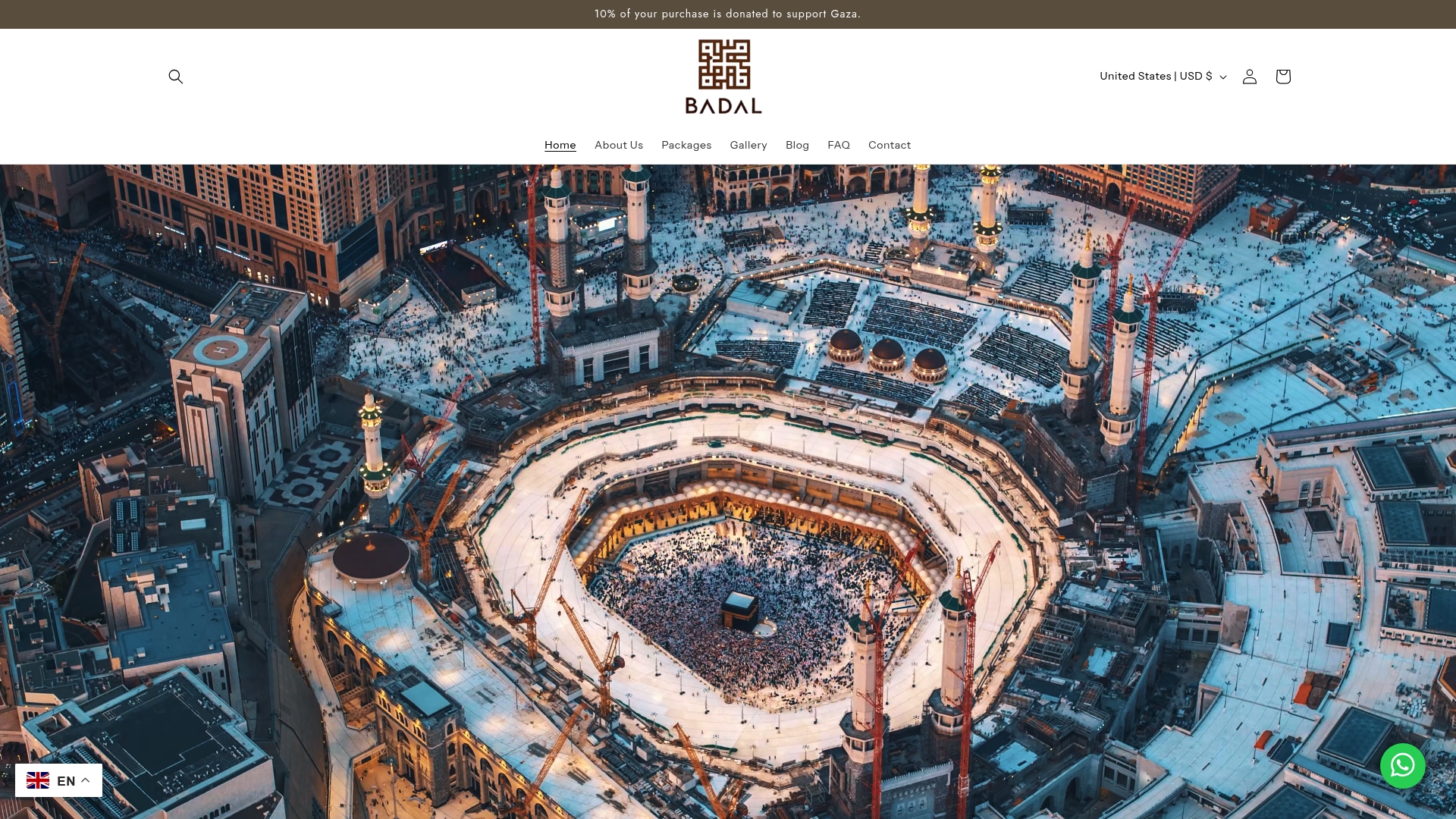
Once you know what to ask for, choosing where to book becomes much simpler. The service is designed to provide transparency with named representatives, timestamped proof, and documentation tied to one beneficiary at a time, avoiding bundled or generic reports.
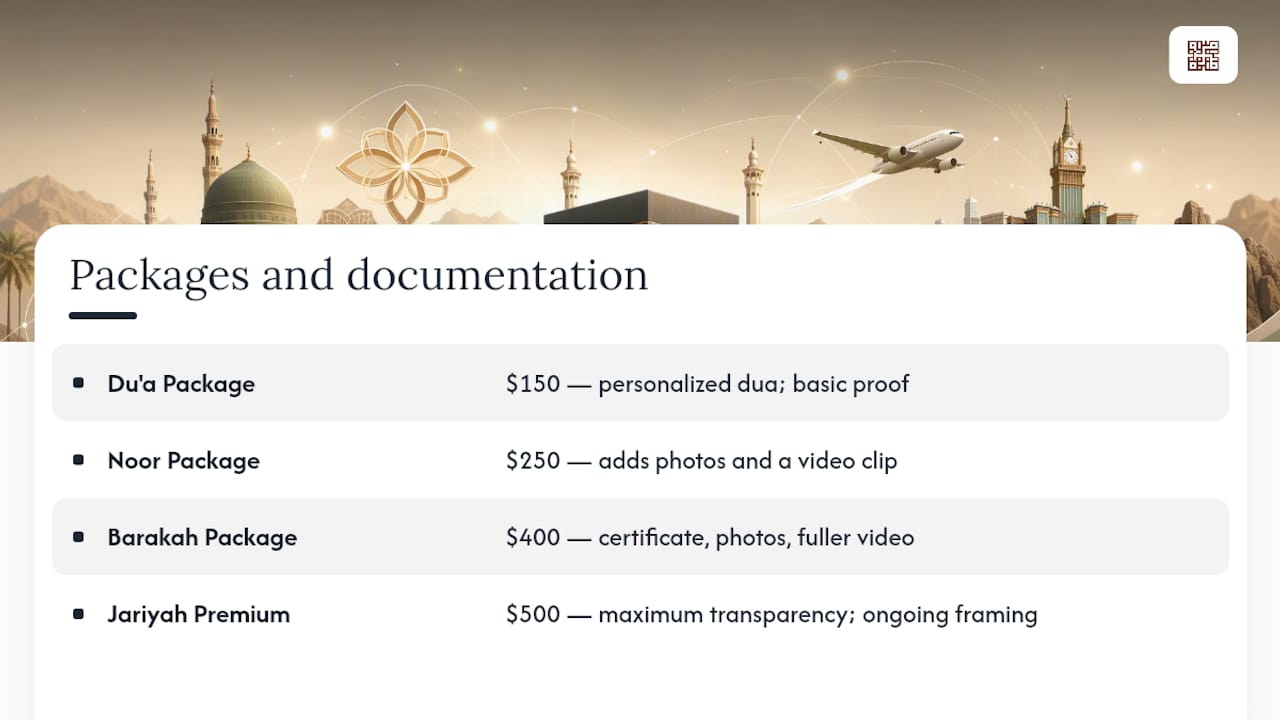
The Du’a Package at $150 covers the essentials for a personalized dua and basic proof of completion. If you want photos and a video clip showing the ritual performed on your loved one’s behalf, the Noor Package at $250 adds that layer. For families who need a full certificate alongside richer documentation, the Barakah Package at $400 covers certificate, photos, and fuller video. Donors seeking maximum transparency and ongoing charitable framing can look at the Jariyah Premium Package at $500.
When you book, you’ll supply the beneficiary’s name and, if they’re living, confirm their permission. From there, review the step-by-step process, check the FAQ page for anything specific to your situation, and select the package that matches the documentation you need.
Sources
For readers who want to verify the juristic details directly, these sources cover the rules on separate niyyah, eligibility, and proxy pilgrimage in more depth:
- IslamQA: Performing Umrah on behalf / rules about multiple Badal Umrahs
- Umrah Badal (Proxy Umrah) | Complete Guide to Performing Umrah on Behalf of Others — Glory Travel & Tours
- Can you perform Umrah on behalf of someone else? — AlKareem Travel
- Badal Umrah service FAQs — MuslimPro support
Where your specific situation involves ambiguity, consulting an imam or local scholar remains the safest route.
FAQ
Can I make up my own dua during Badal Umrah?
Yes, personalized duas are encouraged during moments like Tawaf, at Maqam Ibrahim, and during Sa’i, as long as they supplement rather than replace the required ritual words. Keep the wording specific to the beneficiary and sincere rather than long or rehearsed.
Do I need permission to perform Badal Umrah for a living relative?
Yes, explicit permission from the living beneficiary is generally required before you perform Umrah on their behalf, while permission is not needed for someone who has passed away.
Can one Umrah be dedicated to more than one person?
No, each Badal Umrah requires its own distinct niyyah for a single beneficiary. If you want to cover multiple people, you need separate rituals or separate bookings for each.
What proof should a Badal Umrah service provide?
Expect a named certificate, photos of the Tawaf and Sa’i, and a short video clip showing the ritual performed, along with the representative’s name and the date it took place. Badalumrah’s packages range from the Du’a Package at $150 up to the Jariyah Premium Package at $500, depending on the documentation level you need.
What is the correct niyyah wording for Badal Umrah?
A common phrasing is “Labbaik Umrah’an 'an [Name],” stated just before entering Ihram with the beneficiary’s actual name inserted. Minor variations in wording exist among scholars, so consult an imam if you’re unsure which version applies to your situation.