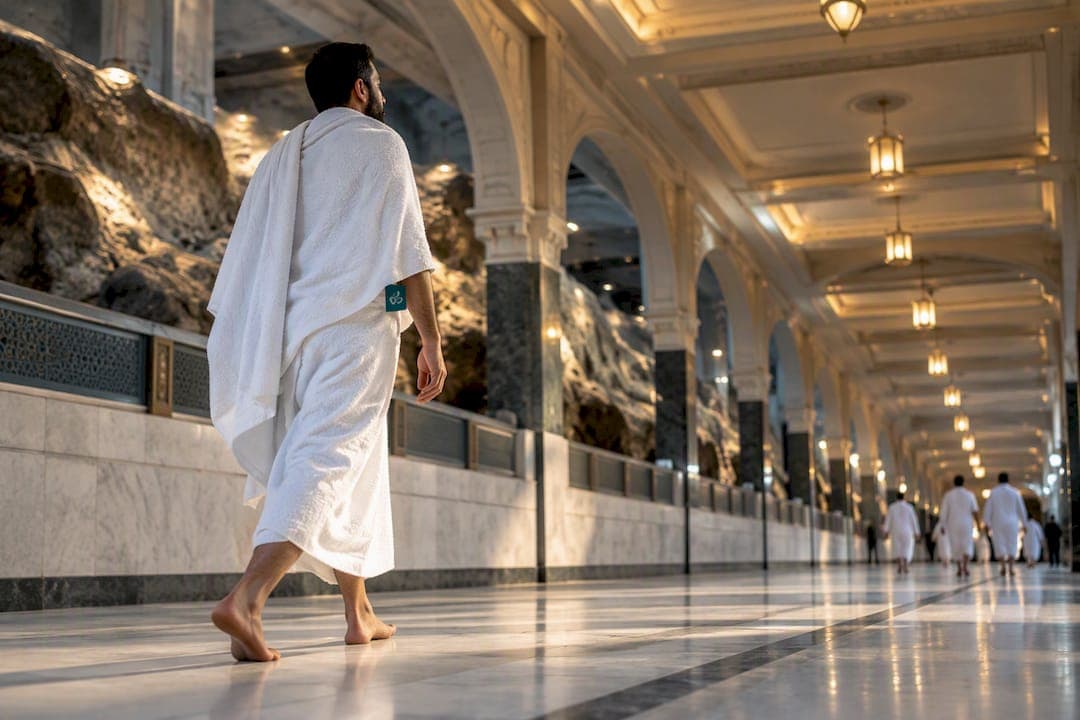
- umrah for bedridden patient
3 Verifiable Proofs for Umrah Delegation for Bedridden Patients in Saudi
Published on Sep 14, 2026
3 Verifiable Proofs for Umrah Delegation for Bedridden Patients in Saudi
Yes, Umrah can be performed on behalf of a bedridden patient through a trusted representative, a practice known as Badal Umrah, and it is religiously permitted for those with a permanent or long-term inability to travel. The first step is not booking anything. It is confirming the person’s condition genuinely qualifies and getting their written consent while they can still give it. From there, the process covers who is eligible, how the representative performs the rites, what paperwork protects everyone, and what proof should land in your inbox once it’s done.
TL;DR:
- Delegating Umrah is only permitted for individuals with long-term or permanent physical incapacity, and explicit written consent from the patient is required beforehand.
- The representative must perform all rites with clear intention and proper documentation, including photos, videos, and signed certificates confirming the person’s identity and the date of completion.
- Necessary paperwork, such as IDs and authorization letters, should be prepared in advance to prevent disputes and ensure proof of the performed rites.
- Trustworthy services provide transparent pricing, proof samples before booking, and clear timelines, with red flags including vague promises and untraceable payments.
- After completion, families should receive dated photos, a video segment, and a signed certificate matching the original authorization to verify the validity of the Badal Umrah.
Table of Contents
- Is Umrah for a Bedridden Patient Actually Allowed?
- How Does the Representative Perform Umrah on Your Behalf?
- What Documents and Consent Do You Need?
- How Do You Choose a Trustworthy Representative or Service?
- What Proof Should You Expect After Completion?
- How Badalumrah Handles Documentation and Booking
- A Note on Dignity and Verification
- Primary Sources for Umrah Delegation Rulings
- Sources
- FAQ
Is Umrah for a Bedridden Patient Actually Allowed?
The short answer: yes, but with real conditions attached, not a blanket permission for anyone who’d rather skip the trip.
Mainstream scholarly opinion holds that delegating Umrah is valid for a living person who cannot perform it themselves due to old age or a chronic, irreversible illness. Consent from that living person is a required condition, not an optional courtesy. A bedridden parent, spouse, or grandparent who is mentally competent needs to agree to the arrangement before anyone books a representative on their behalf.
Saudi scholarly guidance draws a firm line here: you cannot appoint someone to perform Umrah for a person who is physically capable of doing it themselves. The permission exists specifically for incapacity, not convenience. That distinction matters for families weighing whether an elderly relative with mobility issues but no serious illness should try to travel first, perhaps with assistance, before turning to a proxy.
Where things get less clear is voluntary (nafl) Umrah for someone who has already fulfilled any obligation. Fatwa collections note real scholarly difference of opinion on this point, with some scholars urging caution about delegating optional acts of worship for the living. If your situation falls into that gray zone, treat it conservatively.
Before arranging anything, apply this practical test:
- Durable incapacity. The condition is chronic or degenerative, not a temporary illness likely to resolve within months.
- No reasonable recovery expectation. A doctor or the family reasonably expects the person won’t regain the ability to travel.
- Documented reasoning. Write down why the person qualifies. A short note referencing their diagnosis or age protects the family if questions arise later.
When a case sits on the edge, ask a local scholar and keep their answer alongside any medical documentation. That combination settles most disputes before they start.
How Does the Representative Perform Umrah on Your Behalf?
The rites themselves don’t change. What changes is whose name the representative carries through each step, and getting that sequence right is what separates a valid Badal Umrah from a confused one.
- Set the intention (niyah) before ihram. The representative states, internally or aloud, that they are entering ihram and performing Umrah on behalf of the named person. Scholars are clear that intention and the named person’s consent are the anchor points of a valid delegation.
- Enter ihram naming the patient. A simple, specific phrasing works: “I intend Umrah on behalf of [full name], and I have entered the state of ihram for this purpose.”
- Perform tawaf. Seven circuits around the Kaaba, carrying the same intention throughout.
- Perform sa’i. Seven passes between Safa and Marwah, still on the patient’s behalf.
- Complete hair cutting or trimming. This closes the rite and should be done by or for the representative as the final act of Umrah.
- Document everything. Timestamped photos, a short video clip of tawaf or sa’i, and a signed certificate naming the patient, the date, and the representative.
The most common mistakes aren’t dramatic. They’re small sequencing slips: an unclear or silent intention with no record of when it was made, a missed circuit during tawaf that goes uncounted, or hair trimming done out of order relative to the other rites.
Pro Tip: Ask the representative to state the intention out loud on camera for a few seconds before entering ihram. It costs nothing and removes any ambiguity about whose Umrah was actually performed.
What Documents and Consent Do You Need?
Paperwork feels unnecessary until someone asks for it later, usually a sibling who wasn’t part of the original decision. A short authorization file settles most disagreements before they become disagreements.
Keep these on hand:
- A copy of the patient’s ID.
- A medical note or summary, if one exists, describing the condition.
- A written authorization naming the representative and the approximate dates of the Umrah.
- Full names and ID numbers of both the patient and the representative.
- A signature from the patient, or a witnessed digital confirmation if signing by hand isn’t possible.
The authorization itself doesn’t need legal language. A single paragraph works: “I, [patient’s full name], ID number [X], authorize [representative’s full name] to perform Umrah on my behalf on [specific date or ‘at the earliest available date’]. Signed and witnessed by [witness name].” Keep a copy for the family and request that the representative reference these same names on the completion certificate.
How Do You Choose a Trustworthy Representative or Service?
Not every option that offers Badal Umrah delivers proof, and proof is the entire point when you can’t be there to see it yourself.
Look for a representative or service that can show:
- A track record specifically with Badal Umrah, not general Hajj or travel services bundled in as an afterthought.
- A clear, upfront commitment to photo, video, and certificate proof, spelled out before you pay.
- Transparent pricing with a stated refund policy if something goes wrong.
- A direct contact channel and someone who answers questions before booking, not just after.
Red flags are usually obvious once you’re looking for them: refusal to put the authorization in writing, vague promises about “sending something eventually,” requests for payment through untraceable or anonymous transfers, and no fixed timeline for when the Umrah will actually happen.
Before you book, ask to see a sample certificate, recent (not years-old) proof from another completed booking, and the cancellation terms in writing.
Pro Tip: A service that hesitates to show you a real, recent proof sample before you’ve paid anything is telling you something. Legitimate providers usually have this ready because they know families ask.
What Proof Should You Expect After Completion?
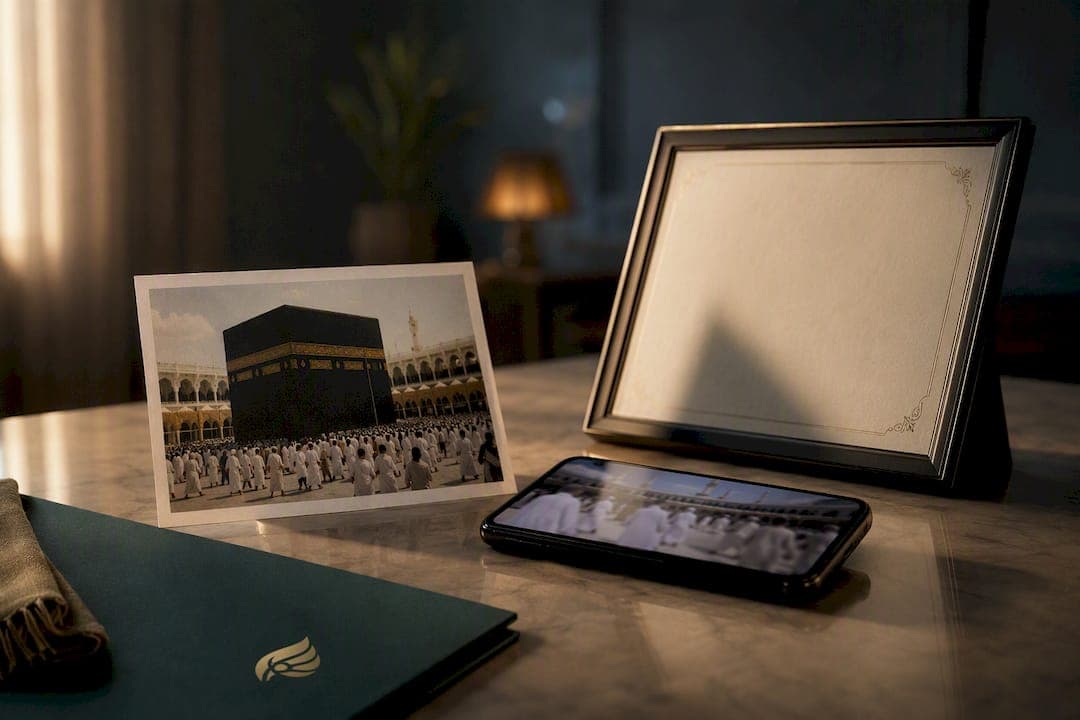
Once the Umrah is complete, you’re looking for three things: dated photos at the Kaaba, a short video segment of tawaf or sa’i, and a signed certificate stating whose Umrah was performed, by whom, and when.

Match the names and dates on that certificate against your original authorization. If a service can provide an itemized report, request one. It’s a small extra step that confirms the sequence was followed correctly.
If proof is missing, incomplete, or the names don’t match, don’t let it slide. Contact the provider’s dispute channel first, ask for a refund if the service failed to deliver, or request a witnessed repeat performance in genuinely justified cases. Photographic and documentary proof exists precisely to prevent this kind of ambiguity, and a reputable provider will treat a proof dispute seriously rather than brushing it off.
How Badalumrah Handles Documentation and Booking
Badalumrah specializes in Badal Umrah with the exact proof structure this article describes: signed certificates, dated photos, and video documentation tied to each booking. Packages range in what they include, and the Umrah Badal Barakah Premium Package adds live video alongside the certificate and photo set for families who want the strongest possible verification.
A trustworthy package should give you clear documentation, responsive customer support, and pricing you can see before you commit. That’s what to look for whether you book with Badalumrah or anywhere else, and it’s the standard Badalumrah builds its packages around. If you’re ready to compare tiers, the Umrah Packages page lays out what each option includes, and the FAQ page answers most booking questions before you need to ask them directly.
A Note on Dignity and Verification
Arranging Umrah for someone who can’t travel isn’t a transaction, even though it involves booking and payment. It’s an act of care for someone who wants their worship completed and can’t do it themselves. That’s why the documentation side of this matters as much as the fiqh side. A certificate and a video aren’t bureaucracy. They’re how you know the trust you placed in a stranger was honored.
Get the consent right, get the paperwork right, and ask for proof without apologizing for it. Families who do this well tend to be the ones who treated verification as part of the worship, not an afterthought to it.
— anas
Primary Sources for Umrah Delegation Rulings
The rulings referenced throughout this guide come from SeekersGuidance, IslamOnline, and Islam Q&A. Scholarly opinions vary by school and case, and this article summarizes the majority and more conservative positions among them.
Sources
- What Are The Rulings On Performing Hajj and ‘Umra on Behalf of Another? - SeekersGuidance
- Performing `Umrah on Behalf of Living Able People - IslamOnline
- ‘Umrah on Behalf of Someone Else Who is Alive? - Islam Q&A
FAQ
Can Umrah Be Performed for a Living Bedridden Person?
Yes, when the person has a permanent or long-term inability to travel and gives written consent, delegation is generally permitted.
Does the Patient Need to Give Consent Themselves?
Yes. For a living person, consent is a required condition for the Badal Umrah to be considered valid.
What Proof Should a Family Receive After Badal Umrah?
Expect dated photos at the Kaaba, a short video of tawaf or sa’i, and a signed certificate naming the patient, the representative, and the date completed.
Can Umrah Be Delegated for Someone Who Is Only Financially Unable?
No. Physical inability, such as old age or chronic illness, is the usual qualifying condition, not financial hardship alone.
How Long Does Badal Umrah Take From Booking to Completion?
Timelines vary by provider and package, but most services complete the rites and deliver documentation within a defined window stated at booking, which you should confirm before paying.
Does Badalumrah Provide Documentation for Badal Umrah?
Yes, Badalumrah’s packages include certificates, photos, and video proof, with a premium tier that adds live video documentation.