- umrah sacrifice requirement
- wheelchair tawaf validity
- umrah rituals and sacrifices
- umrah pilgrimage requirements
- sacrifice for umrah
- umrah animal sacrifice
- is sacrifice mandatory for umrah
- how to perform umrah sacrifice
- requirements for umrah
- types of sacrifices for umrah
Umrah Sacrifice: Shawwal, Travel, and When It Becomes Obligatory
Published on Oct 13, 2026
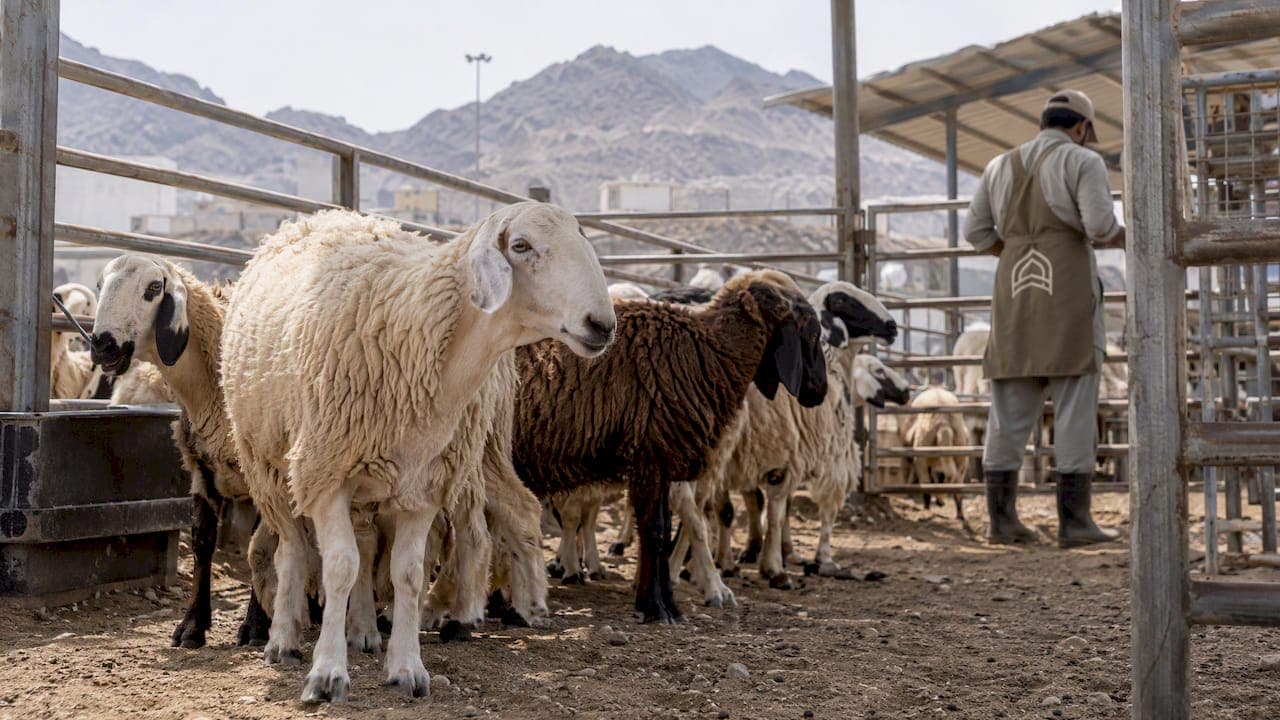

A sacrifice is not required for a normal standalone Umrah, since it remains optional rather than obligatory. It becomes obligatory, known as hady, only when Umrah is performed as part of Hajj Tamattu’ or Hajj Qiran in the same pilgrimage season. Separately, certain mistakes made during Umrah can trigger a compensatory damm or fidyah, regardless of whether hady applies.
TL;DR:
- Hady is due for Tamattu’ or Qiran when Umrah and Hajj occur in the same season, except for Makkah residents; one sheep fulfills it.
- Umrah in Shawwal alone creates no hady duty, but Hajj later that season generally triggers it; brief travel home usually does not cancel the obligation.
- Missing the miqat without entering ihram or violating ihram restrictions may require damm or fidyah, independently of hady; intercourse early in the rites can invalidate Umrah.
- If unable to provide hady, pilgrims may fast three days during Hajj and seven after returning; certain fidyah cases allow feeding six poor people.
- The sacrifice must occur within the Haram and reach poor people in Makkah; pilgrims using a proxy should request dated proof of slaughter and distribution.
Table of Contents
- When hady (sacrifice) is obligatory: Tamattu’ and Qiran explained
- Does Umrah in Shawwal or travel between Umrah and Hajj change the ruling?
- Damm and fidyah: mistakes during Umrah that require a compensatory sacrifice
- How to fulfill the sacrifice correctly: location, proxy rules, and proof
- Alternatives, timelines, and practical recommendations
- Scholarly evidence and key fatwas that support these rulings
- Types of animals eligible for sacrifice in Umrah and their specific requirements
- Detailed step-by-step procedure for performing the Umrah sacrifice
- Common mistakes and how to avoid invalidating the sacrifice
- Cost estimation and factors affecting the price of Umrah sacrifice packages
- Distribution rules of the sacrificed meat according to Islamic jurisprudence
- What pilgrims and families should keep in mind when arranging fulfillment
- FAQ
- Sources
- Primary sources and fatwas to read next
When hady (sacrifice) is obligatory: Tamattu’ and Qiran explained
Hady only enters the picture once Umrah is linked to Hajj in a specific way. Two arrangements trigger it. Tamattu’ means a pilgrim performs Umrah during the Hajj months, exits ihram, then enters a fresh ihram for Hajj later in the same season. Qiran means combining Umrah and Hajj under one continuous ihram without exiting in between. Both forms combine Umrah and Hajj, and the sacrifice is an act of gratitude for those arrangements.
According to Binbaz, hady is mandatory for Hajj Tamattu’ and Hajj Qiran, and it applies to every pilgrim except residents of Makkah itself. That exemption exists because the discount in effort that Tamattu’ and Qiran offer does not apply to people who already live near the Haram.
A single sheep typically satisfies the hady obligation, according to the same ruling, though a pilgrim may instead contribute a one-seventh share of a cow or camel.
A standalone Umrah with no Hajj attached does not itself trigger the hady obligation. The relevant points to hold onto:
- Tamattu’ combines Umrah and Hajj in one season with an exit from ihram in between.
- Qiran combines both rites under one uninterrupted ihram.
- Residents of Makkah are exempt from the hady obligation even if they perform Tamattu’ or Qiran.
- A standalone Umrah with no attached Hajj carries no sacrifice requirement.
Does Umrah in Shawwal or travel between Umrah and Hajj change the ruling?
Two timing questions come up constantly among pilgrims planning trips during the Hajj season. The first: does performing Umrah in Shawwal automatically make hady obligatory? The second: does traveling home between Umrah and Hajj cancel that obligation?
On the first question, the majority view holds that Umrah performed in Shawwal, Dhul Qa’day, or the early days of Dhul Hijjah does not by itself create a hady obligation. What matters is whether the pilgrim goes on to perform Hajj in that same season. If they do, the earlier Umrah is counted as the Umrah portion of Tamattu’, and hady becomes due.
On the second question, scholars differ on whether brief travel between the two rites breaks the Tamattu’ arrangement. A fatwa addressing this scenario notes that many scholars hold a pilgrim remains “mutamatti’” and hady stays due even after traveling home and returning for Hajj, as long as the Umrah fell within the Hajj months and the pilgrim did not establish a genuinely separate, unrelated Hajj-only trip. Some scholars allow exemption when the traveler truly returns as a fresh Hajj-only pilgrim, but this is the minority position.
- Umrah performed in Shawwal alone does not create a hady obligation.
- Hady becomes due once that same pilgrim performs Hajj later in the same season.
- Short trips home between the two rites generally do not cancel the Tamattu’ classification.
Pro Tip: When your itinerary is ambiguous, default to the majority view and budget for hady. Fulfilling an obligation that turns out unnecessary carries no penalty, while skipping one that was actually due does.
Damm and fidyah: mistakes during Umrah that require a compensatory sacrifice
Separate from hady, a range of mistakes during the rites themselves can trigger a compensatory sacrifice called damm or fidyah. These apply whether or not the pilgrim owes hady for Tamattu’ or Qiran.
Some violations may require fidyah, based on rulings from Islam Question & Answer and related fatwas:
- Passing the designated miqat without entering ihram, which requires a sacrifice slaughtered in Makkah if the pilgrim cannot return to the miqat.
- Intercourse during ihram before completing the required stages, which can invalidate the Umrah and require repeating it along with offering a sacrifice.
- Leaving sa’i or tawaf incomplete before exiting ihram may require guidance from a qualified scholar.
- Shaving or cutting hair before the rites that permit it may require guidance from a qualified scholar.
- Using restricted items without a valid excuse may require guidance from a qualified scholar.
Compensation generally takes one of a few forms. Islam Question & Answer explains that intercourse occurring after sa’i but before cutting hair may only require fidyah, with a choice between slaughtering a sheep, fasting three days, or feeding six poor persons, while intercourse earlier in the rites can invalidate the Umrah entirely.
A practical checklist for anyone who suspects a violation: confirm exactly which mistake occurred, sincerely repent, appoint a trustworthy proxy in Makkah if you cannot handle the slaughter yourself, and request certificate or video proof of both the slaughter and the distribution to the poor.
How to fulfill the sacrifice correctly: location, proxy rules, and proof
Where and how the sacrifice happens matters as much as whether it happens. A fatwa on entering ihram from inside Makkah instead of the required miqat confirms that the sheep must be slaughtered in Makkah and its meat distributed to the local poor for the expiation to count.
Intention alone does not fulfill the obligation. If you cannot travel to perform the slaughter personally, appointing a reliable proxy in Makkah is the accepted path, but the animal still has to be actually sacrificed and distributed, not merely paid for in principle.
- Confirm the sacrifice location falls within the boundaries of the Haram.
- Choose a proxy with a verifiable track record rather than the cheapest available option.
- Request a certificate and a dated video showing both the slaughter and the distribution.
- Keep that documentation on file in case the obligation is ever questioned.
Pro Tip: Ask any proxy service upfront how they document fulfillment. A provider that cannot produce dated proof is not one you should trust with a religious obligation.
Alternatives, timelines, and practical recommendations
Not every pilgrim can afford or access a sheep at the time of Hajj, and Islamic law accounts for that. BinBaz guidance on hady and fidyah describes fasting ten days as the accepted alternative to hady: three days during Hajj itself and seven after returning home.
For fidyah tied to specific violations rather than hady, the alternatives depend on which mistake occurred. Consult a qualified scholar about the applicable expiation.
- Fast three days during Hajj and seven more after returning home as a substitute for hady.
- Feed six poor persons as an alternative to slaughter for certain fidyah violations.
- Appoint a trusted proxy in Makkah and record proof whenever travel or circumstances prevent personal fulfillment.
- Treat any intentional violation with genuine repentance rather than viewing the sacrifice as a simple fee.
Scholarly evidence and key fatwas that support these rulings
These rulings rest on established fatwas rather than general opinion.
- Sheikh Ibn Baz confirms hady is obligatory for Tamattu’ and Qiran, satisfied by one sheep or its equivalents, and distinct from the optional Eid udhiyah.
- Rulings on damm and fidyah address mistakes like late miqat entry and intercourse violations, with fasting or feeding the poor as accepted alternatives.
- A standalone Umrah with no attached Hajj carries no comparable obligation, only an optional sacrifice offered purely for reward.
Types of animals eligible for sacrifice in Umrah and their specific requirements
The supported guidance identifies sheep, goats, cows, and camels as sacrifice options. A sheep or goat may fulfill the obligation on its own, while a one-seventh share of a cow or camel is another option, as described in the ruling on hady.
Requirements may apply to the animal’s age and condition. Ask a qualified scholar or trusted provider about the requirements for the animal.
Pilgrims arranging sacrifice through an authorized proxy do not need to select the animal personally. A trustworthy service can handle sourcing and provide details about the animal before slaughter, which may help travelers who cannot inspect livestock themselves. What does matter is confirming that whoever arranges the sacrifice on your behalf is slaughtering a qualifying animal inside the Haram boundaries, not simply collecting a payment and outsourcing the work without verification.
Detailed step-by-step procedure for performing the Umrah sacrifice
Fulfilling hady or fidyah correctly follows a consistent sequence, whether done personally or through a proxy.
- Confirm which obligation applies: hady for Tamattu’/Qiran, or fidyah for a specific violation during the rites.
- Select a qualifying animal, a sheep or goat for an individual obligation, or a share of a cow or camel.
- Arrange for the slaughter to take place within the boundaries of the Haram in Makkah, since location affects validity.
- Ensure the slaughter follows the requirements advised by a qualified scholar.
- The guidance describes distribution of the meat to the poor in Makkah as part of the sacrifice.
- Obtain documentation, ideally a certificate along with a dated photo or video showing the slaughter and distribution.
Pilgrims who cannot be physically present for any step, whether due to distance, health, or timing conflicts with other Hajj rites, commonly delegate the entire process to a proxy. The proxy’s role is to complete every step above faithfully and supply proof afterward, not merely to accept payment on the pilgrim’s behalf.
Common mistakes and how to avoid invalidating the sacrifice
Several avoidable errors can leave a pilgrim believing an obligation is fulfilled when it is not. The most frequent is paying for a sacrifice without confirming it was actually carried out inside the Haram and distributed to the poor. A fatwa on delegated sacrifices stresses that hady and fidyah must occur within Haram boundaries to be valid, regardless of who carries out the actual slaughter.
Ask a qualified scholar or trusted provider about the animal requirements before arranging the sacrifice. Another mistake is treating fidyah as a loophole, deliberately committing a violation because a sacrifice seems like an easy fix. IslamQA addresses this directly, cautioning that fidyah is an expiation for genuine mistakes, not a substitute for intentional negligence, and that sincere repentance matters alongside the ritual itself.
Another mistake is skipping documentation entirely. Without a certificate or dated proof, a pilgrim has no way to confirm the obligation was met, which matters if the fulfillment is ever questioned by family members or religious authorities. Insisting on verifiable proof at the time of arrangement avoids this problem before it starts.
Cost estimation and factors affecting the price of Umrah sacrifice packages
Several factors shape what a sacrifice arrangement costs: the type of animal, whether it is a full sheep or a shared portion of a cow or camel, the season, since prices tend to rise during peak Hajj dates due to demand, and whether the service includes documentation such as certificates and video proof.
A provider handling sourcing, slaughter, and distribution typically charges more than a bare-bones arrangement with no verification, but that premium reflects the added assurance that the obligation was actually fulfilled correctly and on time. Packages that bundle proxy Umrah or Hajj services with the sacrifice itself, rather than treating them as separate purchases, often simplify the process for pilgrims managing the rite from abroad.
Our Hajj Badal — Tamattu’ (with Umrah & Qurbani) service is priced at $2,500 one-off and includes the Qurbani portion alongside the Umrah and Hajj rites, which removes the need to coordinate sacrifice logistics as a separate task. For readers only needing standalone Umrah performed on their behalf without any attached Hajj arrangement, pricing for that kind of service is addressed separately since no sacrifice obligation applies to a standalone Umrah in the first place.

Distribution rules of the sacrificed meat according to Islamic jurisprudence
Distribution is not a side detail. It is part of what makes the sacrifice valid. The meat from hady or fidyah is meant for the poor in and around Makkah, and the obligation is not considered complete until that distribution actually happens.
The guidance describes distributing hady or fidyah meat to the poor in Makkah. For advice about what recipients may do with the meat, consult a qualified scholar. For context on how halal slaughter and distribution standards work more broadly, Confirm Zabihah: 4 Questions Every U.S. Shopper Should Ask outlines the kind of verification questions worth asking of any provider handling meat on your behalf.
A proxy service handling distribution should be able to confirm, ideally with photo or video evidence, that the meat reached people in need rather than simply reporting that the animal was slaughtered. Pilgrims arranging sacrifice from abroad have no way to verify this step themselves, which is exactly why documentation matters more here than at almost any other point in the process.
What pilgrims and families should keep in mind when arranging fulfillment
In my view, the biggest risk is not confusion over the ruling itself but treating the sacrifice as a transaction to clear off a checklist. A genuine violation calls for honest repentance first, and the sacrifice second, not the other way around. When you are unsure whether your situation requires hady, fidyah, or neither, appoint a trusted proxy in Makkah and insist on dated proof rather than guessing. Our proxy Umrah guidance and pages on arranging Umrah for deceased parents or living relatives who cannot travel cover the documentation question in more depth.
— anas
FAQ
Is sacrifice mandatory for a standalone Umrah?
No. A standalone Umrah performed on its own, with no Hajj attached in the same season, does not require a sacrifice. A pilgrim may offer one voluntarily for reward, but it is not an obligatory rite in that case.
What is mandatory in Umrah?
The core obligations are entering ihram from the correct miqat, performing tawaf around the Kaaba, completing sa’i between Safa and Marwah, and shaving or cutting the hair to exit ihram. A sacrifice only becomes mandatory when Umrah is combined with Hajj as Tamattu’ or Qiran, or when a violation during the rites requires damm or fidyah.
Does traveling between Umrah and Hajj cancel the hady obligation?
Generally, no. Many scholars hold that a pilgrim who performed Umrah during the Hajj months and later performs Hajj in that same season remains classified as mutamatti’ and still owes hady, even after brief travel home in between. Exemption applies in narrower cases where the pilgrim genuinely returns as an independent Hajj-only traveler.
What are the new rules for Umrah in 2026?
This guide does not specify Umrah-specific rule changes. Confirm current permit and booking requirements through official Saudi channels before travel. The sacrifice rulings covered here, hady for Tamattu’ and Qiran and fidyah for violations, remain grounded in longstanding scholarly rulings rather than annual updates.
Is 7 Umrah equal to 1 Hajj?
This claim has no basis in the scholarly rulings covered here, and performing Umrah multiple times does not substitute for the obligation of Hajj. Hajj and Umrah are distinct rites with separate requirements, and repeating Umrah does not fulfill the pillar of Hajj.
Sources
- Binbaz
- She entered ihraam for ‘Umrah from Makkah and forgot one or two laps of saa’i - Islam Question & Answer
Primary sources and fatwas to read next
For direct verification, the BinBaz fatwa on hady and sacrifice obligations and the detailed hady and fidyah rulings are worth reading in full, alongside the IslamQA rulings on expiation for intercourse and miqat violations linked throughout this guide.