- badal umrah steps
Badal Umrah Steps: How Umrah on Behalf of Another Is Done
Published on Nov 21, 2026
Badal Umrah Steps: How Umrah on Behalf of Another Is Done

Badal Umrah is done in five parts. First, confirm that the person you are acting for is eligible. Second, secure their permission, or their heirs’ if they have died. Third, appoint a proxy who has already made Umrah for themselves. Fourth, the proxy enters ihram with the intention naming the person and completes tawaf, sa’i and the hair ritual in order. Fifth, the family receives proof that it was done. We perform this service for families who cannot travel, and below we explain each step so you know what a sound Badal Umrah looks like.
TL;DR
- Badal (substitute) Umrah is permitted for someone who has died, or who is permanently unable to travel because of old age or an illness not expected to end. A living person must give permission.
- The proxy must have performed Umrah for themselves first, then enters ihram with the intention naming the person they represent.
- The rites are the same as ordinary Umrah: ihram, tawaf (seven circuits), sa’i (seven runs between Safa and Marwah), then shaving or trimming the hair.
- One Umrah covers one person. Another person means a new ihram and a full second cycle.
- Our packages start at $150 and include photos, video and a certificate for your records.
Table of Contents
- Who may have Umrah performed on their behalf
- The Badal Umrah steps, one by one
- A worked example: one proxy, three people
- Common mistakes that spoil a Badal Umrah
- What proof a family should receive
- Our perspective
- Booking Badal Umrah with us
- FAQ
- Sources
Who may have Umrah performed on their behalf
Before the steps, the first question is whether Badal is the right path for your family member. The scholars we rely on agree on the core.
Jordan’s Iftaa’ Department states that when a person cannot perform Hajj or Umrah because of an illness not expected to be cured, or old age, appointing a proxy is permissible. The same fatwa adds that someone who is physically and financially able may not hand the duty to another. Shaykh Ibn Baz ruled in the same way: Umrah may be performed for a person who has died or who is unable because of old age or a lasting illness, and the performer is rewarded when that condition is met.
In practice, this means three kinds of people:
- A parent, spouse or relative who has passed away. Families often arrange this as an act of honoring them. One fatwa says that if the deceased had asked for it, the request should be carried out, with the proxy’s costs paid from the estate. If they never made their obligatory first Umrah, the obligatory Umrah is the one to perform for them.
- An elderly or chronically ill person. Their inability must be lasting, not temporary.
- A loved one you wish to give a gift of reward. Islamweb’s fatwa explains that making Umrah for a living person as a gift of reward is permissible, but that performing it on their behalf only avails them if they are chronically incapable.
If your relative’s situation is borderline, our guide to Umrah for a living person who is permanently unable explains what qualifies. For the wider ruling, see whether Umrah for others is allowed.
The Badal Umrah steps, one by one
Step 1: Confirm eligibility and your school’s view
Scholars differ on details. Malaysia’s Mufti of the Federal Territories, following the Shafi’i school, limits proxy Hajj or Umrah to the deceased, the paralyzed and those with an incurable illness. Egypt’s Dar al-Ifta notes that scholars even differ on whether Umrah itself is obligatory or recommended, with Shafi’i and Hanbali scholars citing Quran 2:196 for obligation.
What you should do: know your own school’s position and, if your case is unusual, ask your local imam. Our packages are verified by qualified imams and performed in line with Islamic law, so most families find the process settled once eligibility is clear.
Step 2: Obtain permission
For a living person, the proxy must act with their consent. Al-Nawawi, quoted by Jordan’s Iftaa’ Department, explained that the rites require intention, and the incapacitated person is able to give permission. Indonesia’s BPKH, the Hajj finance agency, also lists the permission of the represented person, or of the heirs if they have died, among its conditions for Badal Umrah.
In simple terms: ask the person, and note it. If they have passed away, the family decides together, and an heir’s agreement is enough to proceed.
Step 3: Appoint a proxy who has made Umrah for themselves
This is the condition most often missed. Ibn Baz’s fatwa states that someone who has not yet made their own obligatory Umrah may not perform it for a deceased relative first. Jordan’s Iftaa’ cites the hadith of Ibn 'Abbas in which the Prophet ﷺ heard a man making talbiyah for Shubrumah and told him to perform Hajj for himself first, then for Shubrumah.
The proxy must also be able to perform every pillar and obligation correctly. Many families ask whether a woman may act as proxy; we cover that in our gender rules guide.
Step 4: Ghusl, ihram and the intention
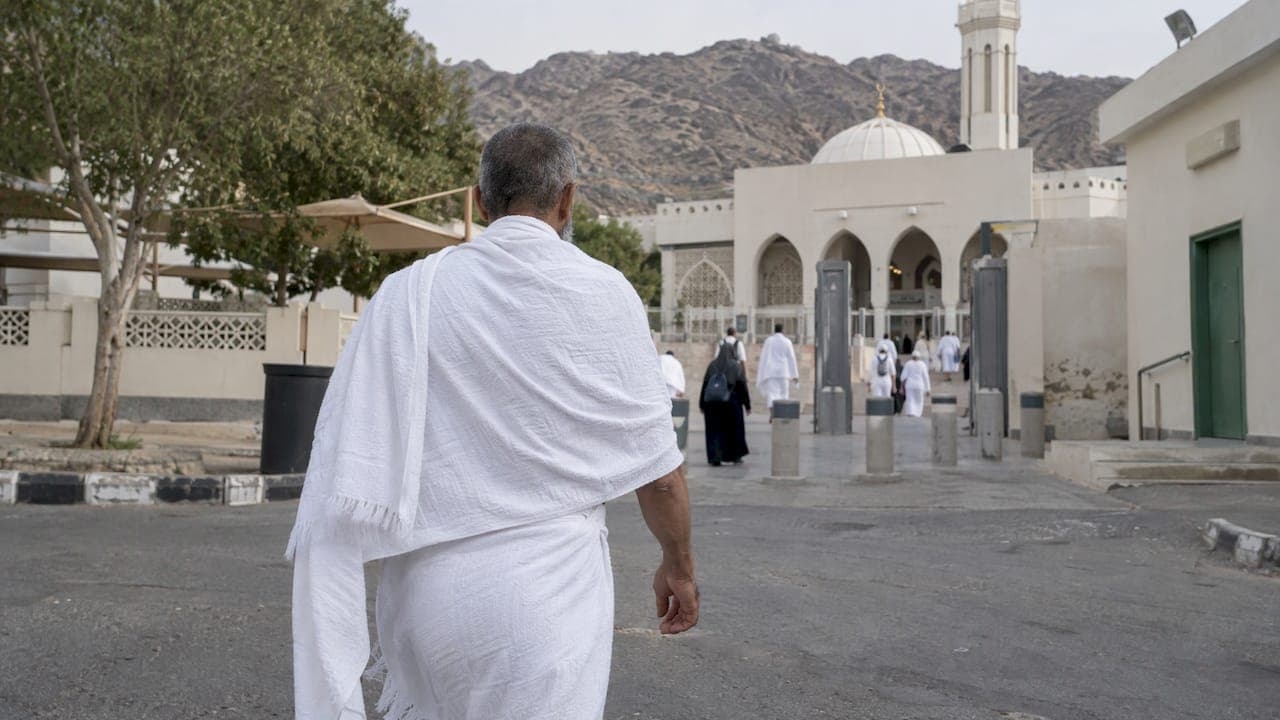
BPKH’s guidance describes the opening of the rite: the proxy takes the sunnah bath and puts on the ihram garments, then makes the intention naming the person represented, in the form “Nawaytul 'umrata wa ahramtu biha lillahi ta’ala 'an fulan”, with the person’s name in place of “fulan.” The proxy begins from the miqat, the boundary where pilgrims must enter ihram.
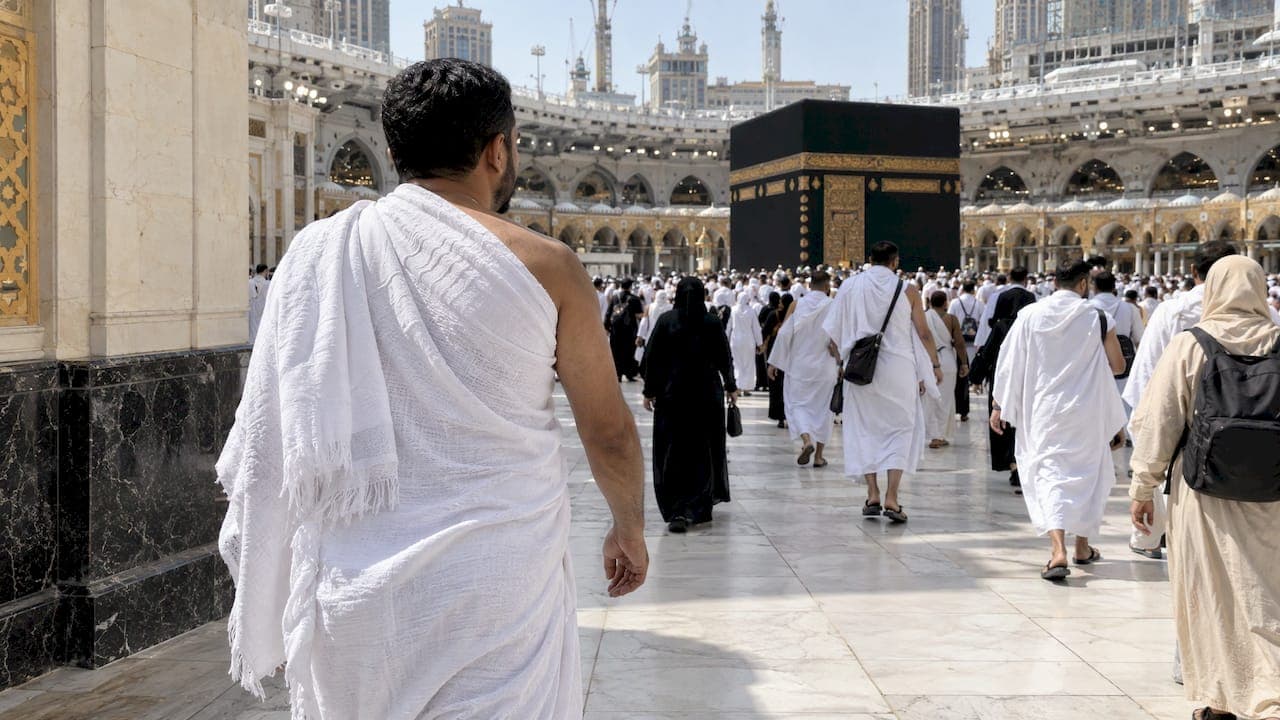
For men, ihram means two white seamless cloths. For women, it is modest regular clothing. From the moment of intention, the ihram prohibitions apply: no perfume, no hunting, no cutting nails, and the rest of the list the same guidance gives.
The intention is the heart of Badal. It is what makes the Umrah the person’s own, and it is why we ask families for the full name of the person for whom the Umrah is made. One Shia ruling from the Office of Grand Ayatollah Al-Hakeem says it is sufficient to intend the Umrah on that person’s behalf, even without mentioning the name, which shows that practice differs between schools.
Step 5: Tawaf
At the Kaaba, the proxy performs tawaf: seven circuits, counterclockwise. Dar al-Ifta reports that the majority hold seven rounds are required, while the Hanafis treat four as the obligatory minimum. A proxy who follows the full seven satisfies every view.
Step 6: Sa’i
Next is sa’i: seven runs between the hills of Safa and Marwah, according to the majority of scholars. The proxy keeps the intention for the person represented throughout.
Step 7: Halq or taqsir
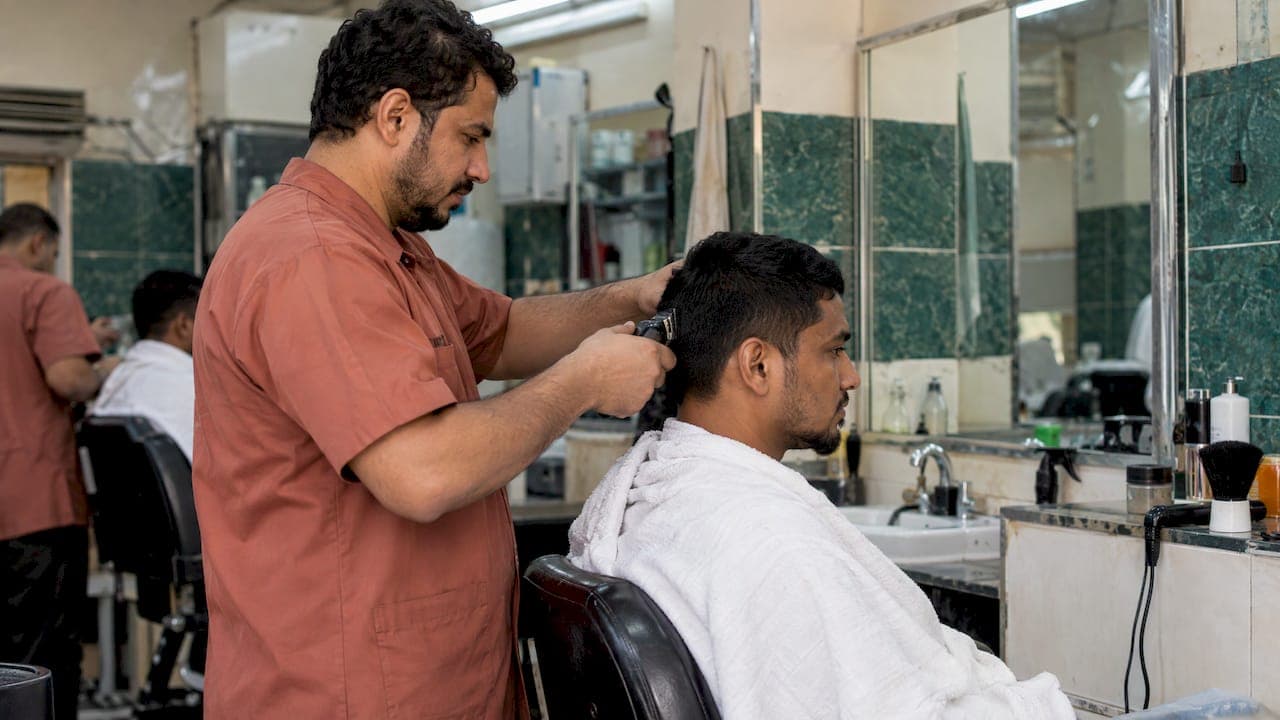
The Umrah ends with tahallul: shaving the head or cutting the hair. In the dominant Shafi’i opinion this is obligatory, with a minimum of three hairs, and the other schools also treat it as a required part of the rite. Once the hair is cut, the proxy leaves ihram and the Umrah is complete. BPKH stresses that all of this must follow the correct sequence (tertib): ihram, tawaf, sa’i, then tahallul.
Step 8: Receive confirmation
The last step for the family is knowing that it was done, so that you can make du’a for your loved one with a quiet heart. This is where a service differs from a private arrangement, and we come to it below.
A worked example: one proxy, three people
Suppose a family wants Umrah performed for a deceased father and a living mother who cannot travel. One Umrah is for one person. Ibn Baz’s fatwa states that one Umrah is only for one person. So the proxy needs a separate ihram for each.
IslamOnline’s fiqh page describes how a pilgrim does it. The proxy first performs Umrah for themselves and exits ihram by trimming the hair. Then they leave the Haram boundary and re-enter ihram from Wadi At-Tan’eem (Masjid Aisha) for each subsequent person, repeating the full cycle every time. So for three Umrahs, the proxy completes three complete cycles of tawaf, sa’i and hair cutting.

A note on optional Umrah: the Hanafi answer on IslamQA is that a voluntary Umrah may be dedicated to one person or many, with the reward reaching those intended. For families who want a separate, clear Umrah for each person, individual bookings are the simplest route. Our guide on repeating Badal Umrah with verified proof walks through this for families.
Common mistakes that spoil a Badal Umrah
- A proxy who has not made their own Umrah. Under the Shafi’i view reported by Duaa Guides, an Umrah made this way counts as the proxy’s own, not the person’s. The Hanafis allow it but rate it highly disliked.
- No permission. A living person’s consent is part of the condition.
- Wrong reason. Jordan’s Iftaa’ states that Umrah for someone who simply lacks the money is not permissible. Inability must be physical, or death.
- Combining two people in one Umrah. Each person needs their own.
- Skipping the order of the rites. Tawaf, sa’i and tahallul must come in sequence.
What proof a family should receive
A proxy Umrah happens far away, so the family relies on records. When you book with us, the package includes documentation, photos, video and a certificate, plus real-time updates and dedicated customer support. Those are the records you keep for your family and for your own peace of mind.

For a deceased parent, the details around niyyah and timing are covered in our guides on Umrah for a deceased mother and Umrah for deceased parents. For what to expect on eligibility and proof, read our Saudi fatwa and proof guide.
Our perspective
Families come to us at a hard moment. A father has passed, or a mother can no longer walk the distance, and they want the Umrah done properly and not merely done.
We believe the steps above are the whole service. Eligibility, permission, a proxy who has performed their own Umrah, the right intention, and the rites in order. When each is kept, the family can rest. That is why we perform every Umrah in accordance with Islamic law, verified by qualified imams, with documentation, photos, video and a certificate, so nothing is left to guess.
A fixed price for each package also means you know the full cost before you begin, with no recurring charges. And a portion of our profits goes to support Gaza, so that your act of devotion carries further.
anas
Booking Badal Umrah with us
We offer four Umrah packages, each a one-time fee, with different speed and features:
| Package | Price | Page |
|---|---|---|
| Du’a | $150 | Du’a Package |
| Noor | $250 | Noor Package |
| Barakah | $400 | Barakah Package |
| Jariyah Premium | $500 | Jariyah Premium Package |
All include proof of completion with photos, video and a certificate. You can also book your Umrah directly, for an individual, a family or as a gift. For a spouse, see Umrah for your spouse.
Pick the package that fits your family’s timing and needs, name the person for whom the Umrah is made, and we take it from there.
FAQ
Can I perform Umrah for my deceased parent myself?
Yes, if you have already performed your own Umrah. You make the intention for your parent at the miqat and complete the rites in full. If you cannot travel, a proxy can do it for you, following the same conditions.
Does a living person have to agree to Badal Umrah?
Yes. For a person who is chronically ill or very old, the Umrah on their behalf only avails them with their permission. For a deceased person, the heirs’ agreement is the basis, and a stated wish of the deceased should be honored.
Can one Umrah be made for two people?
For an obligatory or proxy Umrah, no: one Umrah is for one person. Each additional person needs a new ihram and a full cycle of tawaf, sa’i and hair cutting. Booking a separate Umrah for each person keeps this clear.
Is Badal Umrah the same for every school of thought?
The rites are the same, but rulings on who qualifies and on the proxy’s prior Umrah vary between schools. If your family’s case is unusual, speak with your imam about your school’s position.
Sources
- Jordan’s Iftaa’ Department: delegating Hajj or Umrah
- Ibn Baz, fatwa 85681: conditions for Umrah on behalf of another
- Fatwa-online: Umrah Badal on behalf of the deceased
- Islamweb: Umrah on behalf of the living and the deceased
- Malaysia’s Mufti of the Federal Territories, Irsyad al-Fatwa No. 62
- Egypt’s Dar al-Ifta: The Umrah, rulings and rites
- BPKH Indonesia: conditions and procedure of Badal Umroh
- Ibn Baz, fatwa 85264: Umrah for another before one’s own
- Jordan’s Iftaa’: short fatwa on proxy Umrah
- Office of Grand Ayatollah Al-Hakeem: Umrah on behalf of several people
- Ibn Baz, fatwa 88847: one Umrah for one person
- IslamOnline: performing Umrah on behalf of the deceased
- IslamQA: tawaf and Umrah on behalf of multiple people
- Duaa Guides: Can I perform Umrah for someone else?