- hadith on badal umrah
Hadith on Badal Umrah: The Evidence and Its Rulings
Published on Oct 23, 2026
Hadith on Badal Umrah: The Evidence and Its Rulings

No hadith uses the words “Badal Umrah”. The practice rests on two reports in which the Prophet (ﷺ) allowed a son or daughter to perform pilgrimage for an elderly father who could not travel. One of them names Umrah directly. Scholars then extend the ruling to those who are sick beyond recovery, and to those who have died. Below we set out the narrations, what scholars drew from them, and where the schools differ, so you can act with confidence.
TL;DR
- The main evidence is the woman of Khath’am, in Sahih al-Bukhari 1513 and Sahih Muslim. The Prophet (ﷺ) permitted Hajj on behalf of her old and weak father.
- The report of Abu Razin al-Uqaili, in Jami’ at-Tirmidhi 930, mentions both Hajj and Umrah for a father unable to travel.
- Most scholars allow Umrah for the deceased and for the living who are permanently unable. The Maliki school is more cautious.
- The proxy should already have performed their own Umrah, and the living person should give permission.
Table of Contents
- The hadith of the woman from Khath’am
- The hadith of Abu Razin: where Umrah is named
- Other narrations scholars mention
- From Hajj to Umrah: how scholars reach the ruling
- What the fatwas say
- Who may be represented
- Conditions that come from the evidence
- Our perspective
- Booking Umrah on behalf of a loved one
- Common questions about the evidence
- Sources
The hadith of the woman from Khath’am
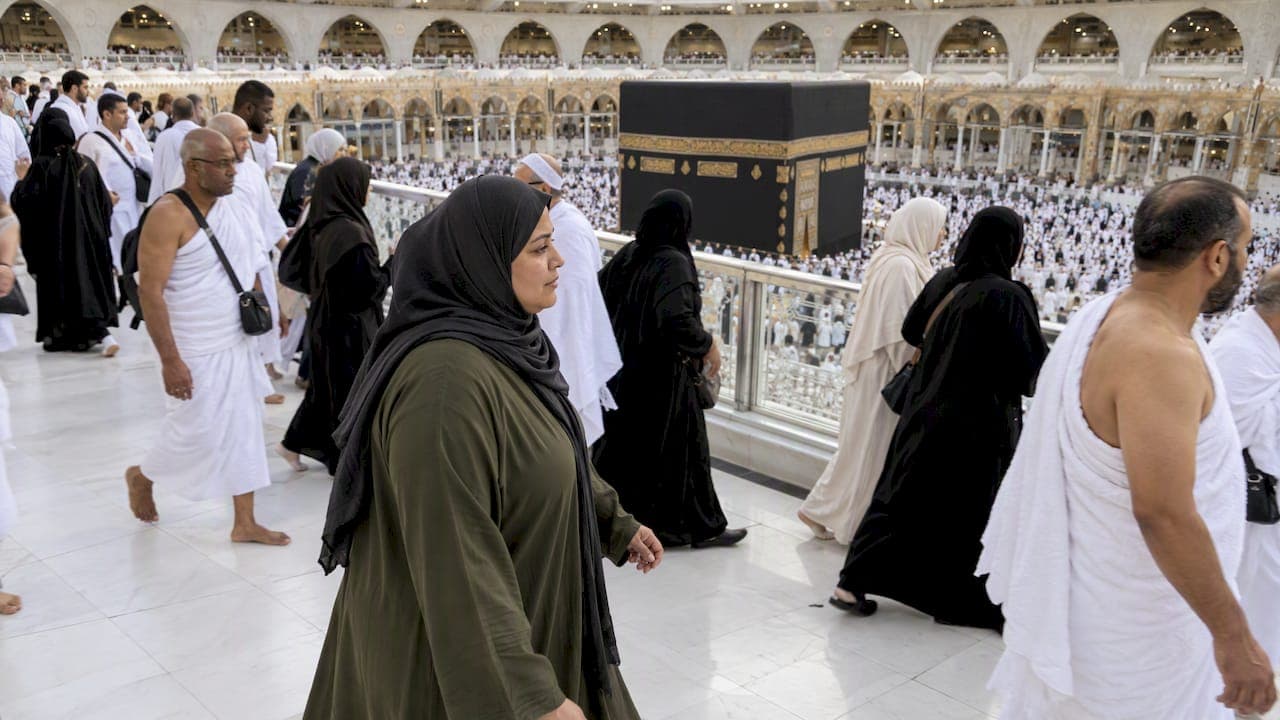
This is the report every discussion of proxy worship begins with. Ibn 'Abbas narrated that al-Fadl was riding behind the Messenger of Allah (ﷺ) when a woman from Khath’am came to ask a question. She said that the obligation of Hajj had fallen due on her father, but he was old and weak and could not sit firmly on his mount. The full wording is in Sahih al-Bukhari 1513. The Prophet (ﷺ) allowed her to perform Hajj for him.
Three points matter for our topic.
- The person acting is a child. The proxy here is a close relative, which is why scholars link proxy worship so closely to kindness toward parents.
- The person represented is alive but unable. The father cannot recover the strength to travel. This is the basis for the “permanent incapacity” condition.
- It happened during the Farewell Pilgrimage. The ruling was given in public, before a large gathering of the Companions.
Muslim records the same event in a chapter on Hajj for one who cannot do it because of chronic illness or old age, or who has died. You can read it at Sahih Muslim, the chapter on Hajj on behalf of the incapable.
The hadith of Abu Razin: where Umrah is named
If you want a narration that mentions Umrah itself, this is the one. Abu Razin al-Uqaili came to the Prophet (ﷺ) and said that his father was an elderly man who could not perform Hajj or Umrah or even undertake a journey. The reply, as al-Tirmidhi records it, was to perform Hajj on behalf of his father, and to perform Umrah too.
This is the closest the sources come to the topic, which is why you will often see it cited next to the Khath’am report. Even so, it concerns a living father who cannot travel. It does not speak of the deceased. Hadith specialists have discussed the chain of this and related narrations, so a careful writer cites it alongside the Bukhari and Muslim report rather than on its own. If you are not sure how a given narration is graded, ask a qualified scholar before quoting it.
Other narrations scholars mention
Scholars also cite the report of the woman who asked about her mother, who had vowed to perform Hajj and died before doing it. The Prophet (ﷺ) compared the matter to a debt and said that a debt owed to Allah is more deserving of being paid. Islamic Landmarks quotes this in its discussion of proxy Hajj. It supports the idea that a person’s unfulfilled obligation can be completed by someone else after death.
There is also the report of the man who said “Labbayk on behalf of Shubrumah”. Here the Prophet asked whether he had performed Hajj for himself, and told him to do his own first. Tiket Haji discusses it and notes that Abu Tahir considered its chain weak while al-Albani judged it differently. Because of this disagreement, some writers lean on it more than others. Most scholars still use it as the basis for the condition that the proxy must have performed their own pilgrimage first.
From Hajj to Umrah: how scholars reach the ruling
The sources explain that no hadith states “Badal Umrah” in those words. The ruling is drawn through analogy (qiyas) from Hajj, and supported by the Abu Razin narration, which mentions Umrah by name.
Dr. Zulkifli Al-Bakri explains the reasoning: the jurists treat Umrah like Hajj, since both involve the body and wealth, so representation is valid in both. He also cites Imam al-Nawawi, who said that the majority of scholars allow appointing a proxy to perform Hajj for someone who has died, or for a sick person with no hope of recovery.

This is not an innovation. It is a concession. Worship is normally done by the person themselves, and proxy worship is an exception allowed out of mercy, so a believer does not lose the chance to fulfil a duty because their body or circumstances fail.
What the fatwas say
The scholarly rulings are clearer than the debate online suggests.
Shaykh Ibn Baz was asked about Umrah for parents. His answer is that there is nothing wrong with performing Umrah for parents who are deceased, or unable because of old age or an illness not expected to end. He adds that doing so is part of being dutiful to them. The answer is given for someone who has already performed Umrah for themselves.
A fatwa from Shaykh Salih al-Fawzan on Umrah on behalf of the deceased is also widely read. It is one more voice for the permissibility of the practice for those who have passed.
Who may be represented
| Situation | General position | Note |
|---|---|---|
| Deceased person | Permitted by most scholars | Heirs’ permission is the usual practice |
| Elderly, cannot travel | Permitted | Based on the Khath’am and Abu Razin reports |
| Chronically ill, no hope of recovery | Permitted | Al-Nawawi’s wording on the sick |
| Healthy and able to travel | Generally not accepted in place of their own trip | The substitution is for the unable |
| Living person who has not asked | Needs their permission | The Hanbali position |
The research also notes that the Maliki school traditionally considers this makruh, while saying that if it is done it is valid. Hanafis, Shafi’is and Hanbalis permit it. If you follow a particular school, ask your own imam which view applies to you.
A common mistake is to think Badal Umrah is only for the dead. It is just as valid for the living who cannot perform it because of illness or extreme age. We explain this in our guide on whether Umrah for others is allowed.
Conditions that come from the evidence
The hadith produce a short list of conditions that scholars repeat.
- The proxy has performed Umrah for themselves first. This follows the Shubrumah report discussed above. NU Online sets out the same condition, together with the requirement that the person represented is unable through illness, old age or death.
- The person represented cannot do it. The ruling is for genuine incapacity, not convenience.
- Permission is given. Indonesia’s pilgrimage fund authority, BPKH, states that Badal Umrah should be done with the permission of the person if living, or of their heirs if deceased.
- The intention is clear. The proxy states the intention for the named person, in the form “I intend Umrah on behalf of so-and-so”. NU Online gives the Arabic wording.
On intention, our view is simple: a name spoken clearly is the heart of the act. Families are often comforted when this moment is recorded, which is why documentation matters.
Our perspective
We get the same question again and again: “Is this actually from the Sunnah, or did someone invent it?” We answer plainly. The Khath’am hadith is in Bukhari and Muslim. The Abu Razin report names Umrah. The extension to the deceased and the sick is the position of the majority of jurists.

What we add is care in the practice. A ruling is only as good as the way it is carried out. That means a proxy who has performed their own Umrah, a named intention for each person, and proof the family can see: photos, video and a certificate. We do not ask families to take anything on trust.
We also say what we do not know. If your situation is unusual, for example a living relative who has not agreed, or a question about your own school, speak to a scholar you trust before you book. We would rather you wait than act with doubt in your heart.
— anas
Booking Umrah on behalf of a loved one
If the evidence has settled your question and you are ready to act, we offer four Umrah packages, each a one-off fee with no recurring charges:
- Du’a Package: $150
- Noor Package: $250
- Barakah Package: $400
- Jariyah Premium Package: $500
The packages differ in speed and features. Each includes proof of completion. You can compare them all on our Umrah packages and prices page, or go straight to booking your Umrah. If you are choosing for a parent, our guides on Umrah for an elderly parent and Umrah for deceased parents walk through the details. If you are asking about timing after a death, read Umrah after a loved one’s death.
Common questions about the evidence
Is there a hadith that says “Umrah on behalf of someone” in those words?
Not as a standalone phrase. The clearest narration naming Umrah is the one from Abu Razin al-Uqaili in al-Tirmidhi. The wider ruling is drawn from the Khath’am report and the reasoning of the jurists.
Can I do Badal Umrah for someone who has died?
Most scholars say yes. Ibn Baz stated there is nothing wrong with it for deceased parents, and al-Nawawi reported the majority view that a proxy may be appointed for the deceased. The Maliki school is more cautious, so follow the guidance of your own school.
Can a person perform Umrah for a living relative?
Yes, when the relative is permanently unable because of illness or great age, and has agreed. A living person who is healthy is expected to perform it themselves. Our guide on Badal Umrah versus your own trip covers the difference.
Does the proxy need to have done Umrah first?
Scholars who follow the Shubrumah report say yes: the proxy performs their own first. NU Online lists it among the usual conditions. Ask us for the proxy’s details, and see our checklist on multiple proxy Umrahs if you plan more than one.
Sources
- Sahih al-Bukhari 1513, Sunnah.com
- Jami’ at-Tirmidhi 930, Sunnah.com
- Sahih Muslim, chapter on Hajj on behalf of the incapable, Sunnah.com
- Performing Badal Umrah, Dr. Zulkifli Al-Bakri
- Ruling on Umrah on behalf of both parents, Ibn Baz
- Umrah Badal on behalf of the deceased, Fatwa-Online
- Badal Umrah, Adakah Dalilnya? Tiket Haji
- Niat Badal Umrah, NU Online
- Syarat Badal Umroh, BPKH