- hajj badal vs umrah badal
Hajj Badal vs Umrah Badal: Which One Is Right for You?
Published on Nov 17, 2026
Hajj Badal vs Umrah Badal: Which One Is Right for You?

Hajj badal and Umrah badal are both a pilgrimage performed by a trusted proxy for someone who cannot travel, but they are not interchangeable. Hajj badal stands in for the major pilgrimage, which has a fixed place in the Islamic year and the heavier ruling for those who were able to perform it. Umrah badal stands in for the lesser pilgrimage, which can be arranged more simply and is the usual choice for a parent, spouse or relative who has passed away or who is elderly or seriously ill. If you are unsure which one your loved one needs, this guide explains the difference in plain words and helps you decide.
We offer both. Our Umrah packages start at 150 USD, and our Hajj badal options are listed further down.
TL;DR
- Hajj badal is a proxy for the major pilgrimage. Umrah badal is a proxy for the lesser pilgrimage. Each is performed for one named person.
- Scholars generally allow a proxy for a deceased Muslim, and for a living Muslim who is permanently unable because of old age or incurable illness.
- A living person who is only poor, or unable for political or security reasons, is not covered by the proxy rulings quoted by scholars. Consent is needed from a living person.
- Most scholars ask that the proxy has completed their own Hajj, and many ask the same for Umrah, before acting for someone else.
- Our Umrah badal packages cost 150 to 500 USD. Hajj badal costs 1,500 USD (Ifraad) or 2,500 USD (Tamattu’).
Table of Contents
- What the two pilgrimages are
- Hajj badal and Umrah badal side by side
- Who may have a proxy perform it for them
- What the proxy must satisfy
- How each is performed for another person
- Which one should you choose?
- Choosing the right package with us
- Book Umrah on behalf of someone you love
- Our view
- FAQ
- Sources
What the two pilgrimages are
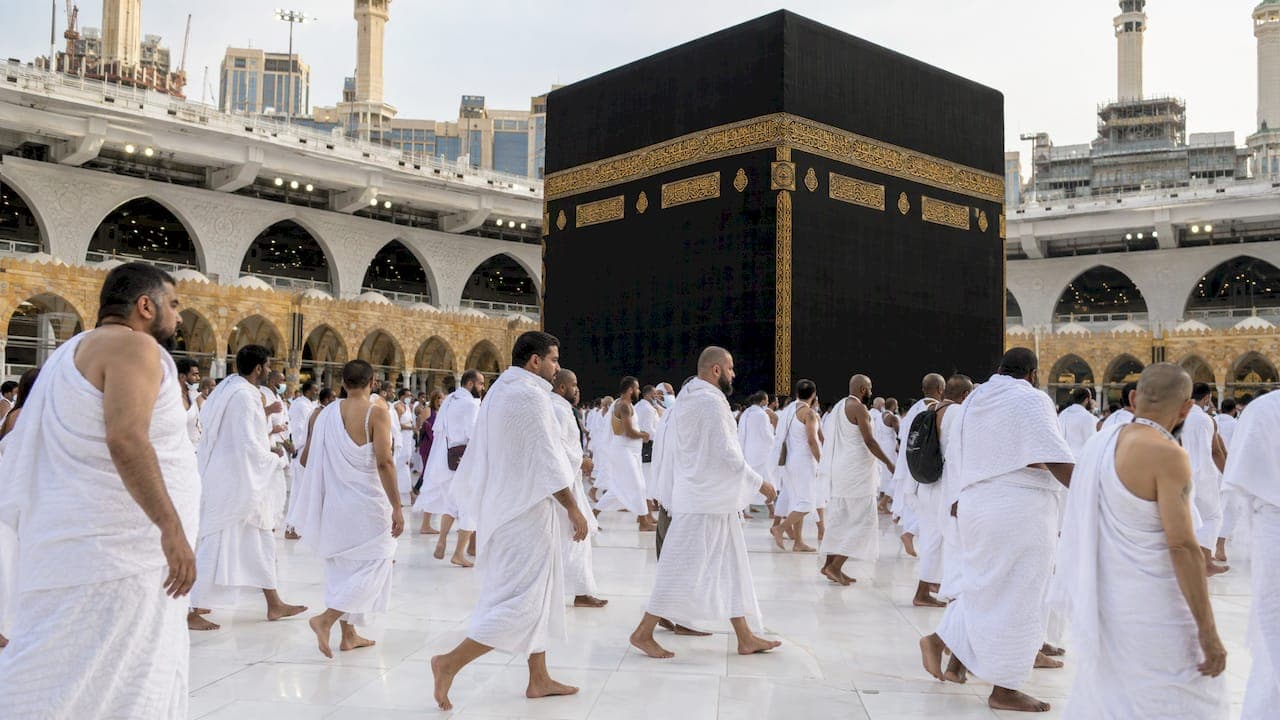
Hajj is the major pilgrimage, performed at set times in the Islamic calendar. Umrah is the lesser pilgrimage, which can be performed at other times and has fewer rites. Both are carried out in and around Makkah. For a fuller side by side look at the rites themselves, see our guide to Umrah vs Hajj.
Badal simply means substitute. In a badal pilgrimage, a Muslim carries out the rites with the intention of fulfilling them for another named person. The person who is represented is the one who is rewarded and, where it is an obligation, the one whose obligation is discharged according to the scholars who allow it.
The main practical difference for you is the weight each carries in the schools of Islamic law. The four madhhabs do not treat Umrah identically, and this affects how a proxy Umrah is viewed. According to a summary of the four schools:
- Hanafi: Umrah is an emphasized Sunnah, so no proxy is required, and sending a proxy Umrah before one’s own is strongly disliked.
- Shafi’i and Hanbali: Umrah is obligatory once in a lifetime, a proxy is allowed for the deceased or the permanently disabled, and the proxy’s own Umrah must come first.
- Maliki: a proxy is discouraged, but it is valid if carried out, and is often framed as gifting the reward.
If you follow a particular school, or your family does, ask your own imam how that school sees your situation. Our own imams check that every booking is performed in line with Islamic law, and we are glad to talk through your situation before you book.
Hajj badal and Umrah badal side by side
| Hajj badal | Umrah badal | |
|---|---|---|
| What it represents | The major pilgrimage | The lesser pilgrimage |
| Commonly arranged for | A deceased person who had not performed an obligatory Hajj, or a living person permanently unable | A deceased relative, an elderly parent, a seriously ill person, or as a gift of reward |
| Timing | Tied to the Hajj season | Flexible, subject to Saudi permits |
| Our price | 1,500 USD (Ifraad) or 2,500 USD (Tamattu’) | 150, 250, 400 or 500 USD |
| Proof we provide | Documentation of the pilgrimage | Photos, videos and a certificate |
The timing row matters. Umrah is not tied to the Hajj season, but Saudi permits affect when a proxy can go, especially around Dhul Hijjah. Our article on badal Umrah in Dhul Hijjah explains how this works.
Who may have a proxy perform it for them
The scholarly answer is similar for Hajj and Umrah, and it is consistent across the sources we rely on.
A deceased Muslim. A proxy is permitted. Shaykh Ibn Baz held that it is permissible to perform Umrah for a deceased Muslim, based on the Prophet’s instruction to perform Hajj and Umrah on behalf of a father, as quoted in this fatwa. For the deceased, Jordan’s Iftaa’ Department, citing the Shafi’i scholar Al-Sharwani, states that delegation is absolutely permissible for an obligatory Hajj, and for a voluntary Hajj only if the person specified it in their will.
If a Muslim died without performing an obligatory Hajj while meeting all its conditions, the Standing Committee, as quoted by IslamQA, says it is obligatory to perform Hajj on their behalf from the estate. For families, this is often the deciding point: if your parent was able to perform Hajj and never did, Hajj badal is the one that speaks to that unfulfilled obligation. If the question is about Umrah, scholars also note that heirs are not obliged to arrange it unless the deceased had made a vow, but it is still valued as ongoing charity, as described here.
A living person who is permanently unable. Old age or an illness with no hope of recovery qualifies, according to IslamQA and Egypt’s Dar al-Iftaa, which lists a deceased person, a broken body part, a physical disability, a chronic disease, or imprisonment with no hope of release. An illness that can be recovered from does not qualify.
Who is not covered. The same sources say a proxy is not correct for someone who is physically able, nor for someone who is unable only for financial reasons or because of political or security circumstances. The Standing Committee ruling is translated on IslamHouse.
Consent. For a living person, consent matters because the pilgrimage requires intention. SeekersGuidance, explaining the Shafi’i position of Al-Inaba, notes that Nawawi held a proxy does not avail a living incapacitated person without their consent. Jordan’s Iftaa’ Department also requires consent from a living person.
If your parent is seriously ill, our guide on arranging a verified Umrah for a terminally ill person walks through the steps.

What the proxy must satisfy
Whoever you choose to go on someone’s behalf must meet conditions. The more demanding Hajj and Umrah are, the more these conditions matter.
- Sane, adult Muslim. Egypt’s Dar al-Iftaa and the Jordan Iftaa’ Department agree on this. Ayatollah Sistani’s office also sets adulthood and sound mind, and a minor’s obligatory proxy pilgrimage is invalid as a precaution, per its ruling on proxy pilgrimage. Our guide for families on avoiding a minor as proxy covers this in detail.
- Has performed their own obligatory Hajj first. Egypt’s Dar al-Iftaa states the proxy may go voluntarily or for a fee provided he has performed his own obligatory Hajj. Jordan’s Iftaa’ Department adds that the proxy must have performed Hajj and Umrah for themselves. Our article on a proxy before their own Hajj goes through the views.
- Knows the rites and is trustworthy. This is a practical requirement across the sources.
- Specific intention. The proxy must have a clear intention for the named person, as the Muhammadiyah Tarjih Council notes in the fatwa summarized with Shaykh Ibn Baz’s ruling above.
One point of difference is worth knowing. Sistani’s office states that there is no requirement that the agent has performed pilgrimage before, though some scholars consider it disliked, and it holds that the agent must not himself be obliged to perform Hajj in the year of appointment. Most Sunni sources above take the stricter view. If your family follows a school with a particular position, tell us when you book.
Gender questions come up often. Our guides cover who may be a proxy, the eligibility of a female proxy and the mahram question.
How each is performed for another person
The proxy performs the rites as they are performed for oneself, with the intention made for the person represented. Sistani’s office explains that the proxy follows the same order of ceremonies, and that if the agent dies before entering ihram, the pilgrimage is not valid for the principal and another agent must be appointed.
One person per pilgrimage is the rule. The Saudi Permanent Committee says one Hajj or Umrah can be designated for only one person, though a proxy may perform Hajj for one person and Umrah for another in the same year. For several Umrahs, the pilgrim performs the first, exits ihram, then re-enters ihram from At-Tan’eem for each next one, as IslamOnline’s fiqh section describes. SeekersGuidance gives the same answer for two deceased relatives: a separate Umrah for each, with ihram renewed. If you want to honor several relatives, see our page on multiple proxy Umrahs.
For Hajj, the form of the pilgrimage is chosen when you book. Our Hajj badal comes in two forms: Ifraad, at 1,500 USD, and Tamattu’ with Umrah and Qurbani, at 2,500 USD.

Which one should you choose?
Start with the person, not the price.
Choose Hajj badal when:
- Your parent or relative passed away without performing an obligatory Hajj that they were able to perform.
- A living person is permanently unable, has not performed their obligatory Hajj, and consents.
- You want the fullest act of worship on someone’s behalf.
Choose Umrah badal when:
- You want to fulfill Umrah for a deceased parent, spouse, child or friend.
- An elderly or seriously ill relative, with no hope of recovery, asks for Umrah to be done for them.
- You are giving the reward of Umrah as a gift or ongoing charity.
- You want to honor more than one person, each with a separate Umrah.
Do both when a relative’s obligations were not met and you also wish to give additional reward. They are separate acts, and each is booked and performed for one named person.
If the person is alive, able to travel and only lacks money, or can only travel after a government restriction ends, the scholars cited above do not treat a proxy as correct. In that case, speak to your imam about the right course.
Choosing the right package with us
All our Umrah badal packages include proof of completion with photos, videos and a certificate, and are performed in line with Islamic law, verified by qualified imams. The four tiers differ in speed and features:
- Du’a Package: 150 USD
- Noor Package: 250 USD
- Barakah Package: 400 USD
- Jariyah Premium Package: 500 USD
For Hajj, see Hajj Badal, Ifraad at 1,500 USD and Hajj Badal, Tamattu’ at 2,500 USD. Each is a one-time fee with no recurring charges. You can also register interest on our Hajj badal pre-booking page.
Before you pay for any proxy service, it is worth knowing what rulings and proofs apply. We set these out in our guide to Saudi fatwas, eligibility and proof before you pay.
Book Umrah on behalf of someone you love
If the person you have in mind needs Umrah, you can choose a package and complete your booking online. We give you real-time updates and our support team is there to answer questions along the way. A portion of our profits is pledged to charity, including support for Gaza.
Start with our Umrah booking page, or visit Badal Umrah to see everything we offer.
Our view
Most families who come to us are carrying grief or worry, and they ask the same question: what is the right thing to do for them? We believe the answer starts with the person, their condition and their consent, not with the price of the package.
We think of Umrah badal as the most accessible way to act on love and duty for a parent, spouse or friend, and of Hajj badal as the path for a relative whose obligation was left unfulfilled. Both deserve the same care: a qualified proxy, a clear intention for one named person, and proof you can keep.
That is why every booking with us is performed in line with Islamic law, verified by qualified imams, with documentation, real-time updates and a certificate. For You. For Your Loved Ones. For Their Forgiveness.
anas
FAQ
Can I do Umrah badal instead of Hajj badal for a deceased parent?
They are different acts. If your parent was able to perform an obligatory Hajj and did not, scholars say Hajj should be performed for them from the estate, as the Standing Committee ruling quoted by IslamQA states. Umrah on their behalf is also permitted and valued as ongoing charity, and many families do it in addition.
Can Hajj or Umrah be performed for someone who is still alive?
Yes, but only when they are permanently unable, for example because of old age or an illness with no hope of recovery, and they consent. Scholars do not allow it for someone who is able, or who is unable only because of money or political circumstances.
Can one person perform Umrah for two relatives?
Yes, as separate Umrahs. The pilgrim completes one, exits ihram, then re-enters ihram from At-Tan’eem for the next, with the intention made for one named person each time. We book each Umrah separately for this reason.
Does the proxy need to have performed Hajj first?
Most of the scholarly sources above say yes: Egypt’s Dar al-Iftaa and Jordan’s Iftaa’ Department require the proxy to have completed their own obligatory Hajj. Some views, such as those in Sistani’s rulings, do not require it. Tell us your school when you book.
Sources
- Can I Perform Umrah for Someone Else? Rulings and Evidence, Duaa Guides
- Hajj is not performed on behalf of anyone but the deceased, al-Fatawa
- Jordan Iftaa’ Department, fatwa 3815
- What Is Hajj by Proxy? IslamQA
- Performing Umrah on Behalf of the Deceased, IslamOnline Fiqh
- Egypt’s Dar al-Iftaa, fatwa 6280
- Doing Hajj and Umrah on Behalf of Another, IslamHouse
- Rulings on Hajj and Umra on behalf of another, SeekersGuidance
- The rules on pilgrimage by proxy, sistani.org
- Proxy in Hajj for a single person, Permanent Committee
- Can One Umra Be Performed on Behalf of Two Deceased? SeekersGuidance