- mahram for female proxy
Mahram for a Female Umrah Proxy: What the Rulings Say
Published on Nov 10, 2026
Mahram for a Female Umrah Proxy: What the Rulings Say

A woman can perform Umrah on behalf of another person, and gender alone does not disqualify her as a proxy. The mahram question is about her journey to Makkah, not about acting for someone else. The schools of Islamic law differ on whether a mahram is required for that journey, so the answer depends on the school she follows and on how safe the travel is.
If you are arranging Umrah for a parent who has passed away, for a sick relative, or for yourself as a gift of reward, you may wonder whether the person who performs it must travel with a male relative. This guide walks through the rulings in plain words, shows where scholars agree and disagree, and explains what to look for when you appoint a proxy.
TL;DR
- A mahram is a husband or a man a woman can never marry because of blood, breastfeeding or marriage ties.
- Most classical scholars treat the mahram as a condition of her travel, not of the rites inside Makkah.
- Hanafi and Hanbali scholars generally require a mahram for longer journeys. Maliki, Shafi’i and Imamiyyah scholars allow safe, trustworthy company in its place.
- Being a woman does not stop someone from acting as a proxy. Proxy Umrah is for those who have died or are permanently unable to perform it.
- Ask your own scholar if your situation is unusual, and choose a provider that documents the work.
Table of Contents
- What mahram means in this context
- Why the question comes up for a proxy
- Travel is one thing, the rites are another
- How the schools differ
- Can a woman be a proxy at all?
- Must the proxy have performed her own Umrah first?
- Checking a provider
- Who this applies to
- Our perspective
- Book Umrah on behalf of a loved one
- FAQ
- Sources
What mahram means in this context
In fiqh, a mahram is a person with whom marriage is permanently prohibited because of close blood relationship, breastfeeding or marriage. The Qur’an sets these categories in Surah an-Nisa. For a woman they include her father and grandfathers, her son and grandsons, and certain uncles, along with other listed relatives. Her husband also counts as her travel companion under the same rulings.
The word comes from an Arabic root meaning inviolable or sacred. Encyclopaedia Iranica notes that the Qur’anic rules on blood, marriage and fosterage (4:22 to 23) identify the person who cannot be married as a mahram. So the term is about protection and respect, not about restriction for its own sake.
Two points help avoid confusion:
- A mahram is defined by a permanent bar to marriage. A cousin, a brother-in-law, or a friend’s husband is not a mahram.
- The term applies in more than one setting: social interaction, dress and travel. This article is only about travel for Umrah.
Why the question comes up for a proxy
The main text behind the rule is the Prophetic instruction that a woman should not travel except with a dhu-mahram. The Jordan Iftaa Department quotes this instruction and reports that the majority of scholars treat a husband or mahram as a condition for a woman’s Hajj obligation.
A proxy Umrah is still a journey and a set of rites. So readers ask: if a woman is the proxy, does the same condition apply? In short, the travel rule applies to her as it would to any woman, according to the school she follows. Representing someone else does not add a new mahram rule on top of it, and it does not remove the existing one.
Travel is one thing, the rites are another
The strict classical view separates the journey from the rites. The Permanent Committee states that a woman who is already in Makkah may go from her lodging to the Sacred Mosque and perform Umrah alone if she is safe from fitnah, because the mahram is required during travel.
That means, under the strict view:
- The mahram is needed for the trip to Makkah.
- Once she is there, tawaf and sa’i do not require him to stand beside her at each step.
- Safety and good conduct still matter throughout.
This explains a common point of confusion. People hear that a woman needs a mahram for Umrah and assume he must accompany every rite. The classical position is narrower than that.
How the schools differ
Scholars do not speak with one voice here. A review in the journal Religions explains that Hanafi and Hanbali jurists generally held that a woman may not travel three days or more without a mahram, while Shafi’i and Maliki jurists generally allowed travel with a trustworthy group of women. The same article notes that the Qur’an sets no specific time limit, so the differences come from how scholars read the hadith and what they count as travel.
| School | General position on a mahram for a woman’s pilgrimage travel |
|---|---|
| Hanafi | Required, commonly tied to a journey of three days |
| Hanbali | Required as a condition of her pilgrimage |
| Maliki | Not essential when security is assured |
| Shafi’i | Not essential when security is assured, with trustworthy company |
| Imamiyyah (Shia) | Not a condition of her obligatory Hajj, but trustworthy travel is required |
The comparison above follows a survey of the five schools. For the Hanafi distance rule, the Georgetown review quotes Fatawa al-Hindiyya as requiring a mahram when Makkah is three days’ travel away, but not when it is less.
The Jordan Iftaa Department also records that, according to the Shafi’i school, a woman may travel for obligatory Hajj or Umrah if she is confident of her safety. The Maliki and Shafi’i view is usually explained by purpose: the aim is a secure journey, so trustworthy company or assured safety can serve that aim.
What this means in practice
If the woman who will perform Umrah follows the Hanafi or Hanbali school, she should travel with her husband or a mahram. If she follows the Maliki, Shafi’i or Imamiyyah view, she may travel with a trustworthy group when the route is safe. Modern jurists continue to discuss how this applies today. Islamic Relief UK describes it as a genuine scholarly difference, where some contemporary scholars reassess the old rule when routes and group travel are demonstrably safe.

When a woman prepares for a journey abroad, she also needs her paperwork in order. If she wears hijab for her photo, the guidance on passport photo rules for hijab in the United States explains what is accepted.
Can a woman be a proxy at all?
Yes. Gender does not itself prevent representation. The Imamiyyah guide states that a man or woman may act as agent for the other, and the agent follows her own applicable requirements. Sunni fatwa material points the same way. Islamweb says a woman may perform Umrah for another person and that the performer need not be related to the one she represents.
So the three practical conditions to think about are:
- The person being represented. Proxy performance is for someone who has died or who is permanently unable. The Standing Committee’s ruling allows a proxy for a person completely unable or chronically ill with no hope of recovery, and treats temporary or recoverable incapacity as insufficient, since someone who can be carried or helped should perform the rites.
- The proxy. She should be a Muslim of sound mind and mature age who knows the rites. The Imamiyyah guide lists Islam, faith, sanity, maturity and knowledge of the rites for an agent.
- The travel. She follows the mahram or safe-travel ruling of her own school, as above.
Our own guide to eligibility rules for a female proxy sets out the checks families can verify before they agree.
Must the proxy have performed her own Umrah first?
Many scholars say yes: the usual teaching is that the person performing for another should have completed Umrah or Hajj for herself first. Islamweb’s fatwa presents it as a condition for performing on behalf of someone else, and it is common to ask the provider to confirm this. Schools phrase the detail differently, so if you have a specific case, put it to a qualified scholar you trust.
Checking a provider
A family sending a loved one’s Umrah to someone else deserves clarity. Before you pay anyone, look for:
- A clear statement of who performs the Umrah and that she or he has already performed their own.
- Proof of completion, such as photos, video and a certificate.
- A clear note on how the niyyah (intention) is made for the named person.
- Fixed pricing with no hidden fees.
- A way to reach a real person for questions.
We cover related questions in our guides on verifying family Badal Umrah and Nusuk permit steps, on paying someone for Badal Umrah, and on whether Umrah for others is allowed.
Who this applies to
Different families come with different situations:
- A deceased mother or father. See our steps for Umrah on behalf of a deceased mother, including the niyyah and vetting.
- A terminally ill relative. Our guide to arranging Umrah for a terminally ill person explains the process.
- A relative who is permanently unable. Read about documented proxy Umrah for living relatives.
- Several people with one intention. See Umrah for multiple people.
Our perspective
We receive this question often from families who want to do right by a parent or relative. Our answer is the same each time: the mahram ruling concerns the woman’s own travel under her school, and it should never leave you worried that the Umrah you asked for is invalid.
What matters most to us is that the Umrah is performed sincerely, in line with Islamic law, and that you can see it was done. Our services are designed to follow Islamic legal standards, verified by qualified imams, with documentation, updates and a certificate so you are not left guessing.
When you book with us, you are not asked to settle the juristic debates yourself. You choose a package, name the person for whom the Umrah is made, and we keep you informed. We also pledge a portion of our profits to charity, including support for Gaza, because we believe service and giving belong together.
For you. For your loved ones. For their forgiveness.
anas
Book Umrah on behalf of a loved one
If you are ready, our packages are one-time fees with no recurring charges. The Du’a Package is $150, the Noor Package is $250, the Barakah Package is $400, and the Jariyah Premium Package is $500. Each includes proof of completion, and the packages differ in speed and features.
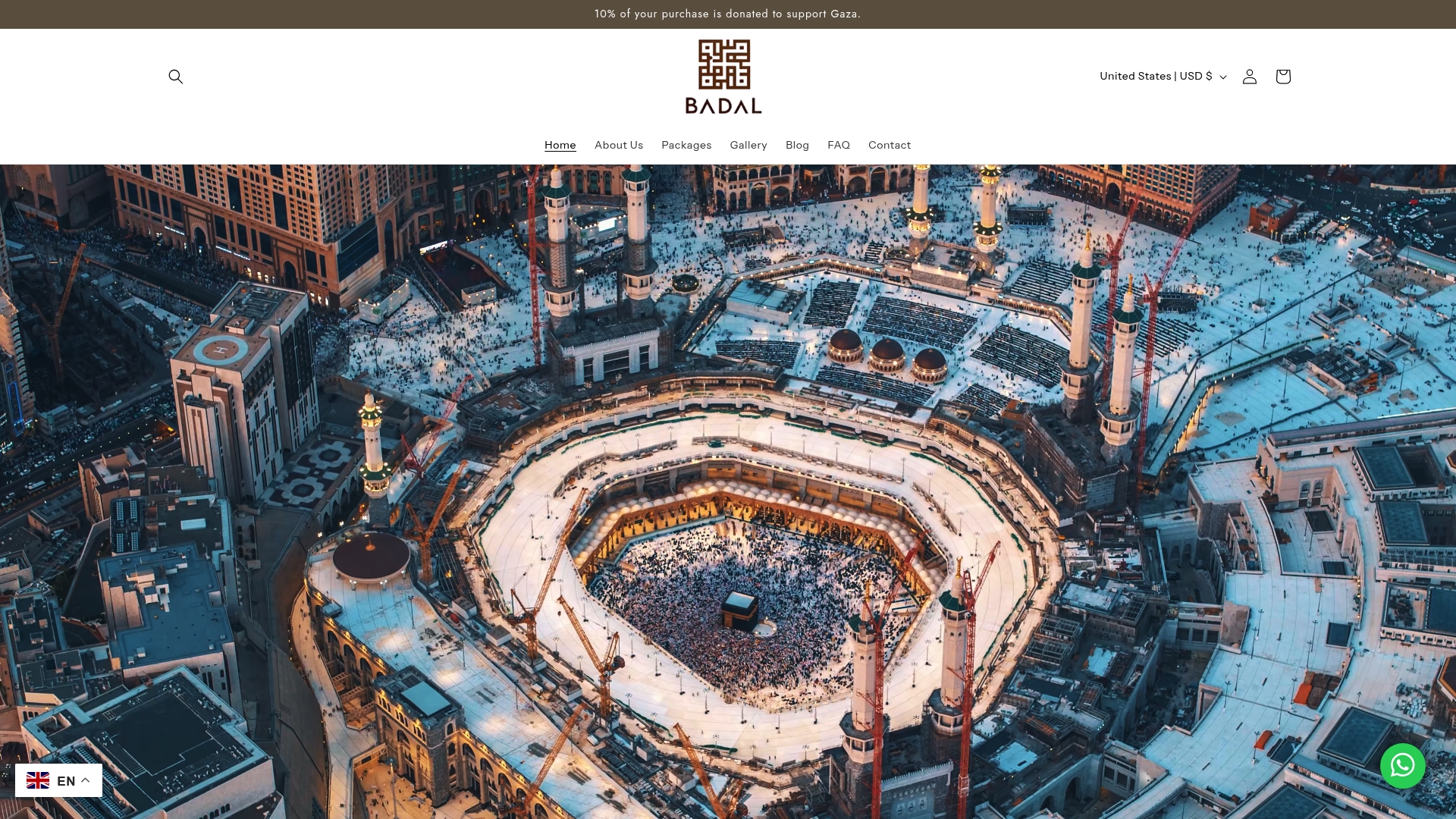
You can see every option on our Book Your Umrah page, or start with the Noor Package. For Hajj on behalf of someone, we offer Hajj Badal Ifraad at $1,500 and Hajj Badal Tamattu’ with Umrah and Qurbani at $2,500, on our Hajj Badal page.
FAQ
Does a woman need a mahram to perform Umrah for someone else?
The mahram rule concerns a woman’s travel, and it applies to her as it would for her own Umrah. Hanafi and Hanbali scholars generally require one for longer journeys, while Maliki, Shafi’i and Imamiyyah scholars allow safe, trustworthy company. Follow the school you follow, or ask a qualified scholar.
Can a woman do tawaf and sa’i alone once she reaches Makkah?
Under the strict classical view, the mahram is required for the journey, not for each rite. The Permanent Committee says she may go from her lodging to the Sacred Mosque and perform Umrah if she is safe from fitnah. Safety and good conduct still apply.
Does the proxy have to be related to the person she represents?
No. Islamweb states that the performer need not be related to the person for whom the Umrah is made, and it cites a Shafi’i statement that a non-relative may perform Hajj for a deceased person. What matters is that the person is a trustworthy Muslim who knows the rites.
Who can have Umrah performed on their behalf?
Someone who has died, or who is permanently unable to travel because of illness or old age, with no hope of recovery. Temporary or recoverable incapacity does not qualify, because a person who can be helped to perform the rites should do so.
Sources
- Mahram and Women’s Mobility in Islam, Georgetown Institute for Women, Peace and Security
- Incest and Inbreeding, Encyclopaedia Iranica
- Jordan Iftaa Department, ruling on a woman’s travel for Hajj or Umrah without a mahram
- Jordan Iftaa Department, travel for Hajj
- The Permanent Committee, the requirement of a mahram for travel
- Muslim Women Travelling Alone, Religions (MDPI)
- The Hajj, The Five Schools of Islamic Law, Al-Islam.org
- Islamic Relief UK, can I travel to Umrah or Hajj without a mahram
- The Guide to Hajj Rites
- Islamweb, performing Umrah for others
- IslamQA, ruling on appointing a proxy for tawaf or sa’i
- Hijab in a U.S. Passport Photo: Rules and Statement