- qurbani vs badal umrah
Qurbani vs. Badal Umrah: Two Different Acts of Worship
Published on Oct 30, 2026
Qurbani vs. Badal Umrah: Two Different Acts of Worship

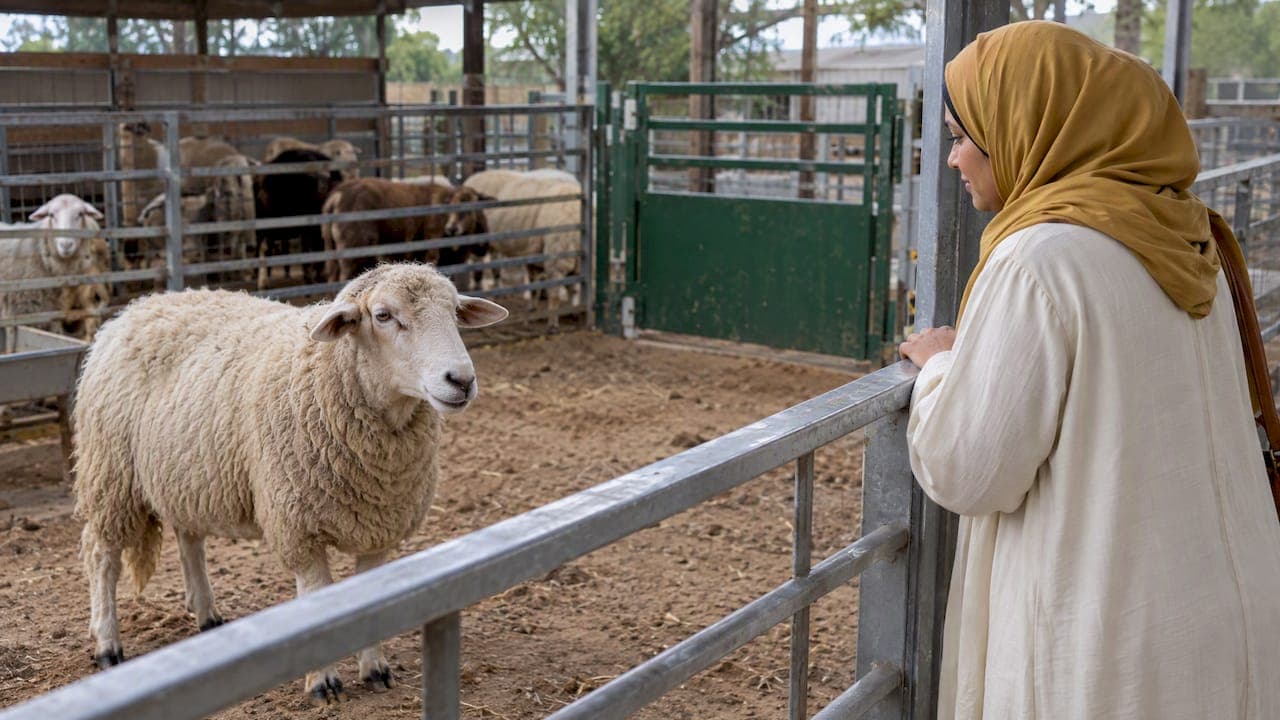
Qurbani and Badal Umrah are two separate acts of worship, and neither one fulfills the other. Qurbani (also called udhiyah) is an animal sacrifice tied to Eid al-Adha. Badal Umrah is an Umrah performed by a trusted person on behalf of someone who cannot perform it. You may do both in the same year. They answer different needs, and each carries its own conditions.
If you are weighing them because of a parent who has passed away, a relative who is too ill to travel, or a budget that does not stretch to everything, this guide sets out the differences plainly. It also covers sadaqah, aqiqah, zakat, and dua, because readers often ask whether one of these can take the place of Umrah.
TL;DR
- Qurbani is a sacrifice offered in a set window around Eid al-Adha. Badal Umrah is a pilgrimage performed by a proxy and can be arranged at any time of year.
- Qurbani cannot replace Badal Umrah, and Badal Umrah cannot replace Qurbani. If Qurbani is obligatory on you, it remains so.
- Sadaqah, aqiqah, zakat, and dua each have their own rulings. Sadaqah and dua benefit the deceased, but they are not a substitute for an Umrah you can still arrange for them.
- Badal Umrah is for the deceased, or for a living person who is permanently unable to travel. It is not for someone who is simply busy.
- Our Badal Umrah packages start at $150, with photos, video, and a certificate as proof of completion.
Table of Contents
- What Qurbani is
- What Badal Umrah is
- Qurbani vs. Badal Umrah, side by side
- Can one replace the other?
- Sadaqah and Badal Umrah
- Aqiqah and Badal Umrah
- Zakat and Badal Umrah
- Dua and charity for the deceased
- Combining acts: a practical plan
- Our perspective
- Arranging Badal Umrah with us
- FAQ
- Sources
What Qurbani is
Qurbani is the slaughter of an eligible animal as an act of worship, to draw nearer to Allah. Turkey’s Presidency of Religious Affairs defines the practice and notes that the Eid al-Adha sacrifice is called udhiyah, while the sacrifice offered during Hajj is called hady.
Timing matters. Scholars at Islam Question & Answer explain that udhiyah is offered in a specified period, from after the Eid prayer on the Day of Nahr until the end of the Days of Tashreeq. Outside that window, the same slaughter is ordinary meat, not udhiyah.
Who must give it depends on the school. In the Hanafi school, Qurbani is obligatory on every sane, adult, non-travelling Muslim whose wealth beyond their needs reaches the nisab threshold. Other schools treat it as a strongly emphasized sunnah. If you are unsure which applies to you, ask a scholar of your own school.
Three things people often mix up:
- Eid Qurbani (udhiyah): the annual sacrifice on Eid al-Adha.
- Hady: the sacrifice a pilgrim offers as part of Hajj, such as for Tamattu’.
- Dam: a sacrifice owed as compensation when a pilgrim breaks a rule of Hajj or Umrah.
These are three different things, and none of them is Badal Umrah.
What Badal Umrah is
Badal means “substitute.” In Badal Umrah, one person performs the full Umrah (ihram, tawaf, sa’i, and the shaving or trimming of hair) with the intention that its reward goes to someone else.

Islam Question & Answer describes it as Umrah performed for a deceased person, or for a living person who cannot do it because of extreme old age or a chronic illness from which recovery is not expected. That is the core rule. A healthy person who can travel is expected to go in person.
The proxy has conditions too. Scholars at Islamweb note, in the parallel case of Hajj, that the person acting for another should have already performed their own pilgrimage first, based on the Prophet’s question to a man who had not. Reputable Badal services apply the same standard when they choose who performs the Umrah.
Practical needs vary. If the person you are acting for is elderly and still able to travel with help, transport for elderly pilgrims in Saudi Arabia may make an in-person Umrah possible, and that remains the better route when it is genuinely possible. When it is not, Badal is the answer. We cover the rulings in more depth in our guide on whether Umrah for others is allowed.
Qurbani vs. Badal Umrah, side by side
| Qurbani (udhiyah) | Badal Umrah | |
|---|---|---|
| What it is | Sacrifice of an eligible animal | Umrah rites performed by a proxy |
| When | Set window around Eid al-Adha | Any time of year |
| Who it is for | Yourself and your household, with reward that can include others | A deceased person, or a living person permanently unable to travel |
| Obligation | Obligatory in the Hanafi school for those meeting the conditions; a strongly emphasized sunnah in others | Not obligatory as such; a way to benefit someone who cannot go |
| Who performs it | You, or an agent slaughtering for you | A proxy who has performed their own Umrah |
| Result | Meat shared with family and the poor | Completed rites with documentation |
The table shows why the question “which one should I choose?” is usually the wrong one. They sit in different categories. One is a yearly sacrifice. The other is a pilgrimage by delegation.
Can one replace the other?
No. Giving Qurbani does not discharge an Umrah that you wanted performed for a parent, and a Badal Umrah does not discharge a Qurbani that is obligatory on you.
There is one place where they overlap in language, and it causes confusion. Qurbani can include the reward for others. Islam Question & Answer says an udhiyah may include living or deceased household members in its reward, and that a separate sacrifice is not required for each deceased person. So a single Qurbani can remember your late father and mother together. That is a real benefit, but it is a different act from having an Umrah performed for them.

The same source adds that if a deceased person expressly bequeathed a sacrifice, or placed one in a waqf, that instruction should be carried out. If your relative left such a wish, honor it first.
Sadaqah and Badal Umrah
Sadaqah is voluntary charity. It is open to everyone, at any amount, and the reward can be dedicated to others. Egypt’s Dar al-Ifta permits dedicating the reward of voluntary charity to living or deceased parents.
For a deceased person, scholars at Islam Question & Answer state that charity on their behalf is valid whether given by a relative or by someone else, and that it may be offered together with supplication.
So is sadaqah a substitute for Badal Umrah? Not automatically. A fatwa on the same subject advises that if you can do both voluntary Umrah and charity, that is better. If you cannot, and you have already performed your own Hajj and Umrah, you may give the money to the poor instead. The point is that charity is a good in its own right, and the choice between the two is yours to weigh with your means and your scholar’s advice.
An easy way to think about it: sadaqah is what you can do today, in any amount. Badal Umrah is what you do when you want the specific reward of the pilgrimage for someone who never made it.
Aqiqah and Badal Umrah
Aqiqah is the sacrifice offered for a newborn. It is usually described as two sheep for a boy and one for a girl, preferably on the seventh day after birth, and it is commonly classed as a sunnah. Its purpose is gratitude for a child, so it has nothing to do with Umrah.
There is no overlap to resolve. A family welcoming a baby may give aqiqah, and the same family may arrange Badal Umrah for a grandparent in the same month. Neither affects the other. If a delayed aqiqah is on your mind, ask a scholar about timing for your school. Do not treat Badal Umrah as a way to make it up.
Zakat and Badal Umrah
Zakat is a pillar of Islam and a fixed obligation on those who meet the conditions. It is not voluntary giving, and it has defined recipients.
The majority of jurists require zakat to be transferred into the ownership of the eligible recipient, according to Egypt’s Dar al-Ifta. Paying a proxy to perform Umrah does not put the money into the hands of a person entitled to zakat in that way, so it does not fit that condition. Keep the two apart: pay your zakat as zakat, and pay for Badal Umrah from your ordinary funds. If you are unsure how this applies to your situation, speak to a scholar before you spend zakat money on anything other than its recipients.
Dua and charity for the deceased
For a parent or relative who has died, the first things most families do are dua and charity. The scholars cited above agree these benefit the deceased. A fatwa on the subject also states that performing Hajj or Umrah on behalf of the deceased benefits them as well.
Islam Question & Answer puts the practical advice simply: dua and charity are prescribed for the deceased, and if the person never performed Hajj or Umrah and you are able, do it on their behalf.
A few cautions from the same body of scholarship:
- Scholars differ on Qur’an recitation for the dead. Ibn Baz held there is no evidence for it and that it is better to leave it. Ask a scholar you trust if this is part of your family’s practice.
- Dua costs nothing and should never wait. You do not need to choose between dua and Umrah. Make dua now, and arrange Umrah when you can.
- If the deceased left a debt, settle it first or alongside. Our guide to Umrah for debt-burdened relatives walks through that.
For timing and steps after a death, see Umrah after a loved one’s death. For a parent in particular, we explain the niyyah and vetting steps in Umrah for a deceased mother and Umrah for deceased parents.
Combining acts: a practical plan
Most families do not face a strict either-or. Here is a simple order that respects each ruling.
- Check what is obligatory. Zakat, debts, and Qurbani (if you follow the Hanafi school and meet the conditions) come first.
- Honor any written wish. If your relative asked for a sacrifice, a waqf, or a Hajj or Umrah, carry it out.
- Make dua daily. It is open to everyone, in every season.
- Give sadaqah in whatever amount you can. Regular small gifts count.
- Arrange Badal Umrah when the person is deceased or permanently unable to travel, and when your means allow.
If money is tight, the fatwa above gives you room: you can give to the poor in place of a voluntary Umrah when you have already performed your own. Choose with a clear conscience, not guilt.
Our perspective
We hear one question again and again: “Is it enough if I give Qurbani for my father this year?” Our answer is gentle but clear. Qurbani is a beautiful act, and you can remember your father in it. It is not an Umrah, and it does not carry the particular reward of the pilgrimage he may not have made.
We also meet families who feel anxious that they have done too little. We would rather reassure them. Dua, sadaqah, and Qurbani are all real acts of love. Badal Umrah is one more, for those who can arrange it. You are not choosing between good and bad. You are adding one more good thing.
That is why we do the work the way we do. Each Umrah is performed according to Islamic rulings, checked by qualified imams, and documented so you can see it was done. A portion of our profits is pledged to charity, including support for Gaza, because we believe service and giving belong together.
— anas
Arranging Badal Umrah with us
If Badal Umrah is the right step for your family, our packages are one-time fees with no recurring charges. Each includes proof of completion, and our team is there to answer questions along the way.
- Du’a Package: $150
- Noor Package: $250
- Barakah Package: $400
- Jariyah Premium Package: $500
If you are also thinking of Hajj on behalf of a loved one, we offer Hajj Badal, Ifraad at $1500 and Hajj Badal, Tamattu’ (with Umrah and Qurbani) at $2500. You can compare everything on our Umrah packages and prices page, or go straight to booking your Umrah.
For a parent still living, read first about Badal Umrah for an elderly parent and when Umrah for a living person is permitted.
FAQ
Can I give Qurbani instead of Badal Umrah for my deceased parent?
No, they are different acts. Your Qurbani may include your parents in its reward, but it does not stand in for an Umrah. If you can, do both: remember them in Qurbani and arrange Umrah for them separately.
Is Badal Umrah the same as the sacrifice some pilgrims give on Umrah?
No. Badal Umrah is a pilgrimage performed for someone else. A sacrifice during Umrah is a separate matter that applies only in certain cases, such as when a rule is broken. See our guide on the Umrah sacrifice requirement for the details.
Can I use zakat to pay for Badal Umrah?
This does not fit the usual conditions. The majority of jurists require zakat to pass into the ownership of an eligible recipient, and a proxy’s Umrah is not that. Pay for Badal Umrah from your other funds, and ask your scholar if your case is unusual.
Is charity enough for someone who died without performing Umrah?
Charity and dua benefit the deceased and are always welcome. Scholars also advise that if the person never performed Hajj or Umrah and you are able, you should perform it on their behalf. Where you can do both, that is better.
Can Badal Umrah be done for a living person?
Only in specific cases, such as extreme old age or a chronic illness with no expected recovery. A person who can travel should go in person. Our page on Umrah for parents explains how we check each case.
Sources
- Kurban ibadetinin mahiyeti ve hükmü nedir? (Turkey’s Presidency of Religious Affairs)
- Rulings of Udhiyah (Islam Question & Answer)
- Qurbani Rules (Islamic Relief)
- Can you delegate someone to perform Umrah on behalf of another (Islam Question & Answer)
- Conditions for performing Hajj on behalf of a living person (Islamweb)
- Charity on behalf of living parents (Egypt’s Dar al-Ifta)
- Charity on behalf of the deceased (Islam Question & Answer)
- Giving precedence to charity over supererogatory Umrah (Al-Feqh)
- The Ruling on the Aqeeqah (Bakkah)
- Zakat to a needy husband (Egypt’s Dar al-Ifta)
- The Prescribed Deeds That Benefit the Deceased (Al-Fatawa)
- Ruling on reading Qur’an for the dead (Islam Question & Answer)