- umrah packages for seniors
- umrah for grandparents
- Affordable Umrah for grandparents
- Elderly Umrah tours
- Elderly travel agencies for Umrah
- Senior-friendly Umrah options
- Group Umrah for older adults
- Umrah preparation for seniors
- Umrah travel for elderly
- Best time for grandparents Umrah
From $150–$500: Badal Umrah for Grandparents with Verified Proof
Published on Oct 1, 2026
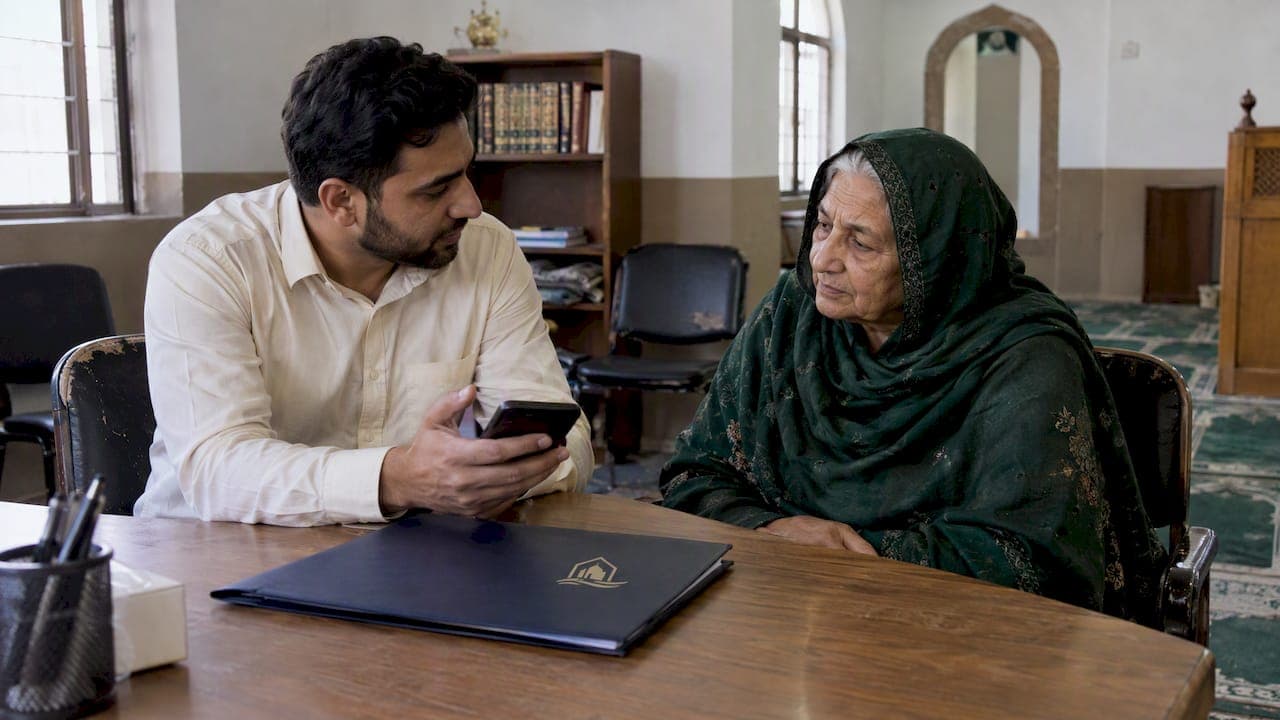

Yes, you can arrange for Umrah to be performed on behalf of a grandparent who cannot travel, and mainstream Islamic rulings support this when specific conditions are met. The first step is simple: confirm which category applies (deceased, chronically ill, or permanently unable to travel due to age) and gather your grandparent’s full legal name and consent or medical documentation. Services such as Badal Umrah exist specifically to carry out this ritual on a principal’s behalf once eligibility is clear.
TL;DR:
- Most providers deliver proof within a few days of booking, with full documentation, including certificates and photos or videos, often arriving within a few weeks.
- Only providers who clearly disclose staff, perform the ritual themselves, and furnish verifiable proof should be trusted to handle this sensitive religious process.
- Medical or age-related documentation required for eligibility is typically simple, such as a medical note or a family statement, and families should verify proof materials before completing payment.
- Confirming whether the representative has completed their own obligatory Umrah is a key condition, especially for performing on behalf of deceased or incapacitated grandparents.
- Packages range from basic certificates at $150 to comprehensive proof and live updates at $500, all with transparent pricing and a portion of profits supporting charitable efforts.
Table of Contents
- Who qualifies for Umrah by proxy and key religious conditions
- What a legitimate Badal Umrah provider does and the proof you should receive
- An actionable checklist and script for vetting any provider
- How to request Umrah for a grandparent, step by step
- Health and mobility realities that make travel impossible for many grandparents
- Special arrangements worth considering for a grandparent’s Badal Umrah
- Handling the emotional side of arranging Umrah for someone you love
- Common challenges families run into, and how to handle them
- Arranging it for my own grandmother taught me what actually matters
- Badal Umrah’s packages and what each one delivers
- Sources
- FAQ
Who qualifies for Umrah by proxy and key religious conditions
Not every grandparent situation calls for Badal Umrah, and checking eligibility first saves families from booking prematurely. According to a fatwa addressing Umrah on behalf of parents, it is lawful to perform Hajj or Umrah for another person when that person is dead, chronically ill, or too old to travel, with classical hadith cited to support the practice.
The qualifying cases generally fall into three groups:
- The grandparent has passed away and never completed an obligatory Umrah.
- The grandparent suffers from a chronic or incurable illness that prevents travel.
- Advanced age has made travel genuinely impossible, not just inconvenient.
Scholars draw a distinction between an obligatory (fard) Umrah owed by the person and a voluntary (nafl) one performed as a gift. The fard case is more clearly supported across fatawa, while voluntary Umrah on someone’s behalf carries more nuance and often depends on that person’s own wish or consent. A separate ruling on Umrah on behalf of a deceased person adds a widely cited condition: the person acting as the representative should have already performed their own Umrah before taking on someone else’s.
Families typically gather a few things before booking: the grandparent’s full name as it appears on official identification, a brief statement of relationship or legal authority, and, where illness is the basis for the request, a simple medical confirmation. None of this needs to be elaborate, but having it ready keeps the booking process quick and the intention clear.
What a legitimate Badal Umrah provider does and the proof you should receive
A representative performing Badal Umrah follows the same physical steps as a personal Umrah: entering the state of Ihram with the intention (niyyah) explicitly set for the named principal, performing tawaf around the Kaaba, completing sa’y between Safa and Marwah, and finishing with haircut or shaving. The difference is entirely in the intention: the ritual is dedicated to the grandparent by name, not performed for the representative’s own benefit.
A trustworthy provider documents this process in stages:
- Confirmation of the booking and the principal’s details shortly after payment.
- Assignment of a representative, with disclosure of who is performing the ritual and whether any subcontracting occurs.
- Execution of the Umrah with photo or video capture at key moments, Ihram, tawaf, sa’y, and the haircut or shaving.
- Delivery of a certificate naming the principal, along with imam or scholar confirmation that the ritual was completed correctly.
Guidance drawn from scholarly answers on performing Umrah on behalf of a dead person stresses that representatives must be trustworthy and knowledgeable, and warns specifically against providers who accept many bookings and quietly hand them off to unnamed third parties. That warning is exactly why photo and video proof, a named certificate, and clear staffing disclosure matter: they turn a religious trust issue into something a family can actually verify.
Pro Tip: Ask for a sample certificate and sample proof photos before you book, not after, so you know what “delivery” will actually look like.
Timelines vary by provider and package, but a reasonable expectation is confirmation within a day or two of booking and full proof delivered within the stated execution window, often a few weeks depending on scheduling.

An actionable checklist and script for vetting any provider
Choosing who performs Umrah for your grandparent deserves the same scrutiny you would apply to any representative handling a sensitive family matter. Look for these signals before paying anything:
- Clear photo and video proof tied to specific ritual moments, not generic stock imagery.
- A certificate that names the principal directly, not a generic receipt.
- Confirmation that an imam or qualified scholar has verified the ritual was performed correctly.
- Transparent written terms covering price, refund policy, and what happens if something goes wrong.
- A plain statement of who performs the ritual, with no vague language about “our team” or undisclosed subcontracting.
One in three adults in the United States serves as an unpaid family caregiver for an aging relative, a role that often extends to managing religious and legal arrangements like this one on a grandparent’s behalf.
Red flags include a refusal to show detailed proof, prices that sit well below every competitor with no explanation, and an absence of any written terms at all. If a provider cannot answer direct questions clearly, that hesitation tells you something.
Before booking, ask any provider these six questions: Who specifically will perform the Umrah? Will any part of the service be subcontracted, and if so, to whom? Can you see sample proof from a past booking? What is the expected timeline from booking to delivery? What is the refund policy if something goes wrong? What exactly is included in each package tier? A provider’s FAQ page and package descriptions should answer most of these without you having to ask twice.
How to request Umrah for a grandparent, step by step
Once eligibility is confirmed, the booking process itself is straightforward if you follow a clear sequence.
- Confirm eligibility and gather proof of incapacity. For chronic illness, a simple medical note is usually enough; for very advanced age, a family statement often suffices.
- Choose a package and prepare the grandparent’s details. You will need the full name as it appears on official identification, the specific intention wording (whether this is their first Umrah or a repeated one), and a note on your relationship or legal authority to make the request.
- Complete the booking and confirm the proof you’ll receive. Before paying, get clear on exactly what documentation comes with the package, photos, video, certificate, and the expected delivery window.
- Verify the materials once delivered. Check that the certificate names your grandparent correctly, that proof images correspond to the ritual stages described, and that any questions get a direct answer from the provider.
Pro Tip: Keep a copy of every document, the certificate, photos, and your original request details, in a family folder. If the Umrah was performed for a deceased grandparent, this record can matter for estate and family accounting purposes later.
This sequence works the same way whether you are a grandchild handling the request or a legal representative acting on a wider family’s behalf. The reading on who can request Badal Umrah and the step-by-step process behind how the service works cover the finer details if your situation has unusual aspects, such as multiple family members contributing to one booking.
Health and mobility realities that make travel impossible for many grandparents
The whole premise of Badal Umrah rests on a simple physical reality: Umrah involves hours of walking, standing in crowds, and navigating large, busy spaces, none of which is forgiving for someone with limited mobility or a serious chronic condition. Tawaf alone means circling the Kaaba seven times on foot or by wheelchair through dense crowds, and sa’y requires a similar repeated walk between two points.
For a grandparent managing heart disease, severe arthritis, dementia, or recovery from a major illness, the physical and logistical demands can outweigh any accommodation a family could arrange on-site. This is precisely the situation that qualifying rulings on performing Umrah for someone chronically ill are meant to address. Rather than risking a grandparent’s health or safety to complete a physically demanding pilgrimage, the family arranges for someone else to perform it on their behalf, fulfilling the religious intention without the physical burden.
Families sometimes wonder whether a modified, assisted version of Umrah might be a middle ground. In practice, if a grandparent’s condition genuinely prevents safe travel and participation, the Badal route is the one most scholars consider appropriate, not a partial attempt with added risk.
Special arrangements worth considering for a grandparent’s Badal Umrah
Even though a grandparent is not traveling, a few practical arrangements still deserve family attention before booking. If the request involves a living grandparent, their own consent matters: where they are mentally capable of expressing a wish, ask them directly whether they want this Umrah performed on their behalf, and document that conversation briefly.
If the grandparent lives with a caretaker or in assisted care, it helps to loop that caretaker in, since they may hold medical records needed to confirm chronic illness or may be the most practical point of contact for confirming details during the booking process. Coordination between a grandparent’s caretaker and the family member making the request reduces the chance of mismatched details on names, medical conditions, or intention.
For families managing multiple elderly relatives at once, perhaps arranging Umrah for both grandparents, or for a grandparent and a deceased grandparent in the same family, keeping separate documentation for each request avoids confusion when proof arrives. A brief guide on elderly safeguarding for families offers useful context on handling a grandparent’s personal information and consent respectfully throughout this kind of process, particularly when multiple relatives are involved in the decision.
Handling the emotional side of arranging Umrah for someone you love
Arranging Umrah on behalf of a grandparent is rarely just a transaction. For many families, it carries real emotional weight, especially when the grandparent is seriously ill or has already passed away and the Umrah is being performed in their memory. Recognizing that weight matters as much as getting the paperwork right.
If the grandparent is still alive and aware, involving them in the decision, even briefly, can turn the process into something meaningful rather than something done to them. Sharing the proof once it arrives, the certificate, the photos, the imam’s confirmation, often becomes a small family moment rather than a mere formality.
When the Umrah is performed for a grandparent who has died, some families choose to share the certificate and proof with the wider family, treating it as both a religious fulfillment and a form of closure. There is no single right way to handle that moment, but providers who deliver clear, respectful documentation make it easier for families to mark the occasion the way they want to, rather than being left with vague confirmation and unanswered questions.
Common challenges families run into, and how to handle them
A few problems come up repeatedly when families arrange Badal Umrah for an elderly or incapacitated grandparent, and most have straightforward fixes.
Uncertainty about eligibility. Families sometimes aren’t sure whether age alone qualifies, or whether a specific diagnosis is needed. When in doubt, a brief medical note describing the condition and its impact on travel is usually sufficient, and providers can often clarify what documentation they need before booking.
Disagreement among family members. When several relatives want to contribute or disagree on which package to choose, naming one point person to handle communication with the provider avoids mixed messages and duplicate bookings.
Delayed or unclear proof. Occasionally, proof arrives later than expected or without enough detail. Asking for a specific delivery window at booking, and following up directly if that window passes, resolves most of these cases quickly.
Concern about who actually performs the ritual. This is the most sensitive issue, and it ties directly back to the scholarly warning against undisclosed subcontracting. Asking a provider directly who performs the Umrah, and requesting confirmation in writing, addresses this before it becomes a problem.
Arranging it for my own grandmother taught me what actually matters
When my family arranged Badal Umrah for my grandmother, the paperwork felt minor compared to the wait for proof. What surprised me was how fast the photos and certificate arrived, within the window we were told, which made the whole process feel real rather than abstract. The one thing I wish we’d asked upfront was whether the imam verification would be named specifically, rather than just mentioned in general terms. It mattered more to the family than we expected.
— anas*
Badal Umrah’s packages and what each one delivers
The service offers four Umrah tiers built around the same core promise: the ritual is performed according to Islamic conditions, verified, and documented so your family knows what happened and when.
- The Du’a Package is the entry-level option at $150 and includes a certificate confirming completion.
- The Noor Package at $250 adds photo and video proof of the ritual stages.
- The Barakah Package at $400 expands documentation further with fuller certificate and media coverage.
- The Jariyah Premium Package at $500 includes extended proof and live updates throughout the process.
Every tier includes transparent pricing with no hidden fees, and a portion of profits from each booking supports ongoing charitable work aligned with Islamic values. If your family is ready to arrange Umrah for a grandparent who cannot travel, you can review the full range of packages and start a booking today.
Sources
Readers who want to verify the religious and procedural basis for this guide can consult the following references directly.
For official pilgrimage logistics, the Ministry of Hajj and Umrah outlines the Umrah permit application process and has launched the Nusuk Umrah service to let traveling pilgrims apply for permits directly online. These platforms serve travelers performing their own pilgrimage, which is a separate process from arranging Badal Umrah for someone who is not traveling.
For the religious rulings behind performing Umrah on another’s behalf, the fatwa on Umrah on behalf of parents and the scholarly answer on Umrah on behalf of a deceased person provide the core conditions referenced throughout this guide.
- Making Umrah on behalf of parents — IslamWeb fatwa
- Can You Delegate Someone to Perform `Umrah on Behalf of a Dead Person? - Islam Q&A
FAQ
Can you perform Umrah on behalf of a living grandparent?
Yes, when the grandparent is chronically ill or too old to travel safely, performing Umrah on their behalf is permitted under mainstream rulings. A fatwa on Umrah for parents unable to travel confirms this applies specifically to cases of chronic illness or advanced age, not general inconvenience.
Does the person performing Badal Umrah need to have done their own first?
Many scholarly rulings state that the representative should have already completed their own obligatory Umrah before performing one on someone else’s behalf. This condition appears consistently in guidance on Umrah on behalf of a deceased person and is a standard practice among reputable providers.
What proof should I expect after booking a Badal Umrah service?
A legitimate provider delivers a certificate naming the principal, along with photo or video documentation of key ritual moments such as Ihram, tawaf, and sa’y. Many packages, including Badal Umrah’s Noor and Barakah tiers, include this documentation as a standard feature.
How long does it take to arrange Umrah for a grandparent?
Confirmation typically happens within a day or two of booking, with the full ritual and proof delivery completed within the provider’s stated window, which varies by package. Confirming this timeline directly with the provider before paying avoids surprises later.
Is it acceptable to pool money from multiple grandchildren for one Badal Umrah?
Yes, families often combine contributions for a single Badal Umrah booking, as long as the intention and the principal’s name are clearly documented. Keeping a simple record of who contributed helps avoid confusion, particularly when the Umrah is performed in memory of a deceased grandparent.