- hanafi vs shafi ihram
Hanafi vs Shafi'i Ihram: Key Differences, Explained Simply
Published on Nov 23, 2026
Hanafi vs Shafi’i Ihram: Key Differences, Explained Simply

The Hanafi and Shafi’i schools agree on what ihram is and on most of what it forbids. They differ on how a person enters it, on fragrance and fastening the garments, and on how some mistakes are made up. If you cannot travel and someone will perform Umrah for you, these differences matter because the representative’s ihram is the doorway to your Umrah. At Badal Umrah we perform every Umrah in line with Islamic law, verified by qualified imams, and we send you proof you can see: photos, video and a certificate.
This guide explains the differences in plain language. It is general education, not a fatwa. For a personal ruling, ask a qualified scholar of your own school.
TL;DR
- Entering ihram: in the Hanafi school, intention plus talbiyah puts you in ihram. In the Shafi’i school, intention alone is enough.
- Fragrance: both schools recommend it on the body before ihram. They differ on perfuming the ihram clothes.
- The miqat: every school says to return to the miqat if you passed it without ihram. The remedies differ if you cannot return.
- Umrah for someone else: the Shafi’i school requires the representative to have done their own Umrah first. The Hanafi school prefers it but does not make it a condition.
- For you: the rulings concern the person performing the rites. Choose a service that follows them and shows proof.
Table of Contents
- What ihram is, in one minute
- The main difference: how ihram begins
- Fragrance, clothing and what you may apply
- Entering before, at or after the miqat
- When a restriction is broken: fidyah, dam and invalidation
- Umrah for someone else: the part that matters to you
- What to look for in a service, whichever school you follow
- Our perspective
- Ready to arrange Umrah on behalf of someone you love
- FAQ
- Sources
What ihram is, in one minute
Ihram is a state of consecration you enter for Umrah or Hajj. It begins when the pilgrim intends the rites and starts the talbiyah, which for Umrah is the declaration “Labbayka Allahumma Umrah,” according to the Saudi Ministry of Hajj and Umrah’s ihram guide. The same guide lists the miqats, the boundary points where pilgrims coming from outside must enter ihram. They include Dhul Hulayfah, about 420 km from Mecca, and Yalamlam, about 115 km away.
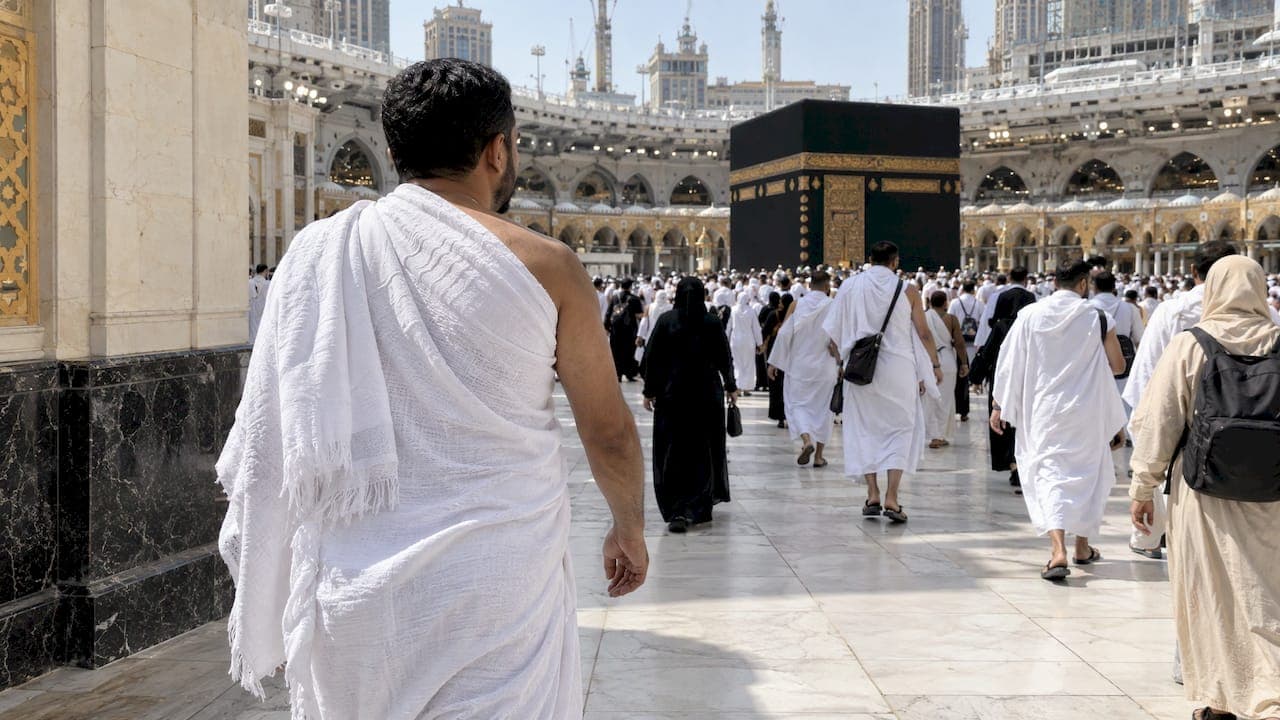
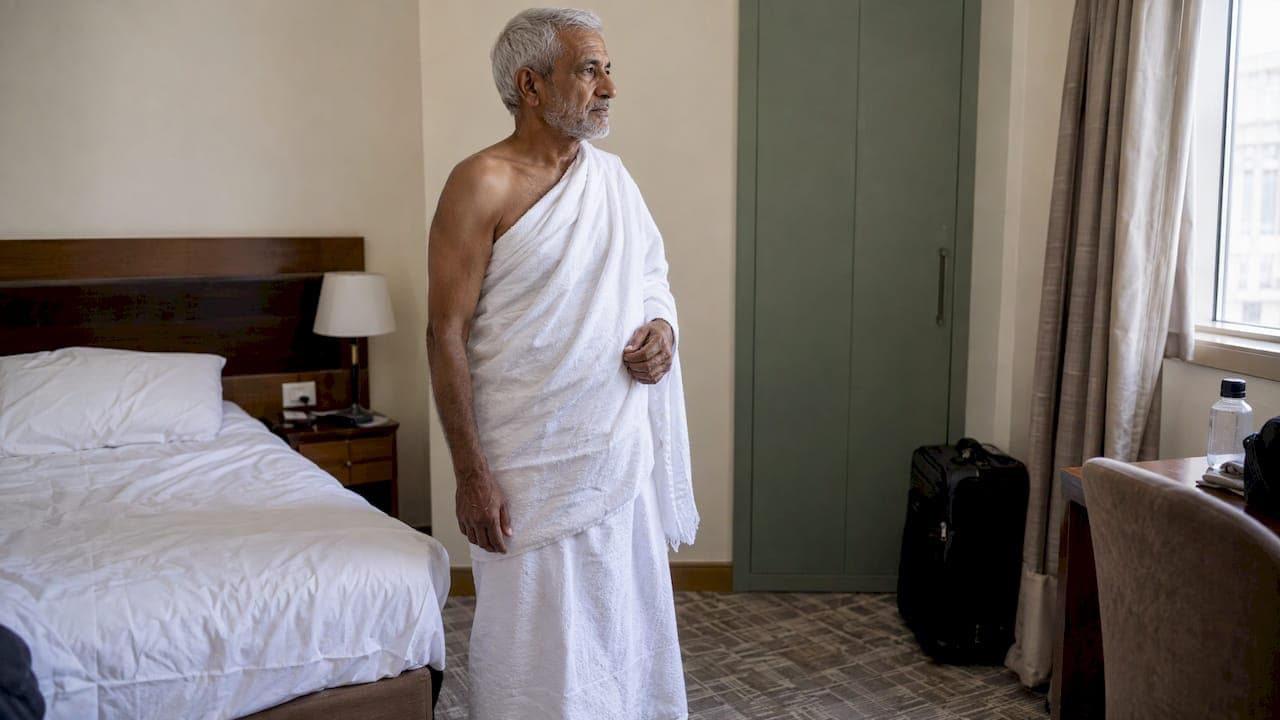
Men wear two unstitched sheets. All five schools agree a man in ihram may not wear stitched clothing, shirts or trousers, and may not cover his head or face voluntarily. A woman covers her head, keeps her face uncovered, and the schools generally say she should not wear gloves. Abu Hanifah allowed gloves, per Al-Islam.org’s summary of the five schools.
The Hanafi and Shafi’i schools both sit within Sunni fiqh. Their differences are ones of method and detail, not of belief.
The main difference: how ihram begins
This is the point readers search for most.
| Question | Hanafi | Shafi’i |
|---|---|---|
| What puts you in ihram? | Intention together with talbiyah (or another phrase of remembrance that venerates Allah) | Intention alone |
| Is talbiyah still done? | Yes, it is part of entering | Yes, as a core act of the rite |
Al-Islam.org’s summary states that in the Hanafi school ihram does not begin on intention alone unless talbiyah accompanies it, while in the Shafi’i school it is assumed by intention alone (Al-Islam.org). A Hanafi source from Seekers Guidance gives the conditions for a valid ihram as being Muslim, intending Hajj, Umrah or both at the miqat, and reciting talbiyah or another phrase that venerates Allah (IslamQA, Hanafi section).
In practice: most pilgrims do both at the same moment, so the difference rarely changes what is done. It matters when someone makes the intention in the heart earlier, for example on a plane or a bus. A Hanafi pilgrim is not yet in ihram until the talbiyah. A Shafi’i pilgrim already is, and the restrictions apply.
Fragrance, clothing and what you may apply
Both schools like a ghusl (full wash) and a clean, pleasant start. The details differ.
- Hanafi: scent the body and clothes before ihram with a perfume whose trace does not remain except the smell.
- Shafi’i: apply perfume to the body after bathing, except when fasting. Perfuming the clothes is treated as not mattering.
This comes from the same Al-Islam.org comparison. Once ihram has begun, fragrance is forbidden in every school. A pilgrim who applies perfume afterwards owes a remedy, covered below.
Brushing teeth, soap and everyday cleanliness
Cleanliness is allowed. Dar al-Ifta al-Misriyyah’s Hajj booklet lists bathing, using soap even if scented for cleanliness, and having a tooth extracted as permissible for a muhrim, the person in ihram (Dar al-Ifta booklet, 2014). So a pilgrim can wash and care for hygiene.
Toothpaste is where the Hanafi tradition is more careful. A Hanafi fatwa on IslamQA says brushing with toothpaste in ihram is makruh, strongly disliked, because of its fragrance. It adds that someone who did so should seek forgiveness, and that no sadaqah or dam is required (IslamQA, Hanafi). The practical habit is to use an unscented option or a miswak.
Women and stitched clothing
The stitched-clothing restriction is for men. A woman wears ordinary modest clothing, covers her head and leaves her face uncovered. A bra or other undergarment is not a stitched garment of the kind the restriction targets. If you have a specific concern, ask a scholar of your school.
Fastening the garments
Practical points on pins, buttons and ties vary by school and teacher. If the pilgrim follows one school, the safest course is to follow the guidance of that school’s scholars on how to secure the izar (lower sheet) and rida’ (upper sheet).
Entering before, at or after the miqat
All the schools agree on the main rule: a person coming from outside the miqat must not pass it intending Umrah without ihram. The Saudi ministry’s Miqaats page says that if he trespasses without ihram he must return to it, and if he assumes ihram after passing it he must offer a fidyah, a compensation.
The schools then give different details on what happens if he does not return. The Marifah Institute cites the Hanafi view that a sheep is binding on him, which falls away if he returns to the boundary and assumes ihram. For the Shafi’i school, it reports that returning is binding unless time is restricted or the path is dangerous, and a sacrifice is binding if he does not return (Marifah Institute).

This is why a representative performing your Umrah must be clear about where ihram starts. For most people flying into Jeddah, the point is the miqat for their route, not the airport gate.
When a restriction is broken: fidyah, dam and invalidation
Most slips do not cancel the Umrah. Dar al-Ifta states that if a restriction is broken before tahallul, the exit from ihram, the Umrah is still valid, but the pilgrim must slaughter a sheep, feed six poor people, or fast three days. Sexual intercourse is the act that nullifies the rite (Dar al-Ifta). The three-way choice follows the Qur’anic verse 2:196 and the hadith of Ka’b ibn 'Ujrah.
The Hanafi school classifies the remedy by how serious the act was. Smaller breaches may call for sadaqah, larger ones for a dam, the gravest for a badanah. The Shafi’i approach works from the Qur’anic fidyah directly. The details of which act falls in which tier are for scholars. The point for you is that the representative should know them well and avoid every restricted act.
Umrah for someone else: the part that matters to you
The ihram is entered by the representative, with the intention made for you. The Shafi’i and Hanbali schools require that he or she has already completed their own Umrah. The Hanafi school considers it better, not a condition. One Umrah cannot be for two people (Amalkit). For a deeper look, see our article on proxy before your own Hajj.
Schools also differ on how much Umrah itself is required. Al-Islam.org states that the Hanafi and Maliki schools consider Umrah a highly recommended sunnah, while the Shafi’i and Hanbali schools consider it obligatory for those who are able (Al-Islam.org). That is why Shafi’i families often feel a stronger duty to arrange Umrah for a parent who is too ill to travel or who has died. Our overview of rulings by madhhab sets this out school by school, and is Umrah for others allowed covers the basics.
A related question is whether a woman can travel for Umrah without a mahram. This is a travel rule rather than an ihram rule. A Hanafi fatwa from Jamiatul Ulama KZN says generally a woman may not travel three days (48 miles) without her husband or a mahram. It reports that al-Shafi’i held safety is the condition for Hajj travel, with some Shafi’i scholars allowing a group of trustworthy women (Jamiatul Ulama KZN). If your representative is a woman, ask how that is arranged.

What to look for in a service, whichever school you follow
Whatever your madhhab, you can hold the service to a few clear standards:
- The representative’s own Umrah is complete, so every school is satisfied.
- Ihram at the right miqat, with the intention made for the named person.
- One named person per Umrah, not several at once. See Umrah for multiple people and multiple proxy Umrahs.
- Proof you can see: photos, video and a certificate.
- Clear rulings and eligibility, as laid out in our guide to Saudi fatwas, eligibility and proof.
Our perspective
When a family comes to us, they are usually grieving, or worried about a parent who can no longer travel. They are not asking which school wins. They want to know the Umrah is done properly and that they can see it.
That is why we hold every Umrah to Islamic law and have it verified by qualified imams. Where the schools differ on ihram, such as how it begins, scent or the miqat, the safest service is the one that takes the rite seriously from the first step.
We also give you what a distant family needs: documentation, video, a certificate and real-time updates, with compassionate support. For you. For your loved ones. For their forgiveness.
anas
Ready to arrange Umrah on behalf of someone you love
Our packages are one-off fees with no recurring charges. The Du’a Package is $150, the Noor Package $250, the Barakah Package $400 and the Jariyah Premium Package $500. Each comes with proof of completion. You can see the full details on the Du’a Package, Noor Package, Barakah Package and Jariyah Premium Package pages. If you want to begin, start at badalumrah.org.

For Hajj on behalf of someone, we offer Hajj Badal, Ifraad at $1,500 and Hajj Badal, Tamattu’ with Umrah and Qurbani at $2,500.
FAQ
Is ihram valid in the Shafi’i school with intention only?
Yes. The Shafi’i school holds that ihram is assumed by intention alone. The Hanafi school requires the talbiyah with the intention. Most pilgrims say both together, so the difference seldom changes what happens at the miqat.
Can I brush my teeth in ihram?
Cleanliness is allowed, and Dar al-Ifta lists bathing and even scented soap for cleanliness as permissible. A Hanafi fatwa calls toothpaste makruh and advises asking forgiveness if it was used, with no sadaqah or dam due. An unscented option is the careful choice.
Can a woman do Umrah without a mahram under Hanafi and Shafi’i rulings?
The Hanafi view generally requires a husband or mahram for a journey of three days. Shafi’i scholars treat safety as the condition and some allow a group of trustworthy women. This is a travel rule, not part of ihram. Ask a scholar of your school about your own case.
Does it matter which school the person doing my Umrah follows?
The representative enters ihram and performs the rites, so the schools’ rulings apply to what they do. Choose a service that follows Islamic law, has the representative complete their own Umrah first and gives you proof.
What happens if someone passes the miqat without ihram?
All schools say to return to the miqat and enter ihram. If ihram is assumed after passing it, the Saudi ministry says a fidyah is due. The details of the remedy differ between the Hanafi and Shafi’i schools.
Sources
- Saudi Ministry of Hajj and Umrah: ihram guide
- Saudi Ministry of Hajj and Umrah: Miqaats
- Al-Islam.org: The Ihram, Five Schools of Islamic Law
- Al-Islam.org: Umrah, Five Schools of Islamic Law
- IslamQA (Seekers Guidance): rulings of ihram
- IslamQA (Askimam): toothpaste in ihram
- Marifah Institute: passing the miqat without ihram
- Dar al-Ifta al-Misriyyah: Hajj and Umrah booklet
- Jamiatul Ulama KZN: women travelling without a mahram
- Amalkit: Umrah on behalf of someone else