- miqat for badal umrah
Miqat for Badal Umrah: Where the Proxy Enters Ihram
Published on Nov 22, 2026
Miqat for Badal Umrah: Where the Proxy Enters Ihram

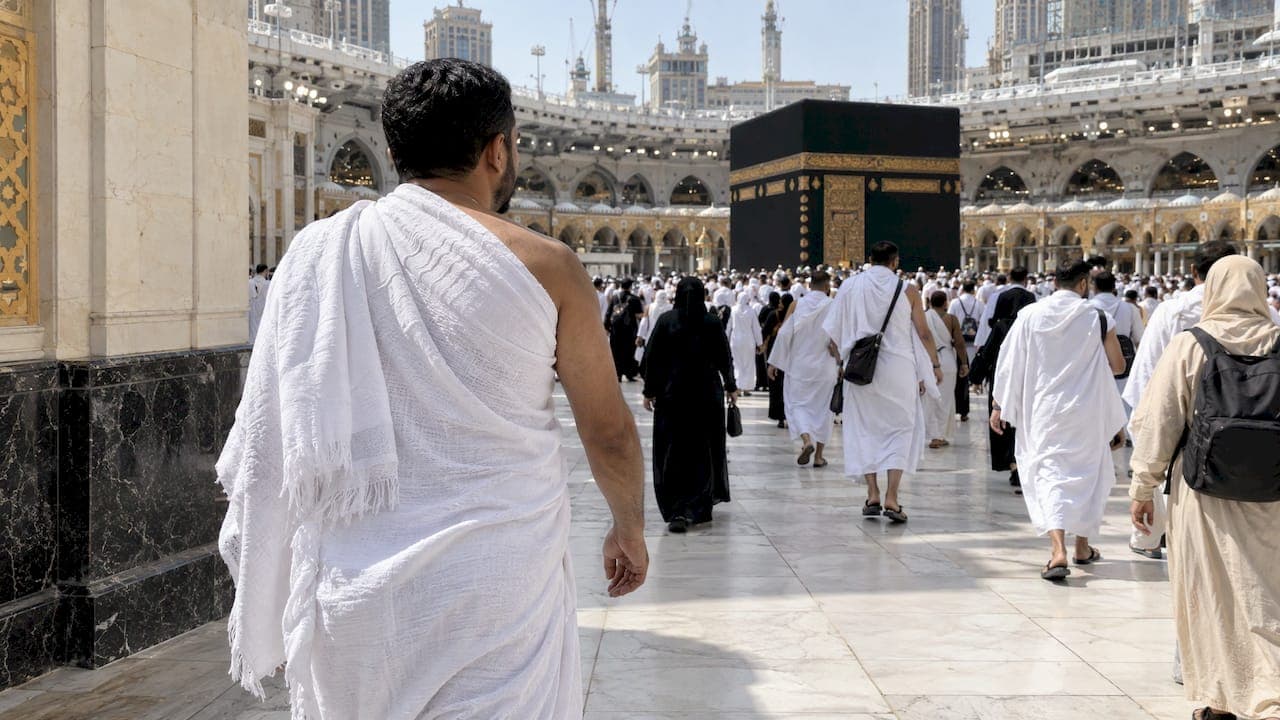
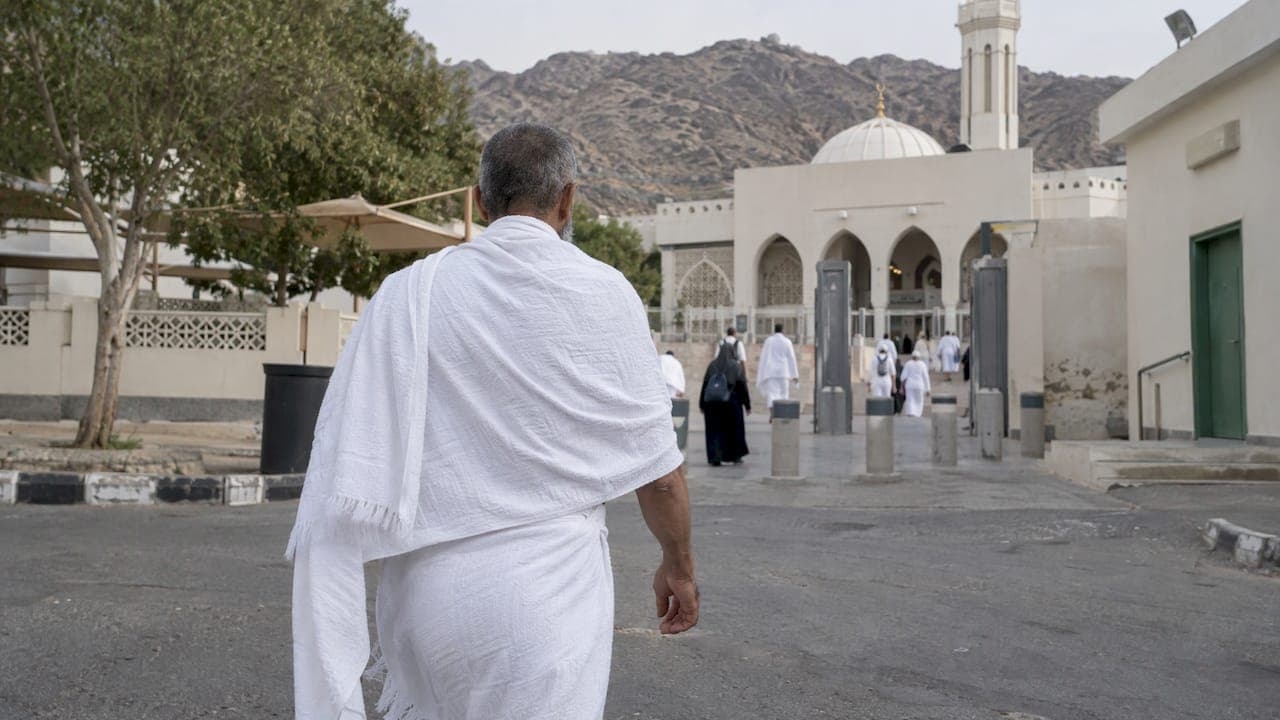
For a Badal Umrah, the miqat is decided by the person performing the rites, not by the person they perform them for. The proxy enters ihram at the miqat on his own route, or from home if he already lives inside the miqat boundary, and makes the intention for the one he represents. Your loved one’s home country does not change this. What matters for you is that the proxy knows this rule and that the Umrah is documented, so you can trust it was done properly. That is the work we do at Badal Umrah, and the sections below explain the ruling so you know what a correct Umrah looks like.
TL;DR
- The miqat follows the proxy’s route and location, not the home of the person he represents.
- A proxy coming from outside the miqats enters ihram at the miqat he passes, including when he is on a plane, with the intention made for the one he represents.
- A proxy already inside the miqat boundary, or already in Makkah, enters ihram from his own place or from the nearest point of al-Hal, such as Tan’im.
- Passing a miqat without ihram requires a sacrificial animal, so it matters that the proxy is knowledgeable.
- Our packages start at $150 and include proof of completion, with the Umrah performed in line with Islamic law and verified by qualified imams.
Table of Contents
- What the miqat is and why it matters for a proxy
- The four miqats and who uses them
- Which miqat a proxy uses
- A proxy already in Makkah: Tan’im and the nearest point of al-Hal
- What happens if the miqat is passed without ihram
- The intention: how the proxy makes it
- Who may act as a proxy
- Questions to settle before you book
- Our packages
- Arrange your Umrah with us
- Our perspective
- FAQ
- Sources
What the miqat is and why it matters for a proxy
The miqat is the boundary a pilgrim may not cross without being in the state of ihram. Ihram is the sacred state a pilgrim enters with an intention and a set of rules. It is the first act of Umrah. If it is made in the wrong place, the Umrah can still be valid, but a penalty becomes due.
When you hire a proxy, you are asking someone to perform every rite for you or for your loved one. That begins at the miqat. A family who knows this can ask the right questions. A family who does not may assume the miqat depends on where the deceased lived. It does not.
This guide is for those who cannot go themselves: the elderly, the seriously ill, and families who want to fulfill Umrah for a parent, spouse or relative who has passed away. Is it permissible at all? Yes. Shaykh Ibn Baz ruled that performing Umrah on behalf of a deceased person, or of someone unable to reach Makkah because of old age, is permissible, just as Hajj is. If you want the wider rules on who qualifies, our guide to Umrah by proxy rules covers them.

The four miqats and who uses them
The Saudi Hajj and Umrah Authority lists the miqats the Prophet ﷺ designated. Each is named for the people of a region and for others who pass by them. That last phrase is the key for a proxy: a miqat belongs to the route, not only to the nationality.
| Miqat | Traditionally designated for |
|---|---|
| Dhul-Hulaifah | People of Madinah |
| Al-Juhfah | People of Ash-Sham |
| Qarn al-Manazil | People of Najd |
| Yalamlam | People of Yemen |
The Authority also states that those living beyond the miqats must assume ihram at the miqat or at points parallel to it, whether they travel by air or land. It adds that King Abdulaziz International Airport in Jeddah is neither a miqat nor a place to enter ihram. A proxy flying into Jeddah therefore needs to put on ihram before the plane crosses the miqat line, not after landing. For the current list and any updates, the Authority’s page is the place to check.
Which miqat a proxy uses
Shaykh Ibn Baz addressed this directly. A person outside the miqats who wishes to perform Umrah for himself or for another, whether a deceased person or one unable because of old age or an illness not expected to end, must enter ihram from the miqat he passes through, intending the Umrah. The same ruling says a resident inside the miqats, such as in Jeddah, may enter ihram from home.
The Egyptian Dar al-Ifta’ reaches the same conclusion on the question of where the proxy starts. A proxy performing Umrah for his father who is outside Makkah enters ihram from the miqat of the country where he currently is, and does not need to go back to his own home country or its miqat. It rests on the Prophet’s words that whoever is beyond the miqat starts from where he set out.
Put simply, there are three common cases:
- The proxy travels from abroad. He enters ihram at the miqat on his route, or when parallel to it by air.
- The proxy lives inside the miqat boundary. He may enter ihram from his home, as in the Jeddah example.
- The proxy is already in Makkah. He goes outside the Haram to the nearest part of al-Hal and enters ihram there.
In every case the intention is for the person being represented, and it never depends on where that person lived or died.
A proxy already in Makkah: Tan’im and the nearest point of al-Hal
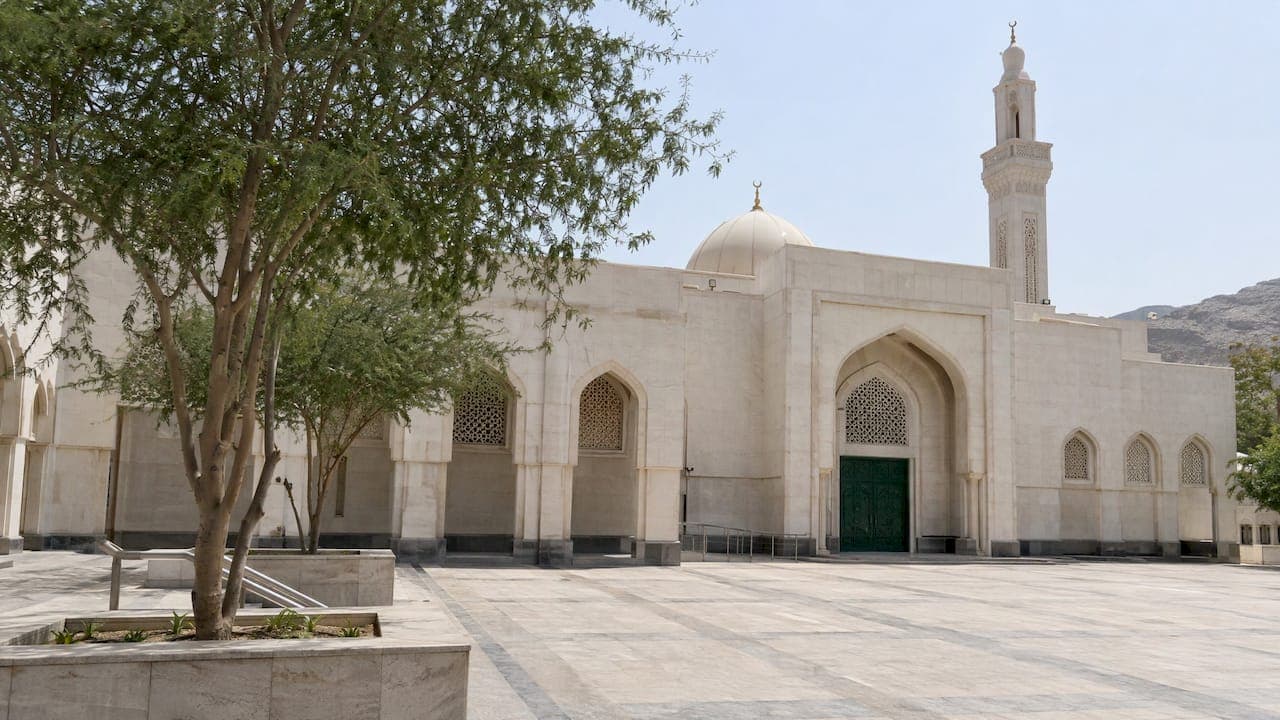
Much of what families ask about is the case where the proxy is already in Makkah. The Permanent Committee of Saudi Arabia says someone already in Makkah enters ihram from the nearest part of al-Hal, such as al-Tan’im, and owes nothing for that Umrah. Al-Hal means the area outside the sacred boundary of the Haram. Tan’im, where Masjid Aisha stands, is the best known point.
Ibn Baz’s ruling adds that after finishing, a proxy may perform a further Umrah for himself from the nearest part of al-Hal, such as al-Tan’im or al-Ja’ranah, without returning to the miqat. He cites the example of 'A’ishah in the Farewell Pilgrimage.
This matters for families because it means a proxy who lives in or near Makkah can serve you without long travel, and the ruling still holds. If you wonder whether a local resident can act for you, our article on whether a Mecca resident can perform Umrah as your proxy explains it.
What happens if the miqat is passed without ihram
This is the mistake that most worries families, so it helps to know the rule. The Hajj Authority says that a pilgrim who passes the miqat without ihram must return to it, and if he assumes ihram after passing it he must offer a fidyah. A fidyah is a compensation, a sacrificial animal offered for the omission.
The Permanent Committee describes the sacrificial animal as a valid Eid sheep, or one-seventh of a camel or cow, distributed to the poor of the Haram. It says the Umrah itself is valid, and that the animal is paid by the person if alive, from the estate if dead, or by a child or relative if he left no wealth.
For a Badal Umrah, this points to one practical conclusion. The proxy needs to be knowledgeable and careful at the very first step. A service that works with qualified, verified people lowers the risk that your Umrah begins with an avoidable error.
The intention: how the proxy makes it
The niyyah, or intention, is what makes the Umrah yours. Ibn Baz ruled that when entering ihram the proxy enters it on behalf of the deceased. It is better to say “O Allah, here I am responding to You with Umrah on behalf of so-and-so”, though the intention in the heart without the spoken words is sufficient.
Three points follow for you as the person arranging it:
- Name the person clearly. Give the full name of the one you want represented, so the intention is specific.
- One Umrah, one person. A single Umrah is made for one person. If you want several relatives remembered, each needs its own Umrah and its own intention. Our guide to multiple proxy Umrahs explains how to arrange this.
- Consent for the living. If the person is alive but permanently unable, they should agree to the appointment. Jordan’s Iftaa’ Department, citing Al-Nawawi, explains that Umrah requires intention, and the incapacitated person keeps the right to grant or withhold permission. For a deceased person, no consent is needed.
Who may act as a proxy
The proxy’s own Umrah comes first. Ibn Baz ruled that a person must perform Umrah for himself before performing it for another, because Umrah is obligatory once in a lifetime, like Hajj. Once he has done so, he may perform it for deceased relatives, for strangers, or for the permanently unable such as the very old, who are treated like the deceased. Jordan’s Iftaa’ Department states the same condition, that the proxy must already have performed Hajj and Umrah for himself.
The proxy does not have to be a relative. Any person who has completed his own Umrah can serve. This is why families can book a service rather than depend on a relative who can travel.
When the illness is permanent or the person is of very old age, appointing a proxy is permissible. The Iftaa’ Department notes that for obligatory Hajj some scholars hold it to be required. If you are the child of a parent in this situation, our guide on Umrah for deceased parents and the one on safely performing Umrah for a deceased mother cover the niyyah and the steps in more detail.

Questions to settle before you book
You do not need to master the details of the miqats. You do need a service that handles them correctly and shows you the result. These are good things to expect:
- A clear statement of the ruling followed. The Umrah should be performed according to Islamic law.
- Proof from Makkah. Photos, video and a certificate help you see that the rites took place.
- Updates. You should be told when the Umrah begins and when it is completed.
- A named intention. The person represented should be named, one per Umrah.
- Support you can reach. Questions about the niyyah, timing or the rites should be answered by a person.
Our positioning rests on these points. Every Umrah we arrange is performed strictly in accordance with Islamic law and verified by qualified imams. You receive documentation, real-time updates and compassionate support from start to finish.
Our packages
Each package is a one-time fee for one booking. There are no recurring charges.
| Package | Price |
|---|---|
| Du’a Package | $150 |
| Noor Package | $250 |
| Barakah Package | $400 |
| Jariyah Premium Package | $500 |
The tiers differ in speed and features, and all of them come with proof of completion, including photos, videos and a certificate. For those who need a Hajj on someone’s behalf, we also offer Hajj Badal, Ifraad at $1,500 and Hajj Badal, Tamattu’ with Umrah and Qurbani at $2,500.
Arrange your Umrah with us
If you cannot travel, or you want to remember a parent, spouse or relative who has passed, you can book a Badal Umrah on the Du’a Package for $150. Choose a higher tier if you want a faster Umrah or more features. We handle the Umrah, you receive the proof, and a portion of our profits is pledged to charity for Gaza.

You can begin on our Du’a Package page or visit badalumrah.org to see everything we offer. If you live outside Saudi Arabia, our guide to arranging Umrah by proxy from abroad walks through the process.
Our perspective
Families usually come to us in a hard moment. A father has died, or a mother is too frail to travel, and they want to do something sincere for her. They do not want to learn the rulings of the miqat. They want to know it will be done right.
That is why we think the proxy matters more than the price. A correct Umrah starts at the miqat, with the right ihram and a clear intention for the person represented. When that is handled by someone knowledgeable, and verified by qualified imams, you can have peace of mind.
We believe the proof matters too. Photos, video and a certificate let you see what was done for the one you love. For You. For Your Loved Ones. For Their Forgiveness.
This is why we built our packages as one fixed fee, with the Umrah performed in accordance with Islamic law and with a share of profits going to charity.
anas
FAQ
Does the miqat depend on where the deceased person lived?
No. It depends on the proxy’s route and location. A proxy from outside the miqats enters ihram at the miqat he passes, and Egypt’s Dar al-Ifta’ confirms he does not have to return to his own country’s miqat. He makes the intention for the person he represents.
Can a proxy who is already in Makkah do the Umrah?
Yes. He goes to the nearest part of al-Hal, such as Tan’im, and enters ihram there with the intention for the person represented. The Permanent Committee says nothing is owed for that Umrah.
What if the proxy passes the miqat without ihram?
The Umrah is still valid, but a sacrificial animal is owed, and the Hajj Authority says he must offer a fidyah if he enters ihram after the miqat. This is one reason to choose a knowledgeable proxy who has already performed his own Umrah.
Can one Umrah be done for two people?
No. Each Umrah is made with an intention for one person. If you want to remember your mother and your father, each needs a separate Umrah. Our packages let you arrange them one by one.
Does the person I represent need to be related to the proxy?
No. It is not a condition that the proxy be a relative. He must have performed his own Umrah first, and for a living person who is incapacitated, that person’s consent is required.
Sources
- Saudi Hajj and Umrah Authority: Miqaats
- Ibn Baz: The permissibility of performing Umrah on behalf of the deceased or incapable
- Ibn Baz: The ruling on one who intends to perform Umrah for his father before the miqat
- Ibn Baz: Performing Umrah on behalf of another for one who has not performed Umrah himself
- Permanent Committee: Hajj or Umrah from a location outside the spatial miqats
- Dar al-Ifta’ al-Misriyyah: the miqat of one who performs Hajj or Umrah for another
- Jordan Iftaa’ Department: proxy Hajj and Umrah