- who can do badal umrah
- repeat badal umrah
- spacing multiple badal umrahs
- badal umrah eligibility
- repeat umrah for others
- cost of badal umrah
- benefits of badal umrah
- performing badal umrah
5 Steps for Families to Repeat Badal Umrah With Verified Proof
Published on Oct 7, 2026
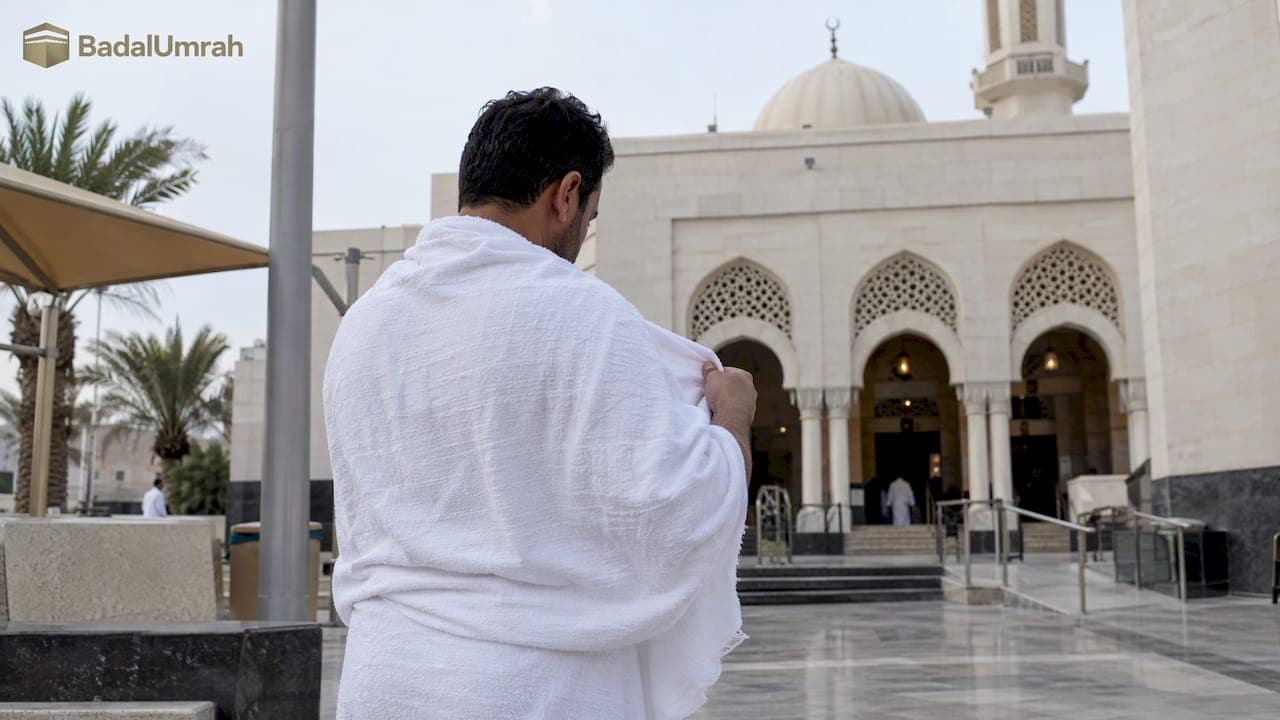

Short answer: repeating Badal Umrah is permissible when each Umrah carries its own intention and follows correct ihram procedure. Scholars broadly agree that a trusted representative can perform substitute Umrah more than once, as long as every performance is for a single beneficiary and the rituals are complete. Jurists differ on how often this should happen and under what pacing, which the rest of this guide walks through: the fatwas behind the ruling, the exact steps for each repeat Umrah, and the logistics that shape scheduling.
TL;DR:
- Each repeat requires leaving Makkah’s sacred boundary, entering consecration outside it, and completing circumambulation, seven Safa and Marwah passes, and hair trimming.
- Assign each complete ritual to one beneficiary; combining names or dividing the rites invalidates the Umrah, so record each person before entering consecration.
- Most scholars permit multiple Umrahs on one trip, but some early scholars discourage frequent repetition from Makkah; jurists also differ about spacing.
- Religious validity does not guarantee a booking: check current permits, seasonal availability, provider capacity, and proof naming the beneficiary before paying.
- Rulings support Badal Umrah for deceased people and those permanently unable to travel; temporary difficulty or ordinary inconvenience alone does not establish eligibility.
Table of Contents
- What Islamic law and top fatwas say about Badal Umrah
- Step-by-step checklist for each repeat Badal Umrah
- Organizing separate Badal Umrahs for multiple beneficiaries
- Repeating tawaf versus performing a full new Umrah
- Permits, crowd limits, and verifying that each Umrah was completed
- What a compliant Badal Umrah provider should offer
- Why families keep coming back to Badal Umrah
- Booking a repeat Badal Umrah through BadalUmrah.org
- FAQ
- Sources
What Islamic law and top fatwas say about Badal Umrah
Badal Umrah, performing Umrah on behalf of someone who cannot do it themselves, rests on a solid juristic foundation. Shaykh Ibn Baz rules that Umrah performed for a deceased or permanently incapacitated person is permissible under Islamic law, and that the representative performs the exact same rites as for a personal Umrah. He notes that intention held silently in the heart is valid, though naming the beneficiary out loud is recommended to avoid confusion later.
On the question of repetition specifically, IslamQA addresses whether multiple Umrahs in one trip are allowed, citing the precedent of Aishah performing an additional Umrah during the same journey after leaving the sanctuary to re-enter ihram. Many scholars extend this to permit several Umrahs, including Badal Umrahs for different people, within a single visit. Some scholars still counsel restraint rather than treating repetition as a habit, since early practice favored a single Umrah per journey outside of specific circumstances like Aishah’s.
A few points matter for anyone coordinating this on behalf of a family:
- Ibn Baz’s ruling confirms Badal Umrah is valid for the deceased and for those permanently unable to travel, not simply inconvenienced.
- The required rites stay identical for every Umrah: ihram, tawaf, sa’i, and hair trimming or shaving.
- Majority opinion permits repeating Umrah within one trip; a minority of early scholars discouraged frequent repetition from Makkah.
- Clear, beneficiary-specific intention at the point of ihram is what makes each Umrah valid for that person.
Our guide to the rulings on Umrah for others covers the underlying eligibility questions in more depth.
Step-by-step checklist for each repeat Badal Umrah
Every repeated Badal Umrah is a complete, standalone ritual. None of the five steps below can be skipped or shared across beneficiaries.
- Enter ihram at the correct point. If starting fresh from outside Makkah, ihram begins at the designated miqat. If already inside Makkah from a previous Umrah, the representative must leave the Haram boundary to an al-hill point before beginning again.
- Make the niyyah for that specific beneficiary. Intention can be made silently in the heart, but stating the beneficiary’s name out loud (“I intend Umrah on behalf of [name]”) reduces the chance of recordkeeping errors, especially when a provider is handling several commissions.
- Perform tawaf. Seven circuits around the Kaaba, completed with the same care as a personal Umrah.
- Perform sa’i. Seven passes between Safa and Marwah.
- Complete with hair trimming or shaving. This step closes the Umrah and releases the representative from ihram restrictions.
Pro Tip: Write down the beneficiary’s name and relationship before entering ihram each time. When a representative is completing three or four Badal Umrahs in one trip, this single habit prevents mixing up intentions between commissions.
When a representative is already inside Makkah and wants to begin another Umrah, remaining inside the Haram does not start anything new. IslamQA’s ruling on repeating Umrah explains that the traveler must physically exit to Tan’im, Ji’ranah, or another al-hill point, enter ihram there, and return. Skipping this step invalidates the attempt at a second Umrah entirely.
Organizing separate Badal Umrahs for multiple beneficiaries
A single Umrah cannot be split between two people, no matter how closely related they are. IslamWeb’s fatwa on performing Umrah for more than one person states plainly that one Umrah belongs to one beneficiary, drawing on classical references including Ibn Qudamah’s Al-Mughni. Combining names, or dividing tawaf and sa’i between two intentions, makes the Umrah invalid for both.
Families commissioning several Badal Umrahs, for a deceased father and grandmother, say, need separate ihrams, separate intentions, and separate documentation for each person. A few practices make this manageable:
- Sequence commissions one at a time rather than attempting to blend intentions mid-ritual.
- Allow the representative brief rest between Umrahs before reapplying ihram at an al-hill point.
- Keep a written or digital record matching each completed Umrah to its beneficiary.
- Consider an annual rotating Badal Umrah for different family members rather than batching everyone into one trip.
Our walkthrough on documented Umrah for deceased loved ones covers how this recordkeeping typically works in practice.
Repeating tawaf versus performing a full new Umrah
A common point of confusion: circling the Kaaba again after finishing an Umrah is not the same as performing another Umrah. IslamWeb’s fatwa on repeating the rituals of Umrah clarifies that extra tawaf on its own is a devotional act, not a fresh Umrah. A new Umrah requires the complete sequence again: new ihram, new intention, tawaf, sa’i, and hair completion.
On timing between Umrahs, scholarly opinion splits. Some jurists advise waiting until hair has grown back somewhat before starting another Umrah, treating this as a natural pacing marker. Others permit multiple Umrahs within days of each other during the same trip, pointing to Aishah’s precedent. A few practical notes:
- Bathing before putting on ihram is permissible but not required.
- Hair trimming at the close of each Umrah should be a genuine trim, not symbolic.
- Representatives performing several Badal Umrahs in quick succession should expect visible hair change to be minimal between each one.
Permits, crowd limits, and verifying that each Umrah was completed
Religious permissibility and administrative permission are two separate questions. A repeat Badal Umrah might be fully valid under Islamic law yet impossible to schedule on a given date because of permit systems like Nusuk, seasonal crowd limits, or provider capacity. IslamQA’s guidance on performing multiple Umrahs notes that these operational rules shift independently of the underlying ruling, so confirming live availability matters as much as confirming the fiqh.
Costs and timelines vary by season and provider rather than following a fixed figure. Before commissioning a repeat Badal Umrah, confirm these items:
- Current permit and booking availability for the intended dates.
- Whether the provider documents each Umrah separately, with its own proof set.
- A dated photo and short video tied to that specific beneficiary’s Umrah.
- A certificate naming the imam or representative who performed the rite.
Pro Tip: Ask any provider whether documentation is matched to the beneficiary by name before paying, not after. This single question filters out vague service promises quickly.
Our overview of BinBaz rulings and Nusuk permits for deceased parents goes deeper into how permit timing interacts with these rulings.

What a compliant Badal Umrah provider should offer
A provider handling repeat Badal Umrah commissions should be transparent about exactly how each one is carried out. At minimum, look for:
- Explicit confirmation that each beneficiary receives a separate Umrah, never a shared or split ritual.
- Named, verified imams or representatives performing the rites, not anonymous third parties.
- Photo and video proof tied to the specific date and beneficiary.
- A certificate documenting completion.
- Clear, upfront pricing and realistic timing expectations rather than vague promises.
A compliant Badal Umrah service should include beneficiary-specific documentation, imam verification, and full compliance with the relevant rulings. Including charitable support for causes aligned with the spirit of Badal Umrah can further enhance the service’s value.
Why families keep coming back to Badal Umrah
Multi-generational Badal Umrah is becoming a quiet family tradition rather than a one-time gesture, often repeated annually for different relatives who have passed or who can no longer travel. That pattern makes sense: it keeps a family’s spiritual obligations active without requiring every member to travel in person.
What deserves more respect is the nuance jurists have built into this ruling. Not every repeat commission is automatically straightforward, especially where eligibility for a living relative is contested. When a situation feels genuinely unclear, a qualified scholar is worth consulting before booking anything.
— anas
Booking a repeat Badal Umrah through BadalUmrah.org
Commissioning a second, third, or fourth Badal Umrah for different family members does not need to involve guesswork about documentation or ritual accuracy. Each commission should be treated as its own Umrah, with its own intention, imam, and proof set to avoid confusion between beneficiaries.
Services may include various package options, each with documentation and certificates, and bookings should be confirmed against current permit and seasonal availability. Readers coordinating proxy Umrah for a living but permanently unable relative can check the eligibility guidance for living persons before choosing a package. Families planning a wider memorial gathering around a completed Umrah sometimes also look into broader Islamic family traditions tied to such occasions.
Ready to commission a Badal Umrah for a loved one? Book your Umrah now and confirm the details directly with our team.
FAQ
How many times can a person perform Umrah?
There is no fixed limit on how many Umrahs a person can perform, either for themselves or on behalf of others, as long as each one includes a complete ihram, intention, tawaf, sa’i, and hair completion. IslamQA’s ruling on multiple Umrahs notes that most scholars permit repetition within one trip, though some early scholars advised against frequent repetition from inside Makkah.
What is Badal Umrah?
Badal Umrah is Umrah performed by a representative on behalf of someone who cannot perform it themselves, typically due to death or permanent incapacity. Shaykh Ibn Baz’s fatwa confirms this is permissible when the representative follows the same ritual sequence as a personal Umrah.
Can I do tawaf again after Umrah?
Yes, extra tawaf after completing Umrah is a valid act of devotion on its own, but it does not count as a new Umrah. IslamWeb’s ruling on repeating Umrah rituals explains that a new Umrah requires a full new ihram, intention, tawaf, sa’i, and hair completion, not tawaf alone.
What is Hajj ul badal?
Hajj ul badal, or substitute Hajj, is Hajj performed by a representative on behalf of someone unable to perform it themselves, following the same principle as Badal Umrah. We offer this as the Hajj Badal, Ifraad package and the Hajj Badal, Tamattu’ package with Umrah and Qurbani, each handled as a separate, documented commission on request.
Can one Umrah be performed for two deceased relatives at once?
No, a single Umrah cannot be divided between two beneficiaries under any circumstance. IslamWeb’s fatwa on this question states that combining intentions this way invalidates the Umrah, so each deceased relative requires their own separate ihram and ritual.
Sources
- كيفية الحج والعمرة عن المتوفى — Ibn Baz fatwa
- Is Doing Multiple ‘Umrahs in One Trip Allowed? — IslamQA
- Invalid to perform ‘Umrah on behalf of more than one person — IslamWeb fatwa