- tawaf for deceased
Tawaf for the Deceased: What Is Allowed and What to Do
Published on Oct 25, 2026
Tawaf for the Deceased: What Is Allowed and What to Do

Most scholars say you should not perform a stand-alone tawaf for someone who has died. They do say you may perform a complete Umrah or Hajj on their behalf, and tawaf is then one of its required parts. If you want to bring your parent, spouse or child the reward of a visit to the Kaaba, the sound path is a full Umrah made with their name in the intention. If you cannot travel, a trusted representative can make it for you.
This guide explains the ruling, the reasoning behind it, and what you can do instead. It also shows how to choose someone to carry out the Umrah, so you can act with a settled heart.
TL;DR
- A separate tawaf for a deceased person has no clear evidence behind it. Many scholars advise against it.
- A complete Umrah or Hajj on behalf of the deceased is permitted and recommended. Tawaf is part of it.
- The person who performs it must have completed their own Umrah first, and should name the deceased in the intention.
- Dua and charity are always open to you, whether or not you can travel.
- If you cannot go, choose a representative for trustworthiness and knowledge, and ask for proof.
Table of Contents
- The Short Answer on Tawaf for Someone Who Has Died
- Why Scholars Separate a Lone Tawaf From a Full Umrah
- What You Can Do for Your Loved One
- How a Valid Umrah for the Deceased Works
- If You Cannot Travel: Appointing a Representative
- Our Perspective
- Packages for an Umrah on Behalf of the Deceased
- Timing and Who the Umrah Is For
- Common Mistakes to Avoid
- FAQ
- Sources
The Short Answer on Tawaf for Someone Who Has Died
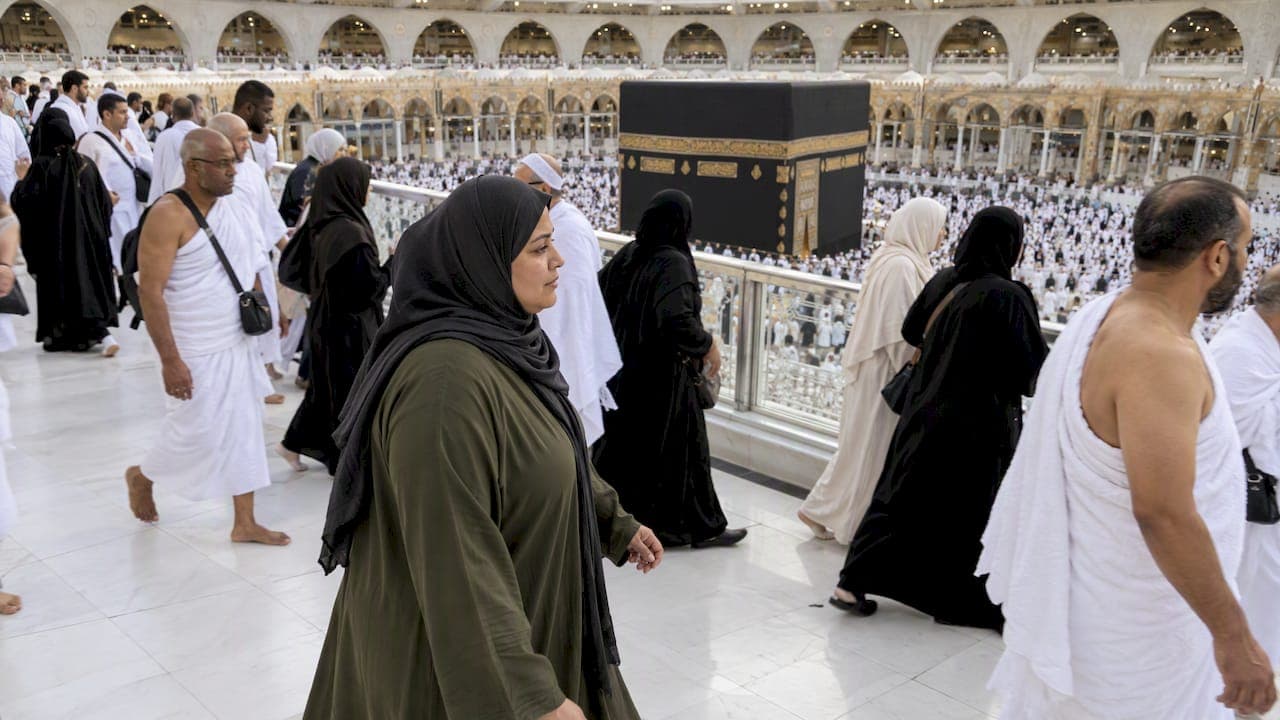
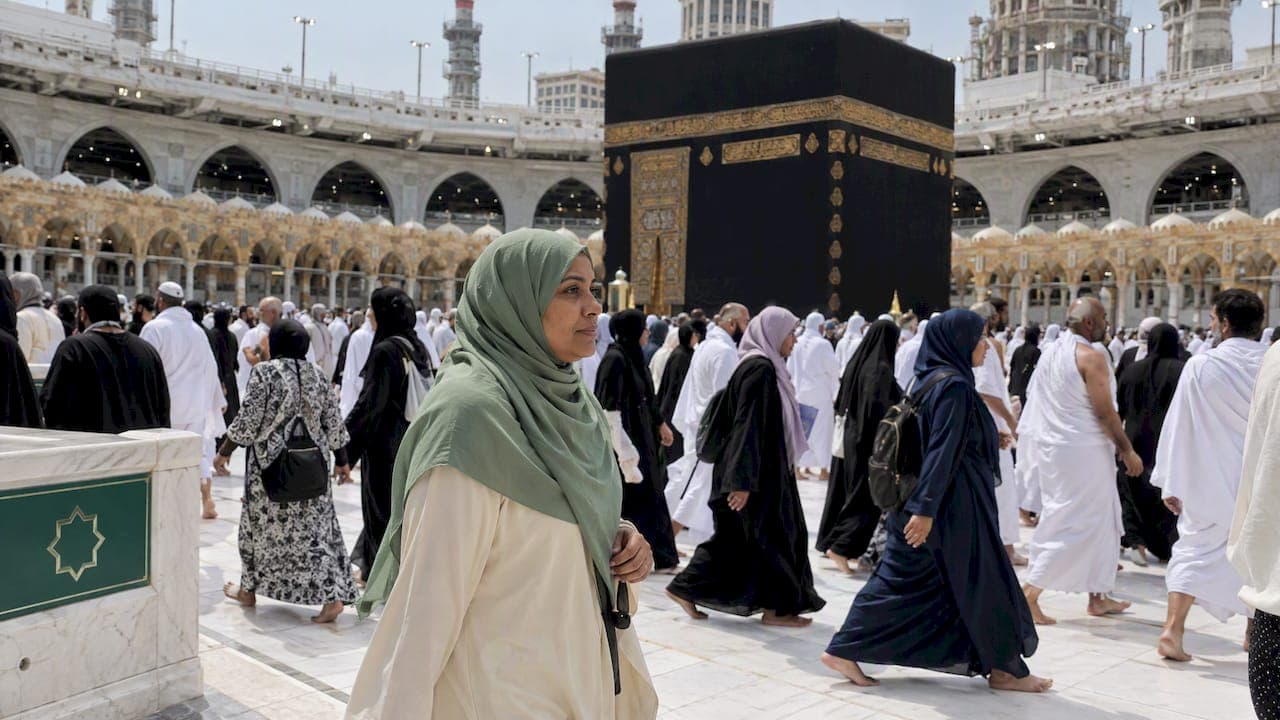
Tawaf means seven circuits around the Kaaba, counter-clockwise, starting at the Black Stone. The official Nusuk guidance presents it as a fixed part of Umrah and Hajj for every pilgrim.
The question is whether you can do that act alone, as a gift to someone who has passed. The answer from the main scholarly sources is this:
- A stand-alone tawaf for the deceased: not recommended. The Islam Q&A answer on tawaf and Quran completion for the deceased cites the Standing Committee’s view that there is no evidence for it. It says it is better to leave it and do a full Umrah or Hajj instead.
- Tawaf as part of a full Umrah for them: permitted. Islam Q&A says that tawaf cannot be done by proxy, except when you are performing Hajj or Umrah on that person’s behalf.
Sheikh Ibn Baz gave the same distinction in a short reply. Asked whether tawaf for the deceased is permissible, he said it has no basis, while a complete Umrah or Hajj is fine.
So the question is rarely “tawaf or nothing.” The reward you hope to send is better served by the whole rite.
Why Scholars Separate a Lone Tawaf From a Full Umrah
The reasoning is simple. Acts of worship rest on evidence. For Hajj and Umrah on behalf of another, the Sunnah gives clear examples, and the scholars of Egypt’s Dar Al-Ifta confirm that Hajj is an act of worship that allows deputation. For a lone tawaf, scholars such as those of the Standing Committee found no such text.
The Islam Q&A answer also compares tawaf to prayer, since the Prophet (peace be upon him) described it in similar terms. Prayer cannot be offered for another person, so a tawaf alone should not be offered either.
You may see online videos or posts saying a voluntary (nafl) tawaf can be dedicated to the deceased. Some people hold that view, and you will find it argued in sermons and short clips. The sources we rely on above lean the other way. If you want to act on the more cautious position, which costs you nothing, choose a complete Umrah. If you have a specific question about your own situation, ask a scholar you trust.

What You Can Do for Your Loved One
There are several acts that are clearly supported. The Islamic guidance, as Dar Al-Ifta summarizes it, centers on dua for the deceased, charity on their behalf, and fulfilling missed obligations such as Hajj or Umrah.
- Make dua. Ask Allah for forgiveness and mercy for them. It needs no travel and no cost.
- Give sadaqah. Charity given in their name, including ongoing charity (sadaqah jariyah), continues to benefit them.
- Perform Umrah for them. This is where tawaf has a proper place, as one of the rites.
- Perform Hajj for them, if they died without having done an obligatory Hajj, under the conditions scholars set.
Dar Al-Ifta also explains that the deceased, in the state of Barzakh, receive the reward of righteous deeds done on their behalf, such as Umrah, Hajj and ongoing charity. That is a reason for comfort. The effort you make is not lost.
How a Valid Umrah for the Deceased Works
A proper Umrah has four pillars in sequence: ihram with the intention, tawaf, sa’i between Safa and Marwa, and shortening or shaving the hair. When it is done for another person, a few conditions apply.

The performer must do their own Umrah first
Scholars agree the person making the Umrah must have completed their own obligatory Hajj and Umrah first. The Islam Q&A answer on doing Umrah for yourself and for your deceased father explains the order: make Umrah for yourself, then enter ihram again for your father.
The intention names the deceased
It is a Sunnah to name the deceased in the talbiyah. The wording is “Labbayk Allahumma bi-Umratin 'an” followed by the name. The same source says that if the intention is made in the heart when entering ihram, it is also valid. This matters when you hire a representative, because the whole act depends on that intention.
Tawaf and sa’i are done in full
Because the tawaf is part of the rite and is done for the named person, it is the permitted form of what many readers are really asking about. Seven circuits, then prayer behind the Station of Ibrahim where possible, then sa’i, then the hair.
One person per Umrah
Keep it simple: one Umrah, one named person. If you want to include several relatives, we cover how to handle that in our guide to Umrah for multiple people.
If You Cannot Travel: Appointing a Representative
Many families cannot go to Makkah. They may live far away, lack the means, or be unable to travel for health reasons. Islam Q&A states that there is nothing wrong with giving money to someone to perform Umrah for a deceased person. It adds that you should look for someone good and righteous.
That guidance names the two things to check: trustworthiness and knowledge. A person may be honest yet perform the rites incorrectly. Another may know the rulings but lack integrity. You need both.
Questions to ask any provider
- Who will actually perform it? The same Islam Q&A answer warns that some people take many bookings and pass them to others without telling the client. Ask directly whether the work is subcontracted.
- Will the deceased be named in the intention? Ask how this is confirmed.
- Has the performer completed their own Umrah? This is a condition, not a courtesy.
- What proof will you receive? Photos, video and a certificate are reasonable to expect.
- Who checks the rulings? Look for review by qualified scholars.
- What is the price, and is it fixed? Avoid unclear fees added later.
For a longer walk-through, see our five steps to a documented Umrah for deceased loved ones.
Our Perspective
We receive this question often, in different words. A daughter writes that she wants someone to do tawaf for her mother. A son asks if a single circuit around the Kaaba is enough. Behind every message is grief and a wish to do something real.
We do not tell families that the question is foolish. We tell them what the scholars say, gently and plainly: a lone tawaf is not the route, and a full Umrah is. Then we help them take that route.
We built our service around three commitments. First, the Umrah is performed according to the rulings, and reviewed by qualified imams. Second, you see what happened: documentation, video and a certificate. Third, you are treated with care, because you are often writing to us on one of the hardest weeks of your life.
We also pledge a portion of profits to charity, including support for Gaza. For us this fits the same principle: reward continues through good that is given with sincerity.
Our advice is to begin with dua tonight, give what charity you can this week, and arrange the Umrah when your heart is settled. There is no need to rush into a choice you do not understand.
— anas
Packages for an Umrah on Behalf of the Deceased
Our fees are one-off, with no recurring charges. Each package covers a full Umrah performed for the person you name.
| Package | Price | Page |
|---|---|---|
| Du’a Package | $150 | Du’a Package |
| Noor Package | $250 | Noor Package |
| Barakah Package | $400 | Barakah Package |
| Jariyah Premium Package | $500 | Jariyah Premium Package |
The tiers differ in speed and features, and every one includes proof of completion. When you are ready, you can book your Umrah here. If the person who died never performed an obligatory Hajj, we also offer Hajj Badal. See Hajj Badal pre-booking for the details.
Timing and Who the Umrah Is For
There is no fixed deadline for Umrah on behalf of the deceased, so you do not need to feel that time has run out. Some families prefer to do it soon after the death. Our guide on timing after a loved one’s death covers that.
If the person is your parent, these pages may help you:
If the person is alive but permanently unable to travel, the ruling is different and stricter. Read about proxy Umrah for living relatives before you book anything. For a broader view of the topic, see whether Umrah for others is allowed.
Common Mistakes to Avoid
Thinking any trip to the Kaaba counts. A visitor who does tawaf in their own name and silently thinks of your relative has not made an Umrah for them. The intention at ihram is what sets the act.
Choosing on price alone. A very cheap offer with no proof and no named performer is a risk. The scholarly guidance puts character and knowledge first.
Skipping the proof. The video or certificate is not decoration. It helps confirm that the Umrah was done, and that the intention was made.
Forgetting the simple acts. Dua costs nothing and can be made every day. Do not wait for an Umrah to begin.
Mixing up Hajj and Umrah. If the deceased missed an obligatory Hajj, an Umrah alone does not replace it. The Dar Al-Ifta ruling addresses Hajj on behalf of a deceased person, and a scholar can advise on your family’s case.
FAQ
Can I do tawaf for my deceased parent on my own?
Most of the scholars we cite advise against a stand-alone tawaf, because there is no clear evidence for it. What is permitted is a full Umrah for them, in which tawaf is one of the rites. Dua and charity in their name are also always open to you.
Can Umrah be performed on behalf of a dead person?
Yes. Islam Q&A says there is nothing wrong with paying someone to perform Umrah for the deceased, as long as you choose a righteous and knowledgeable person. The performer should have completed their own Umrah first and should name the deceased in the intention.
Do the dead receive the reward of what we do for them?
Dar Al-Ifta explains that the deceased are in a state in which they receive the reward of righteous deeds done for them, such as Umrah, Hajj and ongoing charity. They do not watch daily life as the living do. Your dua and good deeds still reach them with Allah’s permission.
What is the best thing to do for someone who has passed away?
The guidance points to dua, charity on their behalf, and fulfilling missed obligations such as Hajj or Umrah. Start with dua, which needs no cost or travel. Then add charity or an Umrah as you are able.
How do I know my representative actually did the Umrah?
Ask for proof before you pay: photos, video and a certificate, and a clear statement of who performs it. Confirm that the deceased is named in the intention and that the work is not passed to someone else without your knowledge.
Sources
- Islam Q&A: Doing tawaf and completing the Quran on behalf of the deceased
- Islam Q&A: Can you do tawaf for someone else?
- Islam Q&A: Can you delegate someone to perform Umrah on behalf of a dead person?
- Islam Q&A: Umrah on behalf of yourself and your deceased father
- Dar Al-Ifta: Performing Hajj on behalf of a deceased person
- Dar Al-Ifta: Hajj on behalf of a deceased person using another person’s money
- Dar Al-Ifta: What happens to us after death
- Dar Al-Ifta: Ruling on dua for the deceased after burial
- Ibn Baz: Ruling on tawaf for the deceased or the living
- Nusuk: Umrah journey