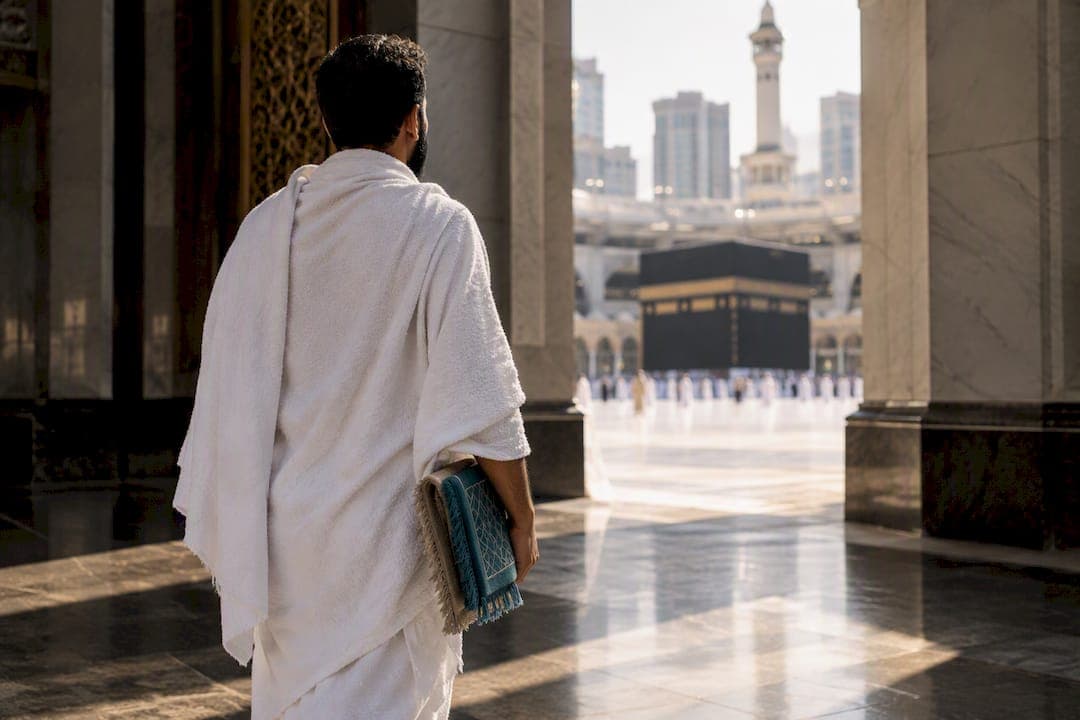
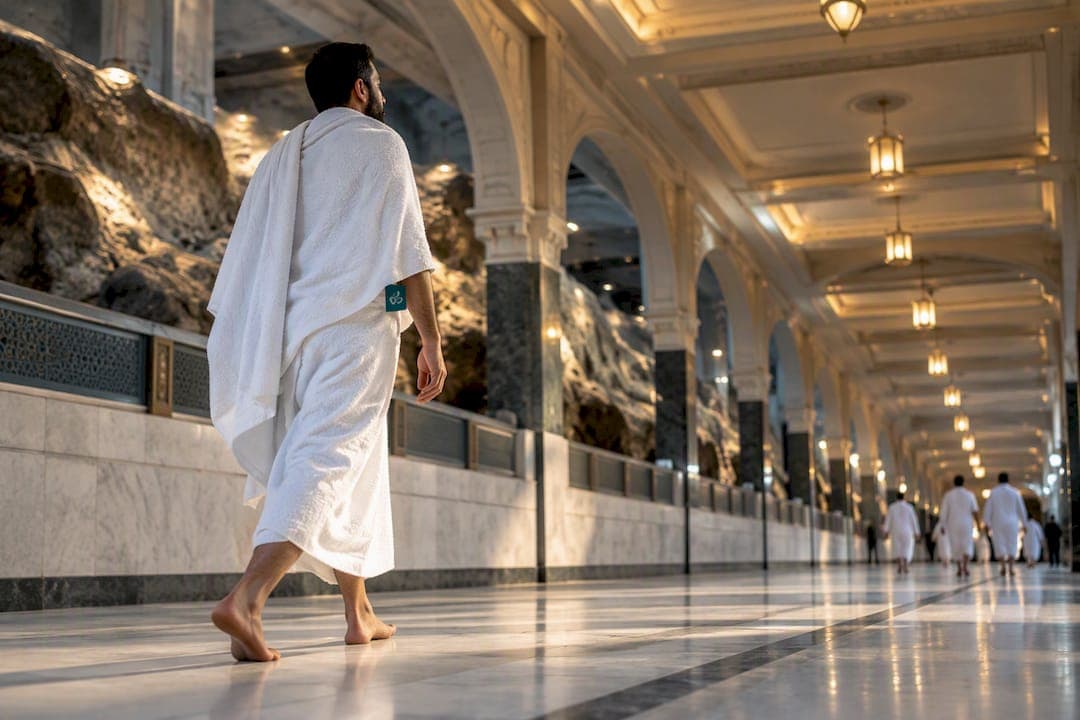
- umrah during hajj season
- hajj season umrah tips
- can you perform umrah in hajj
- best time for umrah
- umrah travel during hajj
- performing umrah in hajj
- umrah vs hajj
- is umrah allowed during hajj
Avoid 2–4 Week Date Shifts: Umrah During Hajj Season for Pilgrims
Published on Sep 7, 2026
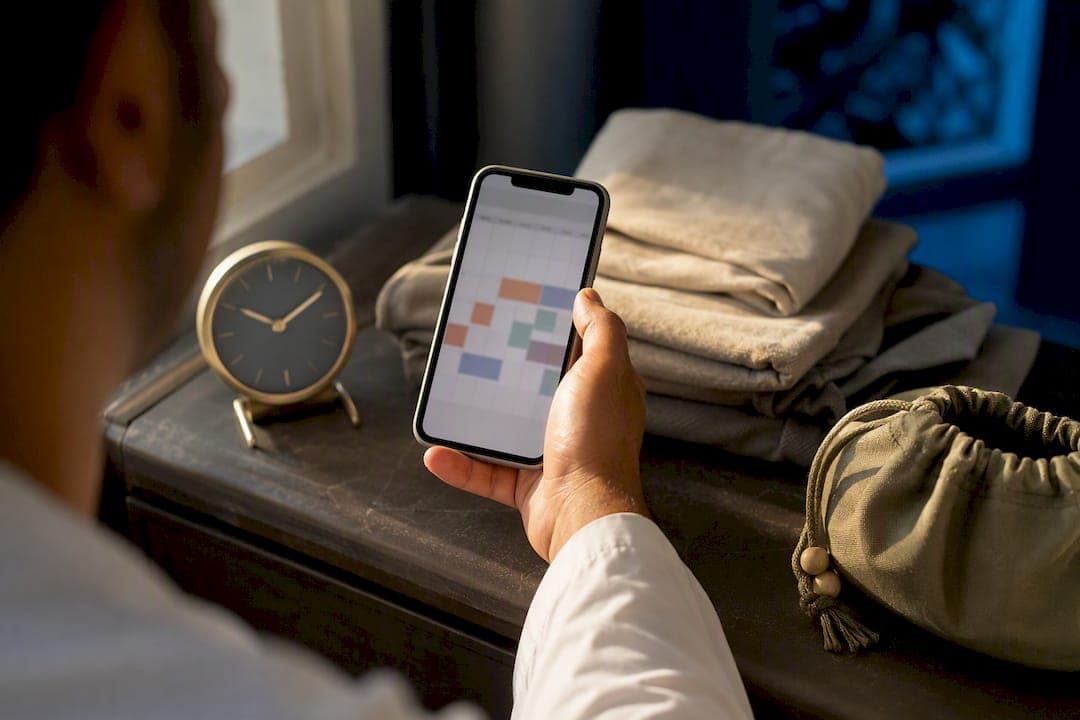
Avoid 2–4 Week Date Shifts: Umrah During Hajj Season for Pilgrims
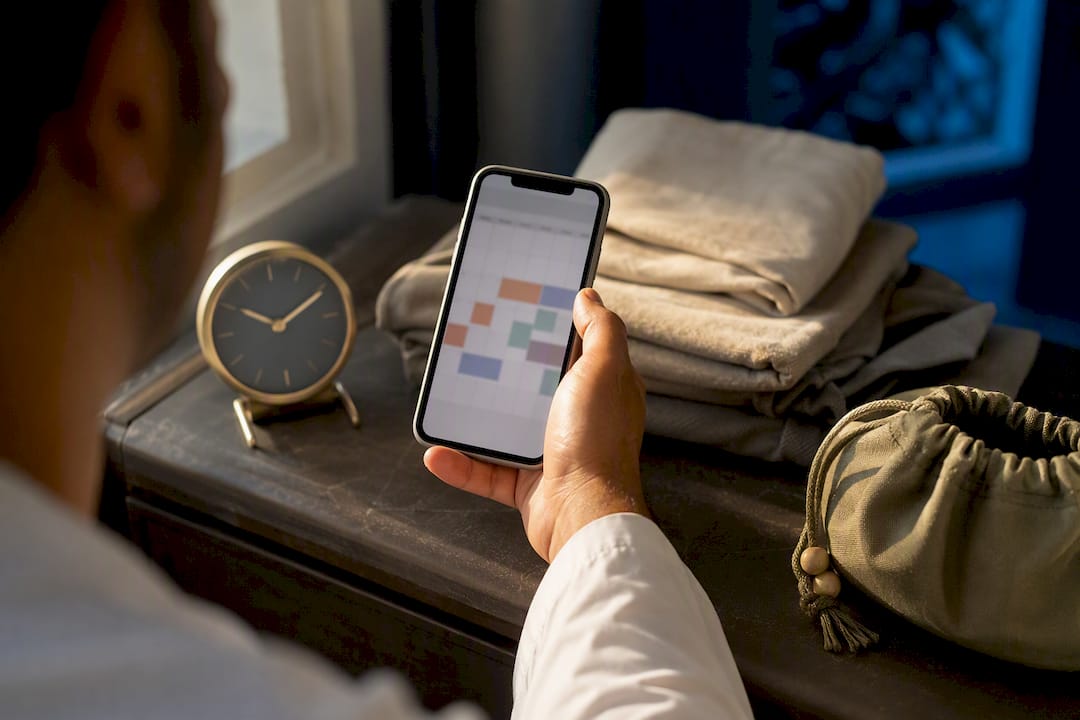
Umrah during Hajj season is religiously permitted year-round, but Saudi authorities operationally close Umrah entry for a defined window before and around Hajj to manage crowd safety. The single constraint that decides whether your trip works is the official Umrah calendar and your Nusuk permit status, not your visa alone. Check the Ministry of Hajj and Umrah, the Nusuk app, and visa.mofa.gov.sa before booking flights, and consider Badal Umrah if your dates fall inside a closure window.
TL;DR:
- The official Umrah calendar is shaped by four key dates that vary yearly and can shift by two to four weeks, affecting travel plans and entry times.
- Travelers must independently verify visa validity, permit activation, and airline acceptance, prioritizing permit availability over visa dates to avoid entry denial.
- Pilgrims already inside Makkah must exit the Haram to enter Ihram again at designated Miqat points before completing Umrah rituals, especially near Hajj season.
- Crowded windows around Hajj start and end times require advance booking of slots, early morning or late-night prayer times, and flexible scheduling to avoid severe congestion.
- If delays or health issues prevent travel, Badal Umrah allows a proxy to perform the pilgrimage on your behalf with verified documentation, ensuring ritual completion despite restrictions.
Table of Contents
- What Does the Official Umrah Calendar Actually Mean?
- Visas vs. Nusuk Permits: Where Travelers Get Tripped Up
- What If You’re Already in Makkah When Hajj Approaches?
- How Do You Handle Crowds When Umrah Windows Get Busy?
- Travel Checklist: What to Confirm Before You Book
- Health and Safety During the Busiest Weeks of the Year
- Does the Umrah Ritual Change During Hajj Season?
- Should You Try to Combine Umrah With Hajj Rituals?
- Getting the Most Out of a Crowded Umrah
- Why the Calendar Matters More Than the Agent’s Promise
- When You Can’t Travel, Badal Umrah Completes It for You
- Sources
What Does the Official Umrah Calendar Actually Mean?
The Ministry of Hajj and Umrah publishes a seasonal calendar every year that governs four checkpoints travelers need to track. Missing any one of them is what strands people at airports or checkpoints near Makkah.
- Visa issuance window: the period during which Umrah visas are actively being granted through official channels.
- Permit activation date: when Nusuk starts issuing entry slots tied to a visa, which can lag behind visa issuance by days or weeks.
- Last entry date: the final day pilgrims can physically enter Saudi territory for Umrah before the Hajj closure takes effect.
- Departure deadline: the date by which visiting pilgrims already in the country must exit before Hajj-only restrictions begin.
Recent seasons have shown these dates shifting by roughly two to four weeks depending on when the Hajj season calendar was formally announced, so treating last year’s dates as this year’s is a common and costly mistake.
The dates move because Dhu al-Hijjah begins on the sighting of the new moon, not a fixed solar date. That means the entire calendar can shift by a small number of days even after Saudi authorities publish an initial schedule. If you’re booking flights well in advance, build in a buffer and re-check the Ministry’s calendar page closer to departure, since that’s typically when final confirmations replace earlier estimates.
Visas vs. Nusuk Permits: Where Travelers Get Tripped Up
A Saudi visa and a Nusuk permit are not the same document, and confusing them causes most of the denied-entry stories you hear about. The Ministry of Foreign Affairs, through Visa, issues the entry visa itself. Nusuk, the kingdom’s official Umrah platform, separately issues the ritual permit and time slot that actually lets you enter Makkah and the Grand Mosque.
Here’s the gap that catches people out: a visa can be technically valid on paper while the Nusuk permit window tied to it is already closed for the season. Airlines sometimes still let passengers board because the visa scans as valid, only for those travelers to face restrictions on arrival or find they cannot activate an Umrah slot at all.
Before finalizing any booking, confirm three things independently:
- Visa status and validity dates on visa.mofa.gov.sa.
- Permit activation and slot availability inside the Nusuk app, since Nusuk manages route assignments and Al-Rawdah scheduling separately from visa issuance.
- Airline confirmation that your specific travel dates are accepted for Umrah entry, plus a courtesy call to your embassy or the airline if anything looks inconsistent.
Prioritizing the permit activation date over the visa issue date is the single habit that prevents the most common Hajj season travel disaster.
What If You’re Already in Makkah When Hajj Approaches?
Pilgrims who are already inside Makkah, whether on a prior Umrah, Ziyarah, or residency visit, cannot simply enter Ihram from inside the Haram boundary and start Umrah rituals as Hajj nears. Saudi guidance requires you to exit to the nearest point outside the Haram boundary first, then enter Ihram from there before returning. Nusuk’s Umrah Journey guidance names Al-Ju’ranah and Masjid at-Taneem as the standard reference points many pilgrims use for this.
In practice, that means:
- Confirm your intended Umrah falls inside an active permit window, not a Hajj-only restricted period.
- Travel to a Miqat point outside the Haram boundary, such as Al-Ju’ranah or Taneem.
- Enter the state of Ihram there, with the intention (niyyah) formally made outside Haram limits.
- Return to Makkah and complete Tawaf, Sa’i, and hair trimming or shaving as usual.
- Exit Ihram only once trimming or shaving is complete, since leaving it incomplete close to Hajj dates can complicate your departure timing.
Pilgrims who skip step two are commonly stopped at checkpoints and turned back to complete the exit and re-entry correctly.
Pro Tip: If you’re arriving within a week of the expected closure date, finish your Umrah and hair trimming at least a day earlier than you think you need to. Checkpoint delays near the boundary points get worse as Hajj approaches, and a tight schedule leaves no room for a slow queue at Taneem.
How Do You Handle Crowds When Umrah Windows Get Busy?
The days right before an Umrah closure window and the days immediately after reopening are consistently the most congested of the year, often rivaling the crowd density of the last ten nights of Ramadan. Pilgrims chasing the last available slot before closure, or the first slot after reopening, create a predictable surge that catches first-timers off guard.
Nusuk lets you check live booking availability and assign Al-Rawdah visit slots in advance, and using that feature instead of showing up and hoping is worth the five extra minutes it takes. The Ministry’s own Umrah guidance for pilgrims recommends checking crowd density indicators and sticking to designated walking tracks rather than cutting through packed areas.
A few habits make a real difference during peak windows:
- Book your Tawaf and Al-Rawdah slots for early morning or late night, when density drops noticeably.
- Keep your passport, visa printout, and Nusuk confirmation on your phone and on paper.
- Travel in a small, defined group so you’re not searching for separated family members in a crowd of thousands.
- Add at least 90 extra minutes to any transit estimate between your hotel and the Haram during high-demand days.
Pro Tip: If your schedule allows any flexibility at all, shift your Umrah by even 48 hours away from a permit reopening date. Crowd levels on day three of a reopened window are routinely lighter than day one.
Travel Checklist: What to Confirm Before You Book
Run through this sequence before you commit to flights, in this order:
- Confirm your visa has actually been issued, not just applied for, on visa.mofa.gov.sa.
- Check that your Nusuk permit slot is active for your intended travel dates, not just theoretically available.
- Verify your airline accepts Umrah travelers on that specific route and date range.
- Review the Ministry of Health’s pilgrim health requirements, including any recommended vaccinations, before you fly.
- Book a return date with some flexibility rather than the earliest possible one, in case permit delays push your entry back.
If travel plans feel uncertain, contact your embassy or consulate directly. The U.S. Embassy’s pilgrimage travel page is a useful model of the kind of consular guidance most nationalities can find through their own foreign ministry. If you discover you’ve missed the last entry date entirely, your realistic options are rescheduling for the post-Hajj reopening or arranging Badal Umrah so the ritual still gets completed on your behalf while you wait out the closure.
Health and Safety During the Busiest Weeks of the Year
Heat exhaustion, dehydration, and crush injuries spike during any period when millions of people move through the same courtyards and walkways within days of each other. Hajj-adjacent weeks push Makkah’s infrastructure close to capacity even outside the official Hajj rites themselves, and Umrah pilgrims share the same roads, buses, and Haram entrances as arriving Hajj pilgrims.
The Ministry of Health’s pilgrim guidance recommends confirming your vaccination status well before travel, since some immunizations need weeks to take effect. Beyond paperwork, the practical risks are heat and crowding. Carry water constantly, use the misting stations installed around the Haram perimeter, and avoid the open courtyard during peak midday heat if you can shift Tawaf to early morning or after Isha instead.
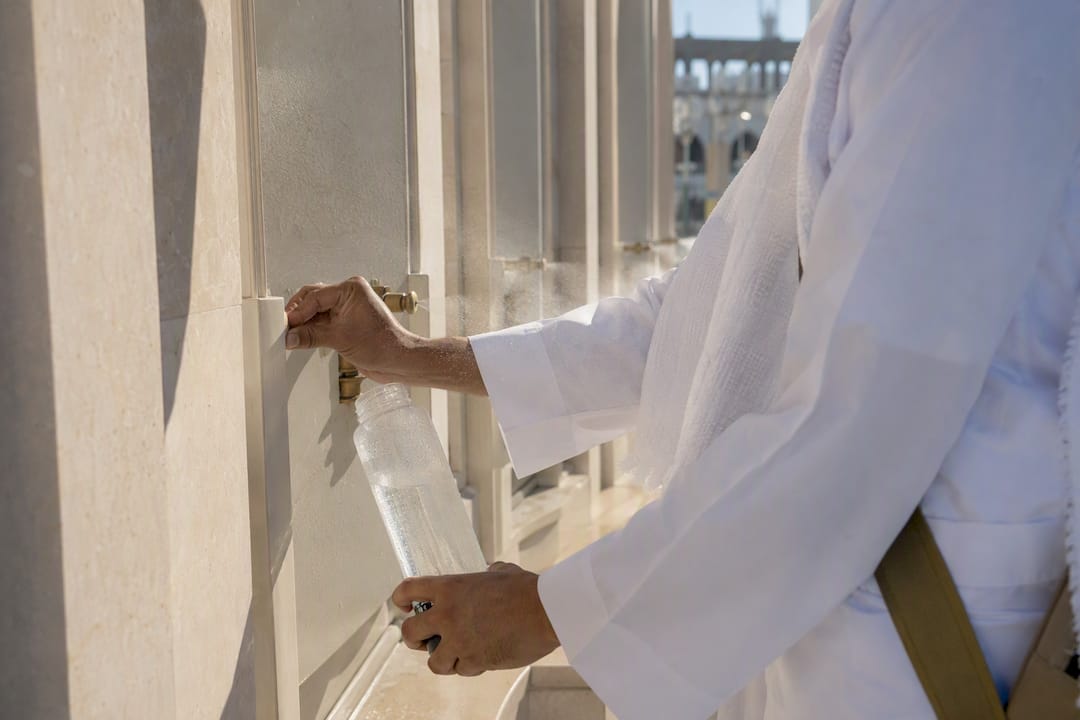
Older pilgrims and those with chronic conditions face real risk in this environment. Crush-related injuries and heat stroke cases climb noticeably whenever crowd density rises past comfortable walking capacity. If a family member has mobility limitations, a respiratory condition, or is recovering from illness, performing Umrah personally during this window may not be safe or realistic. Discuss the trip honestly with a doctor beforehand, and treat any hesitation as a signal to consider deputizing the pilgrimage instead of pushing through.
Does the Umrah Ritual Change During Hajj Season?
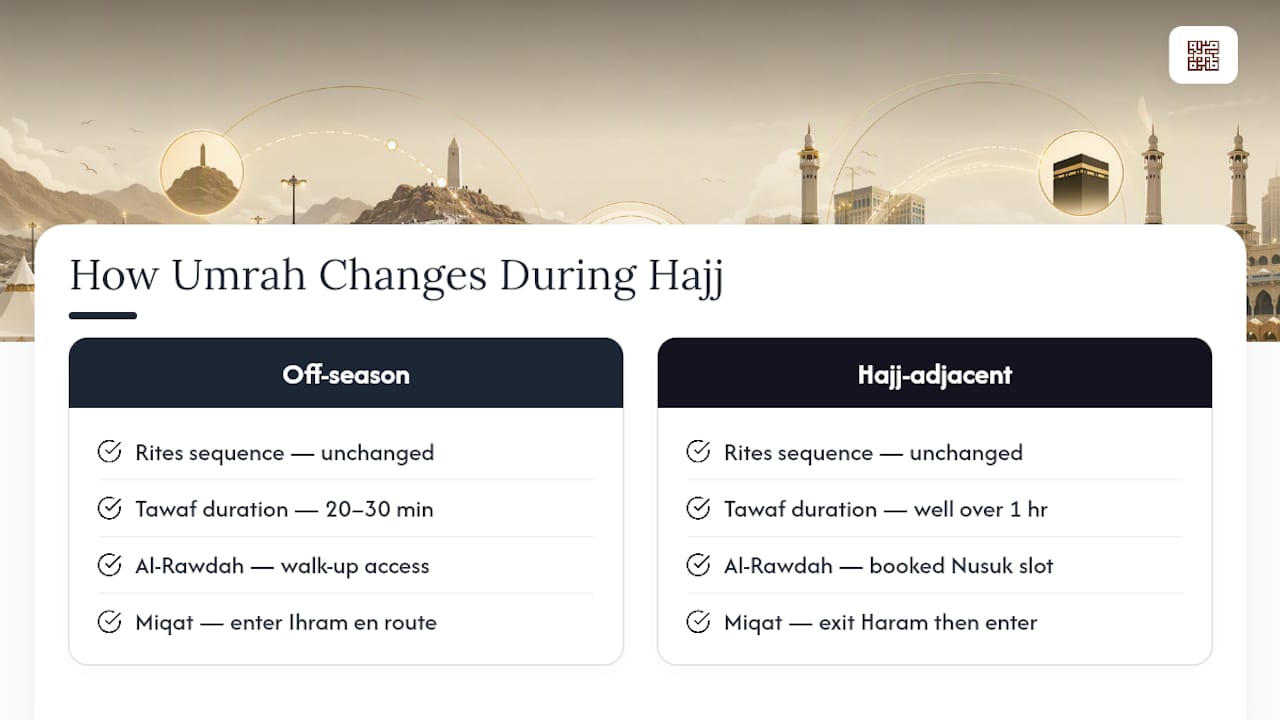
The rites themselves don’t change. Ihram, Tawaf, Sa’i, and hair trimming or shaving follow the same sequence whether you perform Umrah in a quiet month like Safar or squeezed against the Hajj closure. What changes is pacing, access, and the margin for error.
During off-season months, pilgrims often complete Tawaf in twenty or thirty minutes and move through Al-Rawdah without a scheduled slot. During Hajj-adjacent weeks, the same Tawaf can take well over an hour simply from the physical density of bodies moving around the Kaaba, and Al-Rawdah access requires a booked Nusuk time slot rather than walk-up entry.
The other real difference is the Miqat procedure covered earlier. Off-season pilgrims arriving from outside Saudi Arabia typically enter Ihram at their designated Miqat point during the flight or drive in, with no special exit-and-return requirement. Pilgrims already inside Makkah as Hajj approaches face the added step of exiting the Haram boundary before entering Ihram, a rule that exists specifically to prevent Umrah crowds from blending into Hajj-only movement patterns during the restricted period.
Sa’i between Safa and Marwah also runs on a stricter one-directional flow system during busy weeks, with designated lanes for different walking speeds and wheelchair access. It’s the same seven circuits, just with far more structure imposed on how you move through them.
Should You Try to Combine Umrah With Hajj Rituals?
If you’re already planning to perform Hajj in the same trip, Umrah typically gets folded into one of the three recognized Hajj types: Tamattu, Qiran, or Ifrad, rather than being booked as a separate standalone visit. Tamattu is the most common approach for first-time pilgrims, where Umrah is completed first, Ihram is exited, and Hajj begins separately a few days later.
What trips people up is expecting standalone Umrah access during the days immediately before Hajj begins, when the calendar has already shifted into Hajj-only permit status. If your goal is genuinely to combine both, register your intention as a Hajj pilgrim through the appropriate Hajj visa and package channel from the start, since Umrah visas and Hajj visas are administered under different permit systems entirely.
If you’re not on a Hajj visa and simply hoping to “squeeze in” Umrah right before the season closes, treat that as a real gamble rather than a plan. The safer expectation to set for yourself: either book comfortably inside a confirmed Umrah window well ahead of Hajj, or accept that your Umrah will need to wait until the season reopens after Hajj concludes. Trying to thread the needle in the final days before closure is where most disappointing stories originate.
Getting the Most Out of a Crowded Umrah
Performing Tawaf shoulder to shoulder with tens of thousands of other pilgrims is a different spiritual experience than a quiet weekday visit, and it’s worth preparing for that mentally rather than treating the crowd as an obstacle to your worship. Many pilgrims describe the physical difficulty of a packed Tawaf as part of what makes the moment feel weighty rather than routine.
Practically, arrive with your supplications already memorized or written down somewhere accessible, since pulling out a phone or booklet mid Tawaf in a dense crowd is difficult and can separate you from your group. Focus on a handful of du’as you know well rather than trying to read through a long list while being jostled.
Pace yourself physically before you even reach the Haram. Rest the day before, stay hydrated starting 24 hours ahead, and eat a real meal rather than attempting Tawaf on an empty stomach in the heat. Spiritually, treat the crush and the wait as part of the exercise in patience the ritual is built around rather than a flaw in your trip. Pilgrims who go in expecting ease often come away frustrated; those who go in expecting difficulty and treating it as worship tend to describe the experience as more meaningful, not less.
Why the Calendar Matters More Than the Agent’s Promise
Every season, we watch families make the same mistake: trusting a travel agent’s verbal assurance that “it’ll be fine” over the Ministry’s own published calendar. It never is fine when the dates conflict. Scheduling around the official Hajj season calendar and Nusuk permit windows is crucial because that discipline is what keeps a booking from collapsing at the airport.
That same scheduling logic applies whether someone is traveling personally or arranging Umrah on behalf of a parent who can’t make the trip. Bookings for Umrah by proxy typically come with documentation, photos, video, and a completion certificate, and the religious rulings behind performing Umrah for someone else are treated with the same seriousness as the travel logistics themselves.
Building a plan around the published calendar, not around what an agent hopes will happen, is the difference between a trip that works and one that ends in a denied boarding pass.
— anas
When You Can’t Travel, Badal Umrah Completes It for You
If your visa gets delayed past the Nusuk permit window, or a parent’s health makes travel impossible during a busy Hajj-adjacent season, a trusted representative can complete the pilgrimage on your behalf instead of the trip simply not happening.
The service is built around documentation you can actually verify: a completion certificate, photos, and video of the rituals performed, delivered after the Umrah is complete. It’s particularly useful for elderly parents who can’t handle the physical demands of a crowded Tawaf, for family members honoring someone who has passed, or for anyone whose visa or permit simply didn’t clear in time for their planned dates. Browse the available Umrah packages, including the documented Umrah Badal Barakah Premium package with full video and certificate, or check eligibility details on the FAQ page before booking through Badalumrah.