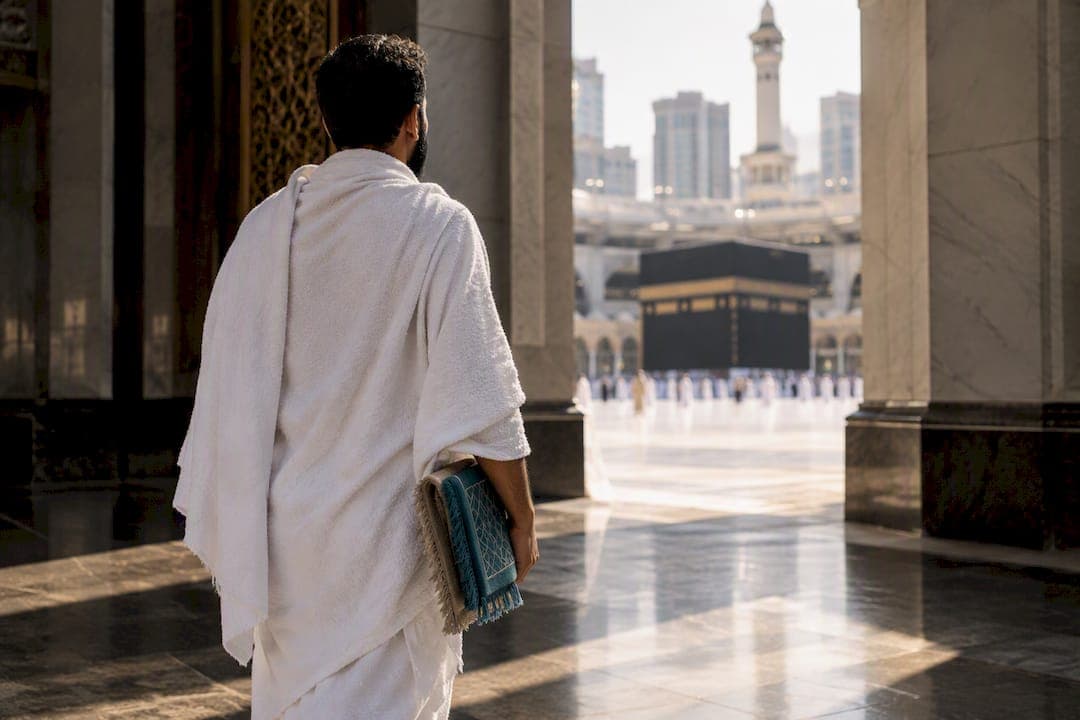
- umrah for spouse
From $150: Badal Umrah for Your Spouse With Certificate and Video
Published on Sep 21, 2026
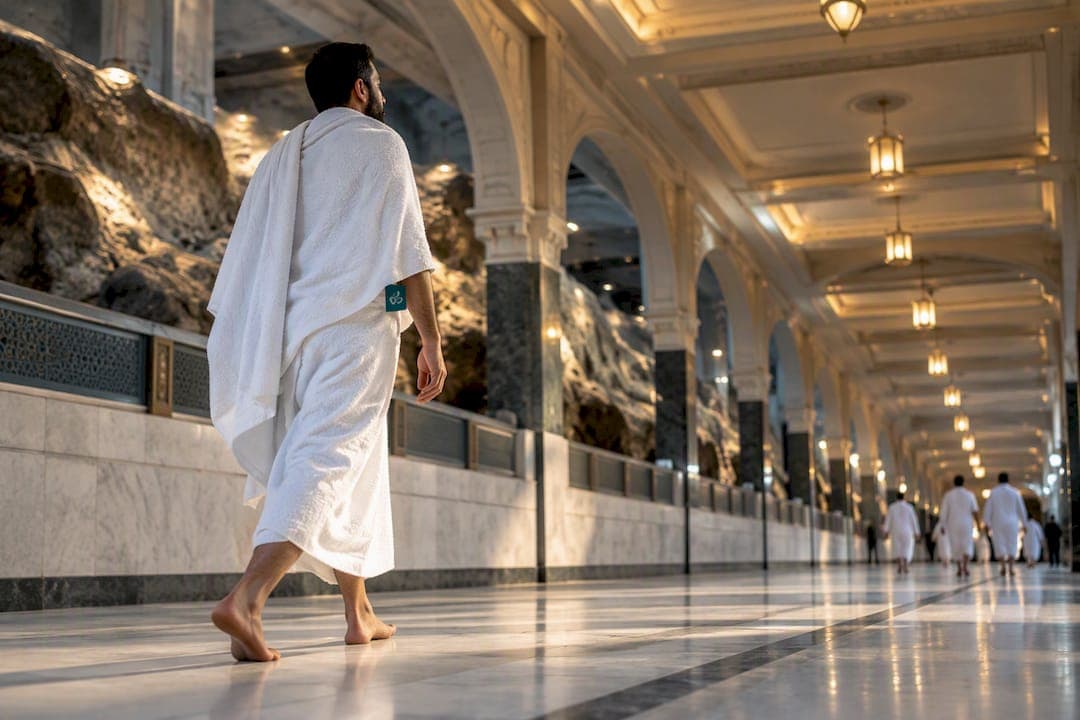
From $150: Badal Umrah for Your Spouse With Certificate and Video
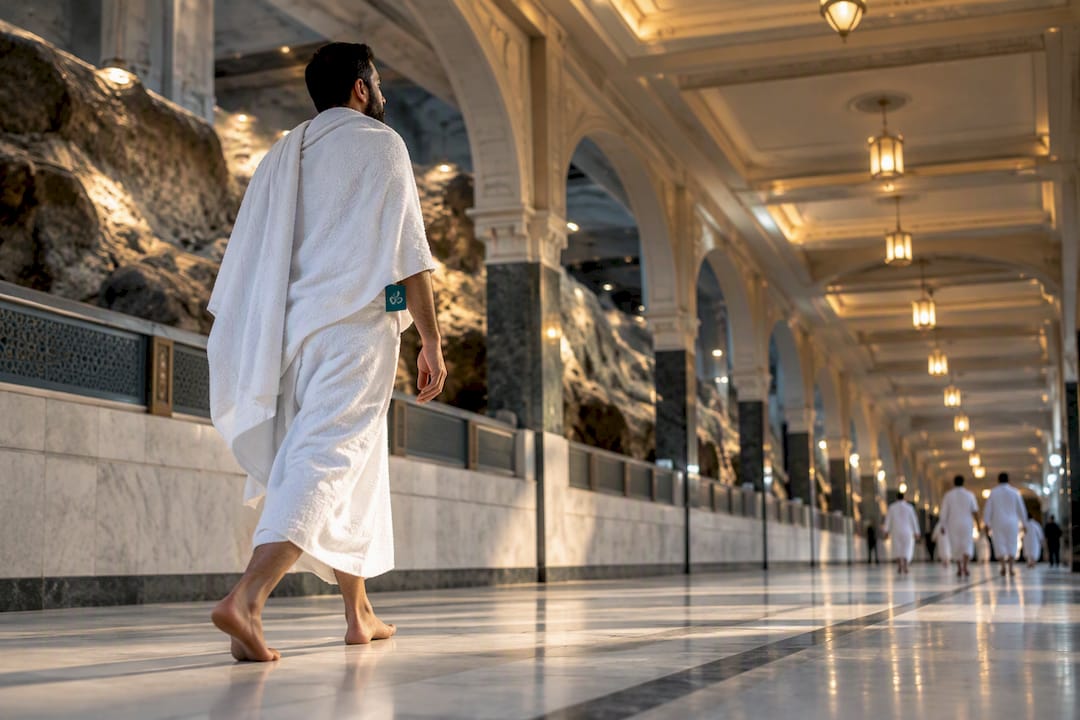
Yes, you can arrange a legitimate Badal Umrah for a spouse who cannot travel themselves, whether they’re alive and ill, elderly, or deceased. Three things make it valid: if your spouse is living, you need their explicit consent; the representative must have already performed their own Umrah before doing it for anyone else; and you need to walk away with verifiable proof, a certificate, photos, or video, not just a promise.
TL;DR:
- Only spouses unable to travel due to illness, age, or death are eligible for Badal Umrah arrangements, and explicit consent is required from living spouses.
- The representative must have performed their own obligatory Umrah and clearly perform the rites personally, with explicit intention naming the spouse.
- Proof of completion should include a signed certificate, with higher tiers providing photos, videos, and imam attestations, and must be kept for verification.
- Reputable providers will disclose the performer’s identity, supply detailed evidence, and establish clear timelines; undisclosed delegation signals a warning.
- Typical booking processes take a few weeks, with proof delivered shortly after the ritual; disputes often stem from unclear agreements or missing verification.
Table of Contents
- Who Is Eligible for Umrah on Behalf of a Spouse?
- What Religious Conditions Make a Badal Umrah Valid?
- How Do You Choose a Trustworthy Representative?
- What Proof of Completion Should You Receive?
- What Happens After You Book?
- What Disputes Come Up, and How Do You Resolve Them?
- Do Different Islamic Schools of Thought Treat Proxy Umrah Differently?
- Where Should You Look for a Reputable Badal Umrah Provider?
- Why a Specialist Provider Beats a Generic Travel Agent
- Which Badalumrah Package Fits Your Situation?
- Sources
- FAQ
Who Is Eligible for Umrah on Behalf of a Spouse?
Umrah for spouse arrangements exist for a narrow set of situations, not general convenience. The eligibility categories that fatwa bodies recognize are consistent: permanent physical incapacity, a chronic illness with no realistic treatment path, advanced age that makes the journey unsafe, or death. Jordan’s Iftaa’ department outlines these conditions clearly, noting that delegation, called al-inabah, is permitted specifically for those unable to perform the rites themselves.
Consent is where most people get tripped up. If your spouse is alive, even if bedridden or cognitively impaired but still capable of expressing a wish, you need their explicit agreement before hiring anyone. That consent doesn’t have to be a notarized document, but it does need to be documented in some traceable way:
- A signed consent form, even a simple one, dated and kept with your records
- A recorded verbal consent with a witness present, saved as audio or video
- An authenticated written message (text, email, or letter) confirming the request
For a deceased spouse, none of this applies. Scholarly consensus holds that consent isn’t required after death, since the ritual becomes an act of charity on their behalf rather than a substitution of their will. One line to remember before you book: if your spouse is physically and financially capable of performing Umrah themselves, delegation isn’t a valid shortcut, no matter how convenient it feels.
What Religious Conditions Make a Badal Umrah Valid?
Getting the paperwork right means nothing if the ritual itself doesn’t meet the conditions scholars agree on. Three conditions come up across nearly every fiqh source on this topic.
- The intention (niyyah) must explicitly name the person on whose behalf the Umrah is performed. The representative states, at the point of entering the state of ihram, that this Umrah is on behalf of your spouse specifically, not a general or vague dedication.
- The representative must have already completed their own obligatory Umrah. SeekersGuidance confirms this is a standard requirement across schools of thought: someone can’t perform this act for another person before fulfilling it for themselves.
- The representative should perform the rites personally, not hand the task to someone else without telling you. Islam Question & Answer warns specifically about this, noting that a person who accepts payment and then quietly delegates to another performer, without the client’s knowledge, crosses into ethically troubling territory.
Scholars from the Shafi’i school, including commentary traceable to al-Nawawi, treat the representative’s own completed Umrah as close to a hard requirement. Ibn Uthaymin’s guidance goes further, stressing that the person performing the rites should be righteous and known to be trustworthy, not simply the cheapest available option.
Pro Tip: Ask directly, “Have you personally completed your own Umrah, and will you be the one performing mine?” A provider who hesitates on either question is telling you something important.
How Do You Choose a Trustworthy Representative?
The representative matters more than the package tier. A beautiful certificate means little if the person named on it never set foot in Makkah.
Start by asking for proof of their own completed Umrah, a certificate, a passport stamp history, or documented travel records. A reputable provider won’t treat this as an odd request. Next, ask directly whether your Umrah will be re-delegated to someone else under any circumstances, and if so, whether they’ll disclose that before it happens. Islam Question & Answer’s guidance on this point is blunt: undisclosed delegation after taking payment is a documented problem in this industry, not a hypothetical one.
Before you pay anything, lock down these details in writing:
- The specific name of the person who will perform the rites
- A realistic timeline from booking to completion
- The exact evidence types you’ll receive (certificate, photos, video, or all three)
- The refund or guarantee terms if something goes wrong
Watch for these warning signs before you commit:
- The provider refuses to name who will actually perform the ritual
- Delivery timelines are vague (“a few weeks, maybe more”) instead of a stated window
- Prices are unusually low alongside claims of handling large batches of Umrahs at once, a pattern that often signals unofficial subcontracting
Pro Tip: If a provider’s price seems too good against competitors offering similar evidence packages, ask why. Legitimate on-ground coordination in Makkah costs money; a price that ignores that reality usually means corners are being cut somewhere you won’t see.
A step-by-step breakdown of the full Badal Umrah process can help you compare what a provider tells you against what the standard procedure actually looks like.
What Proof of Completion Should You Receive?
Proof is the entire point of hiring someone rather than trusting a verbal assurance. At minimum, insist on a signed certificate that includes the date of performance and the representative’s full name, not a generic template with blanks left unfilled.
Beyond the certificate, ask for:
- Timestamped, ideally geotagged photos taken at the Haram
- A short video clip showing tawaf or sa’i in progress
- A written or recorded attestation from an imam or independent witness confirming the ritual occurred
To verify what you’re given, check the photo metadata for a timestamp that matches your booking window, and don’t be shy about requesting the imam’s contact information or a scanned copy of the service contract. Providers typically structure evidence in tiers, a basic package might include only the certificate, a mid-tier adds photos, and a premium package layers in full video and an imam’s statement. The jump in cost reflects the real labor involved in on-site recording and coordination, not just marketing.
Keep every piece of documentation, digitally and on paper. If the Umrah was funded from a deceased spouse’s estate, this recordkeeping matters even more, since inheritance and zakah questions sometimes require proof of how estate funds were spent.
What Happens After You Book?
The process from booking to proof follows a fairly standard sequence across most providers. You submit consent documentation and identification, select a package tier, complete payment, and then wait for the representative to perform the rites and send evidence.
- Basic tiers usually deliver a certificate alone
- Mid-tier packages add photo evidence alongside the certificate
- Premium tiers include video, sometimes live updates during the ritual, and a written imam statement
Tarteel Travel’s overview of the practice confirms this tiered structure is now standard across the marketplace, not unique to any single provider. Timelines vary, but most bookings complete within a few weeks of submission, with proof typically delivered shortly after the ritual itself is performed. Payment is usually a single upfront fee rather than installments, and you should receive a receipt tied to the specific package purchased.
When the spouse has passed away, the process shifts slightly. Consent forms drop out of the equation, but families often need to coordinate among siblings or other heirs, especially when the Umrah is paid for using estate funds rather than one individual’s personal money.
What Disputes Come Up, and How Do You Resolve Them?
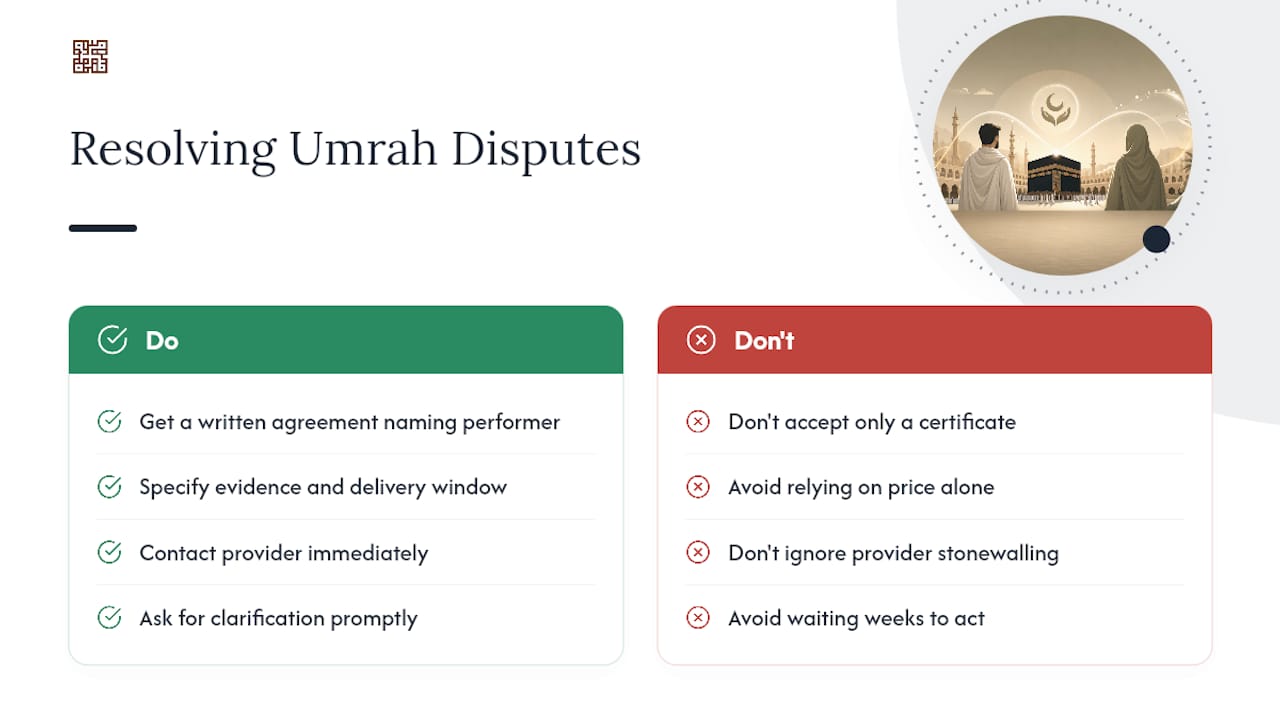
Most disputes in this space trace back to one root cause: a mismatch between what was promised and what was delivered. A family expects video and receives only a certificate. A representative was supposed to perform the rites personally but the family later learns, sometimes through inconsistent details in the photos, that someone else did it instead.
The fix starts before you ever pay. A written agreement specifying the performer’s name, the evidence you’ll receive, and the delivery window gives you something concrete to point back to if things go sideways. Without that paper trail, disagreements often become a matter of one party’s word against another’s, with no way to resolve it cleanly.
If proof arrives late or looks inconsistent, contact the provider immediately and ask for clarification, don’t wait weeks assuming it will sort itself out. Reasonable providers will explain delays (Makkah’s peak seasons create real bottlenecks) or correct genuine errors quickly. If a provider stonewalls basic questions like who performed the ritual, that’s no longer a minor administrative issue, it’s a sign the arrangement may not have been valid in the first place.
For disputes rooted in religious validity rather than customer service, for instance, uncertainty about whether the representative had completed their own Umrah, it’s worth consulting a local imam or a scholarly body for guidance on whether the ritual should be repeated. This isn’t common, but it does happen when families skip the vetting step entirely and choose a provider based on price alone.
Do Different Islamic Schools of Thought Treat Proxy Umrah Differently?
The core permissibility of proxy Umrah isn’t seriously disputed across the major schools of thought. Where nuance appears is in the details: how strictly the representative’s own prior Umrah is required, and how explicit the intention (niyyah) needs to be at the moment of ihram.
The Shafi’i school, reflected in commentary tied to al-Nawawi, treats the representative’s completed Umrah as close to a firm precondition. Other schools generally agree with the underlying principle but sometimes differ on secondary points, such as whether a representative performing Umrah for multiple people in sequence needs a fresh ihram and intention for each one (most guidance says yes, it does).
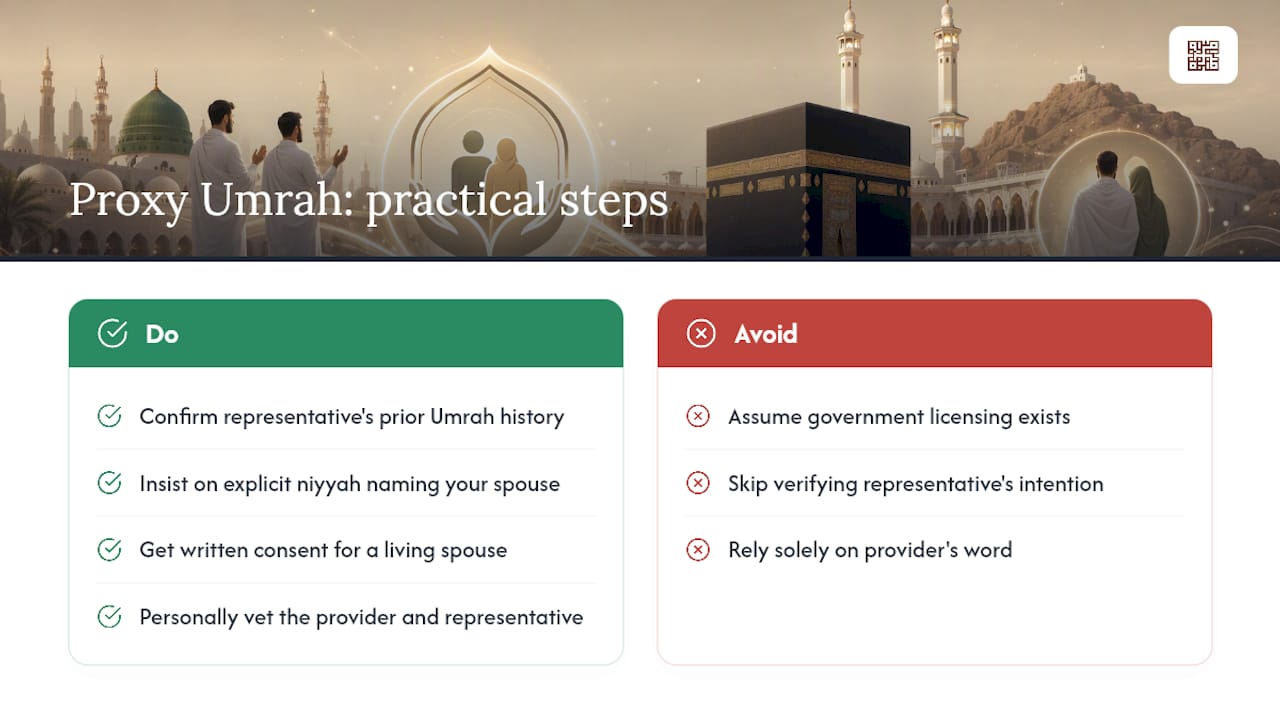
None of these differences change the practical advice for someone arranging Umrah for a spouse: confirm the representative’s own Umrah history, insist on explicit intention naming your spouse, and get consent documentation squared away for a living spouse. SeekersGuidance’s answer on this topic is written to apply broadly across schools rather than favor one interpretation, which makes it a useful reference point if you’re trying to reconcile advice from different sources.
There’s also a legal dimension worth flagging briefly: proxy Umrah is a religious practice, not a regulated financial product, so there’s no government body auditing providers for compliance. That makes personal vetting, not licensing, your main protection. A deeper explanation of Badal Umrah’s meaning and doctrinal basis is worth reading if you want the fuller religious context before deciding.
Where Should You Look for a Reputable Badal Umrah Provider?
Reputation in this space comes down to three things: a documented history of transparency, clear evidence delivery, and a willingness to answer hard questions before you pay. Providers who publish detailed rulings and process explanations rather than just marketing copy tend to be more accountable, because they’re putting their standards in writing for anyone to check.
Look for platforms that name their evidence tiers clearly rather than leaving proof vague until after payment. A provider that lets you compare a basic certificate-only option against a premium video-and-live-update package upfront is giving you the information you need to match spend to your comfort level. Ask specifically whether the same imam or coordinator verifies rituals across bookings, consistency here often correlates with fewer disputes.
Country-specific guidance can also help you understand what documentation formats are typical where you live. A regional walkthrough like the Sweden-focused guide shows how consent and identification requirements can vary slightly depending on where the requesting family is based, useful context even if you live elsewhere, since it shows the range of what “acceptable documentation” can look like.
Why a Specialist Provider Beats a Generic Travel Agent
Most travel agencies treat Badal Umrah as an afterthought bolted onto their Hajj packages. That’s backwards. Getting the intention right, confirming the representative’s own Umrah history, and producing evidence that would satisfy a skeptical family member requires someone who treats this as the core service, not a side offering.
Some specialist providers offer package tiers that scale from a basic certificate to full video documentation and imam attestation, so families aren’t guessing what “proof” means. The site’s published guidance on Islamic rulings reflects the same conditions covered here: representative qualification, explicit intention, and consent handling. A portion of profits also goes toward supporting Gaza, which matters to families who want their spending to align with broader Islamic charitable values, not just the transaction itself.
— anas
Which Badalumrah Package Fits Your Situation?
If everything above has you ready to move forward, some providers address concerns about who performs the ritual, what proof you’ll get, and how fast it happens.
The Du’a Package at $150 gives you a signed certificate confirming completion, a solid entry point if a basic verified record is all you need. The Noor Package at $250 adds photo evidence to that certificate, useful if you want visual confirmation without the higher cost of video. The Barakah Package at $400 steps up documentation further for families who want stronger assurance than photos alone provide. For maximum verification, the Jariyah Premium Package at $500 includes full video coverage alongside the certificate, the closest thing to watching the ritual happen yourself.
Starting an order means submitting your consent documentation (or, for a deceased spouse, basic identifying information) along with your chosen package. Payment is a single one-off fee with no recurring charges. From there, you’ll receive updates as the representative completes the rites, followed by delivery of whatever evidence your tier includes. Browse the full collection of Umrah packages to compare tiers side by side before you decide.
Sources
- What Are The Rulings On Performing Hajj and ‘Umra on Behalf of Another? - SeekersGuidance
- Can You Delegate Someone to Perform `Umrah on Behalf of a Dead Person? - Islam Question & Answer
- Conditions for performing Hajj or Umrah on behalf of a sick person - Iftaa’ (Jordan)
- Can You Perform Umrah on Behalf of Someone Else - Tarteel Travel
FAQ
Can I arrange Umrah for my spouse without their consent?
Only if your spouse has passed away. For a living spouse, whether ill, elderly, or incapacitated, explicit consent is required before any representative can perform Umrah on their behalf.
Does the representative need to have performed their own Umrah first?
Yes. Scholarly guidance is consistent on this point: a person must complete their own obligatory Umrah before performing it on behalf of someone else, including a spouse.
What proof should I expect after booking a Badal Umrah?
At minimum, a signed certificate naming the performer and the completion date. Higher tiers add timestamped photos, video footage, and sometimes an imam’s written attestation, depending on the package you choose.
How much does Umrah for a spouse cost through Badalumrah?
Packages range from the Du’a Package at 150 USD up to the Jariyah Premium Package at 500 USD, depending on the level of documentation you want.
What if a provider refuses to name who performs the ritual?
Treat that as a serious warning sign. Providers who accept payment and then quietly delegate to someone else without telling the client are engaging in a practice scholars have explicitly flagged as problematic.
How long does it take to receive proof after booking?
Most bookings complete within a few weeks, with evidence delivered shortly after the ritual is performed, though timing can shift during Makkah’s busier seasons.